


Antique Card Chest
These antique card chest pieces encompass multi-drawer filing cabinets and small boxes, prized for organising papers and games.
Antique Card Chest
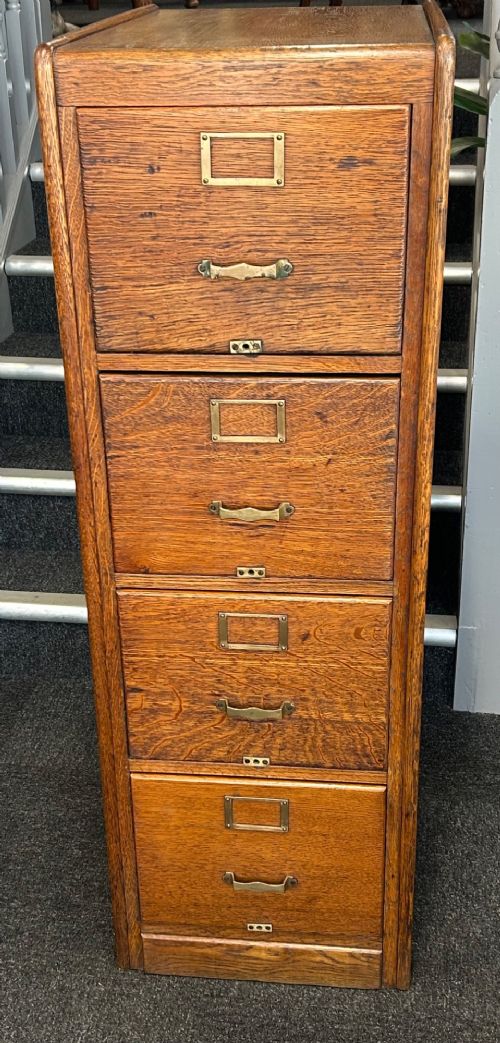
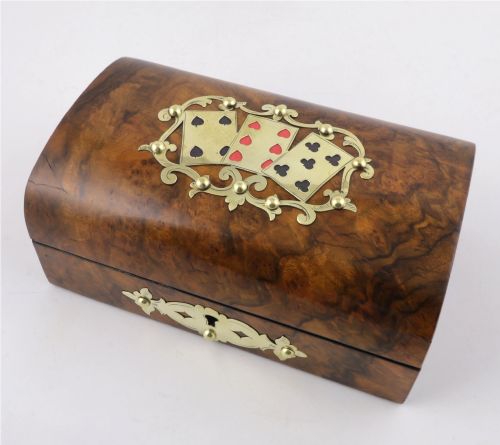
An antique card chest typically spans small desktop boxes designed for playing cards and poker dice alongside large office filing cabinets and shop fittings. Buyers searching for an antique card chest frequently encounter multi-drawer filing units, haberdashery cabinets, and index drawers dating from the Victorian and Edwardian eras.
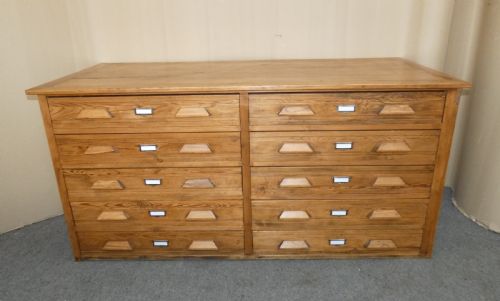
The selection ranges from compact walnut playing card caskets to expansive oak or pine office cabinets featuring numerous small drawers. Pieces stem from periods such as nineteen hundred, nineteen ten, nineteen twenty, and the nineteenth century, reflecting commercial and domestic storage needs.
Materials and construction
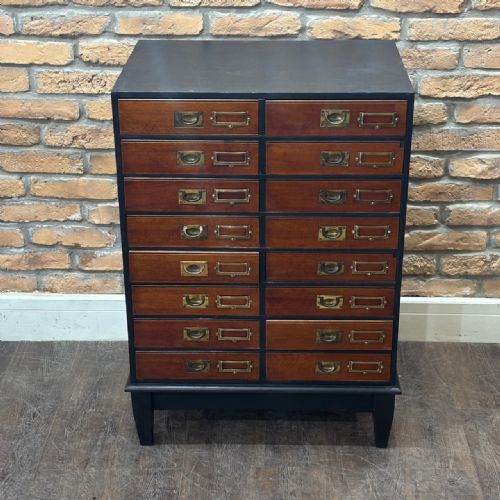
Cabinet makers utilised hardwoods like mahogany, walnut, burr walnut, and oak alongside softer woods such as pine and beech for the drawer carcases. Brass hardware, metal fixtures, and enamel labels appear frequently across office filing cabinets and bank chests.
Joinery techniques serve functional commercial and domestic roles, evident in multi-drawer office filing cabinets, shop fittings, and patented letter files. Surfaces display polished wood grains or painted finishes depending on whether the piece originated as a domestic box or a commercial office fitting.
The archive includes sterling silver card cases alongside wooden playing card boxes and multi-drawer shop fittings.
Quality variations
Superior examples distinguish themselves through dense timber selection, such as burr walnut or solid mahogany, matched with robust internal drawer construction. Lesser pieces rely on simpler pine or secondary woods with basic utilitarian joinery.
Original hardware, working brass locks, and intact patent mechanisms elevate a piece above standard utility furniture. The integrity of the multi-drawer configuration and the retention of original enamel or brass labels define the upper tier of the range.
Amberg·Shannon·A Wilcox
The Antique Card Chest Glossary
- Bank of Drawers
- A set of multiple small drawers arranged in a wide or tall block, commonly used in offices and shops for sorting documents or small items.
- Haberdashery Cabinet
- A multi-drawer storage unit originally designed for drapery shops, featuring shallow glass-fronted or wooden drawers.
- Filing Cabinet
- An office furniture piece with sliding drawers built to hold correspondence, index cards, or letters.
- Playing Card Box
- A small lidded casket fashioned to store decks of cards and gaming dice.
- Patent Cabinet
- A specialised filing unit incorporating a proprietary mechanical system for securing or indexing papers.
Antique Card Chest: Frequently Asked Questions
What is an antique card chest used for?
These chests serve primarily for organising small paper documents, index cards, or playing pieces within shallow drawers. Smaller boxes house card decks and poker dice, while larger multi-drawer cabinets sort correspondence and office items.
Buyers often repurpose these multi-drawer units in modern settings for stationery, craft supplies, or desktop storage. Their modular drawer construction makes them practical for sorting small items while retaining period character.
Are these cabinets suitable for modern offices?
Many multi-drawer units fit standard desk setups and provide functional storage for modern stationery and paper sizes. Their sturdy timber construction handles daily use better than many contemporary alternatives.
Placing a vintage index cabinet or bank of drawers on a desk offers practical organisation alongside period aesthetics. The varying drawer depths accommodate modern office supplies while maintaining a traditional workspace appearance.
What is the difference between a haberdashery cabinet and a filing cabinet?
Haberdashery cabinets feature shallow, numerous drawers originally built for retail display and textile storage, often with glass fronts. Filing cabinets are deeper, designed to hold vertical folders, letters, or index cards securely.
Office filing variants emphasise mechanical indexing systems and robust timber frames to support heavy paper loads. Haberdashery pieces prioritize visibility and accessibility for small goods rather than document filing.