
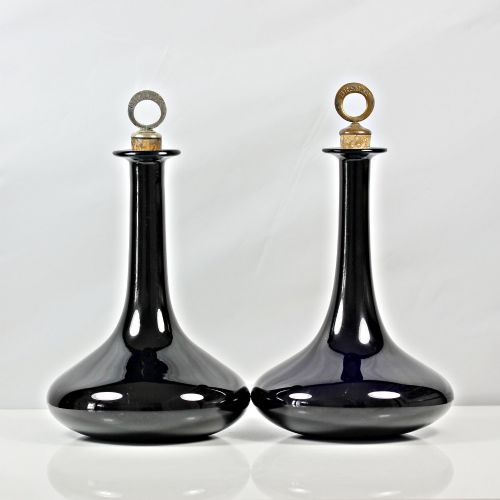
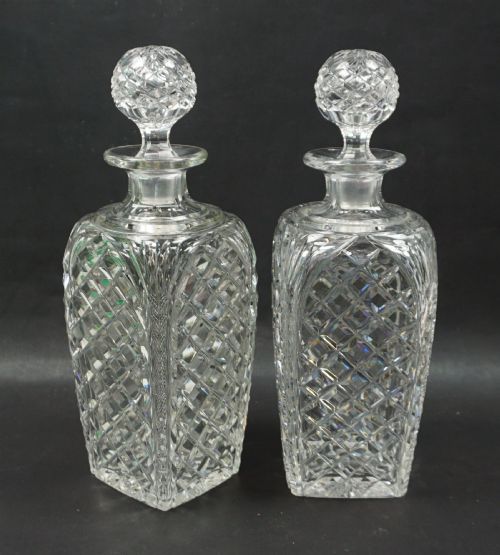
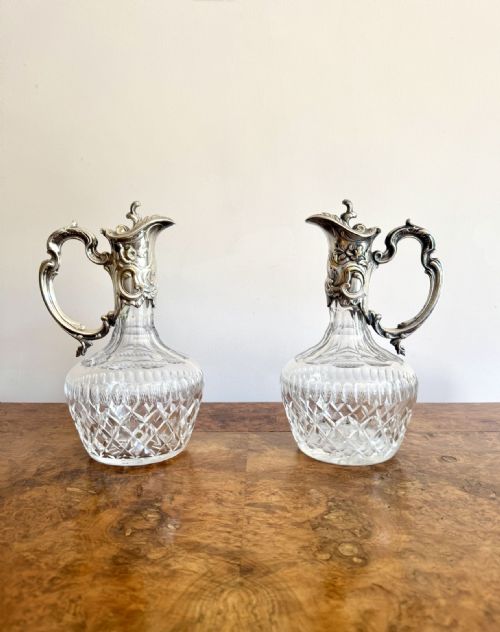
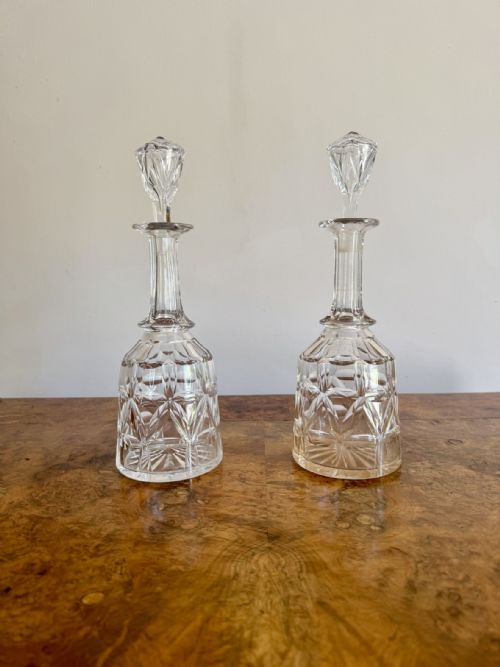




Antique Carafe Pair
An antique carafe pair brings double the symmetry and period charm to a dining table.
Antique Carafe Pair
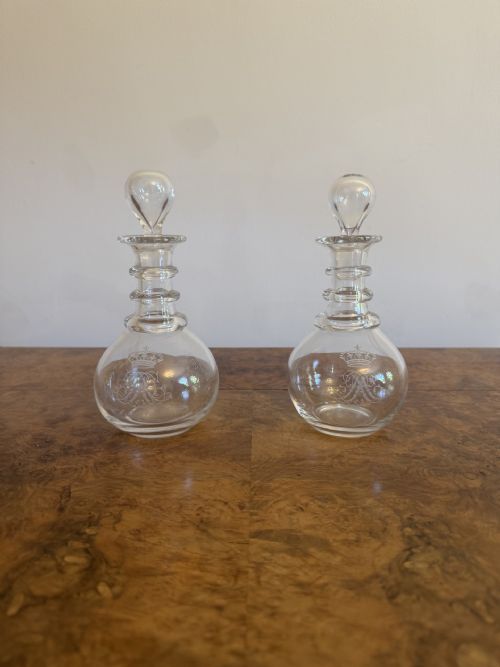
An antique carafe pair, also frequently catalogued as matching sets of period decanters or jugs, provides a balanced duo of glass vessels designed for serving wine, spirits and water at the table. These matching duos span the Georgian, Regency, Victorian and Edwardian eras, offering dual presentation for dining and entertaining.
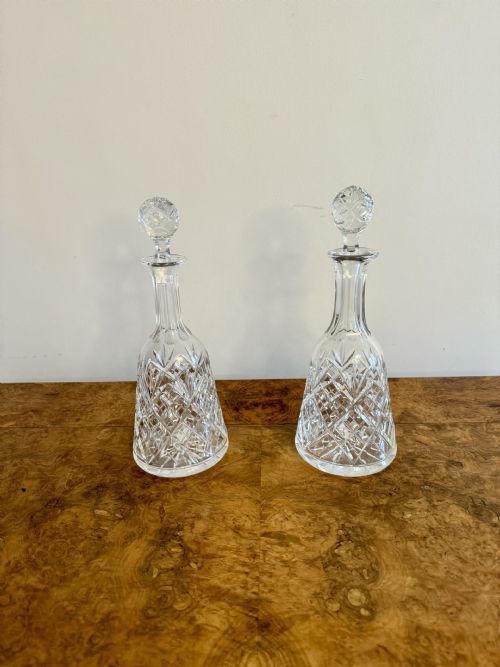
Most examples met on this page date from the nineteenth and early twentieth centuries, encompassing styles from heavy cut crystal to colourful glass bodies. Forms range from ships decanters and square section taperers to bell shapes and mell profiles, reflecting the changing tastes of past households.
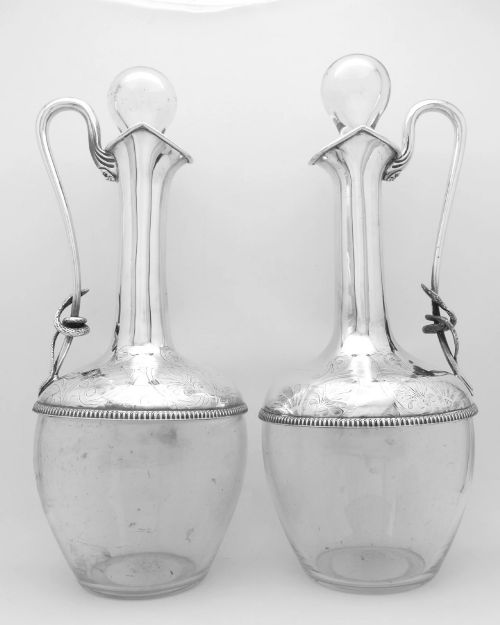
Makers and workshops across England, France and Austria produced these twin vessels in clear, coloured and cased glass, often pairing the glass bodies with silver plate, sterling silver or pewter mounts.
Materials and construction methods
The materials recorded in these listings centre on lead crystal, cut glass, clear glass and coloured varieties such as ruby, cranberry, amber, green, amethyst and Bristol blue. Glassmakers utilised techniques including optical blowing, pillar cutting and wheel engraving to pattern the vessels.
Metal mounts in solid silver, silver plate and pewter provide functional collars, lips and serpent handles, securing stoppers and adding structural weight to the glass bodies.
Recorded object forms range from shaft and globe decanters and square section spirit bottles to claret jugs mounted in silver plate and pewter.
Distinguishing quality across pairs
Quality separates pairs through the crispness of the glass cutting, the depth of wheel engraving and the clarity of the material itself. Heavier lead crystal and deeply faceted pillar cuts denote higher production standards.
Matching consistency dictates value in a pair; identical heights, matching original stoppers and evenly matched colour intensity between both vessels elevate the set. The integration of solid silver mounts or maker-stamped collars further separates standard utility ware from finer examples.
James Powell·Hukin & Heath·Rene Lalique
The Antique Carafe Pair Glossary
- Mell decanter
- A mallet-shaped decanter with a broad base and tapering neck, popular for stability on ships and dining tables.
- Whiskey noggin
- A small drinking vessel or miniature decanter, often fitted with a silver lip and handle.
- Ships decanter
- A bottle-form vessel with a wide, conical base designed to prevent tipping during rough movement at sea.
- Optically blown
- A glassforming technique where molten glass is blown into a ribbed mould to create a pattern of internal flutes or optic ripples.
- Pillar cut
- A heavy geometric cutting style featuring wide, vertical flutes or facets running along the body of the glass.
Antique Carafe Pair: Frequently Asked Questions
How do I clean an antique carafe pair?
Wash glass vessels by hand using warm water and a soft bottle brush, avoiding harsh chemical detergents that might harm historic glass or silver mounts.
Dry the pieces thoroughly and store them with stoppers slightly ajar to prevent moisture trapping and odours inside the bowls.
Can I still use these antique decanters?
These glass vessels function well for serving wine and spirits at modern dining tables, provided the interior glass remains clean and free of heavy residue.
Check metal mounts and stoppers for secure fits before pouring, and handle coloured or heavily cut pieces with care.
How do I date an antique glass pair?
Examine the base for pontil marks, wear patterns and the tint of the glass, which often indicate nineteenth or early twentieth-century manufacture.
Stylistic cues such as Georgian facet cutting, Victorian engraved floral motifs or Edwardian silver plating help narrow the production period.
Are original matching stoppers important?
Matching stoppers that fit securely and share identical cutting or tinting are essential for maintaining the integrity and period correctness of a pair.
Replacements or mismatched stoppers alter the visual balance and authenticity of the set.