
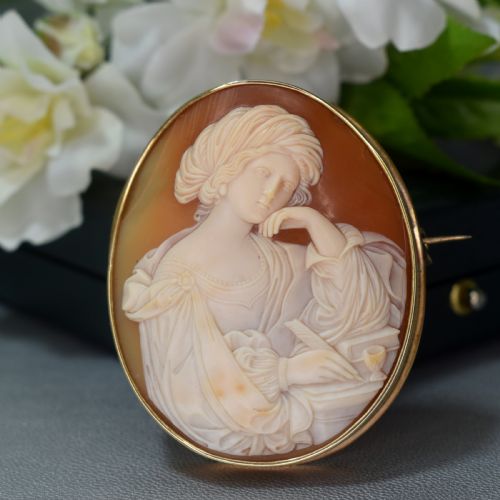


Antique Cameo Brooch
An antique cameo brooch brings hand-carved classical myth and portraiture from the Georgian and Victorian eras straight to your lapel.
Antique Cameo Brooch
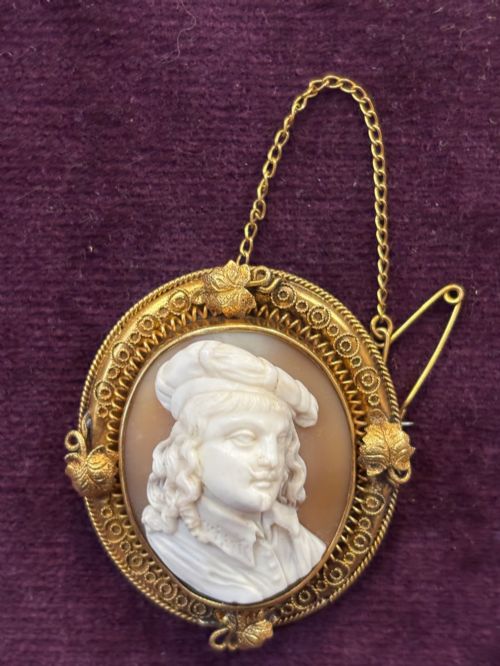
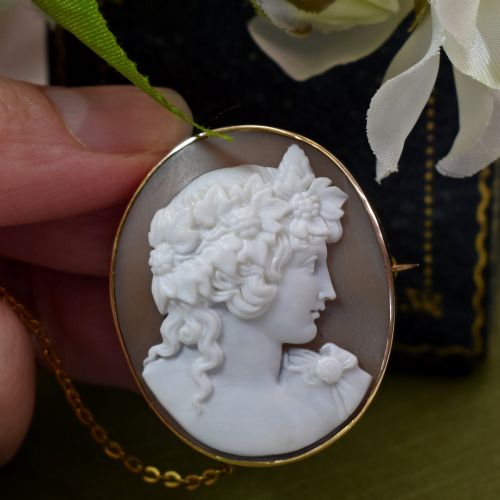
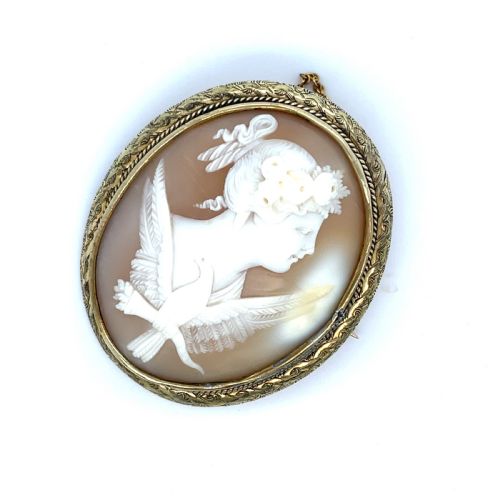
An antique cameo brooch presents a raised relief carving set into a precious metal or base metal frame, frequently designed to double as a pendant necklace. The subjects drawn upon include Greek and Roman mythological figures, classical deities such as Flora and Demeter, and detailed portraits.
The version you are most likely to meet on this page is the Victorian shell cameo mounted in gold or silver, reflecting the popular Grand Tour aesthetic of the nineteenth century. Pieces range from small bar brooches to large tabletop ornaments and monumental carved shells in solid gold frames.
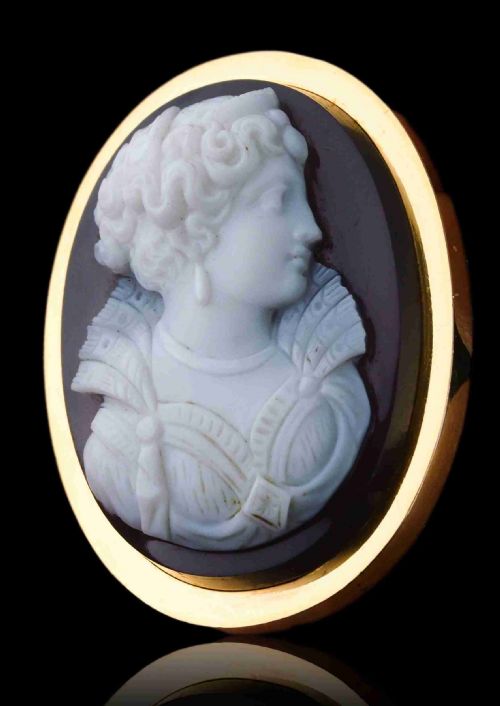
Beyond shell, these objects appear in hardstone, agate, lava stone, and coral, housed within mounts of varying carats including 9ct, 15ct, 18ct, and 20ct gold, alongside silver and pinchbeck.
How They Were Made
Carvers cut directly into natural materials, exploiting the layered colour variations in shells such as conch or sardonyx, and in banded hardstones and agates, to ensure the carved figure stands out sharply from a contrasting background.
Mounts were handmade by goldsmiths and silversmiths using techniques like filigree work, ornate casting, and detailed wirework to frame the fragile carved reliefs securely.
Antique Cameo Brooch Retail Price Guide 2026
Typical asking prices for cameo brooch among the pieces listed under this phrase on Sellingantiques today, from the lower quarter to the upper quarter. They describe what is for sale here now, not the wider market.
Listings feature shell, agate, lava stone, hardstone, and coral mounted across Victorian, Georgian, and Edwardian periods.
What Varies in Quality
The precision and depth of the carving dictate the artistic merit of the piece, distinguishing master carvers who rendered facial expressions and drapery with anatomical accuracy from routine workshops.
The weight and purity of the metal frame, from standard silver and 9ct gold up to high-carat yellow gold, alongside the scale and complexity of the subject matter, mark the difference between standard production and museum-quality examples.
R. Pernice
The Antique Cameo Brooch Glossary
- Cameo
- A method of carving where a design is raised above its background. This technique relies on natural colour changes within the shell or stone.
- Hardstone
- A gemstone of significant hardness, such as agate, used for intaglios and cameos. These stones offer exceptional durability and fine detail retention.
- Grand Tour
- A cultural journey undertaken by nineteenth-century travellers across Europe. Travellers routinely acquired Italian carved lava and shell cameos as souvenirs.
- Pinchbeck
- An alloy of copper and zinc developed to imitate gold. It frequently appears in Georgian and Victorian jewellery mounts.
- Maenad
- A female follower of Dionysus, frequently depicted in classical art. These mythical figures form popular subjects for carved shell brooches.
Antique Cameo Brooch: Frequently Asked Questions
How do I wear a cameo brooch?
Pin the brooch securely to the lapel of a jacket, the collar of a blouse, or at the centre of a neckline. Many pieces also feature a concealed loop that allows them to be suspended from a chain as a pendant.
Ensure the fabric is heavy enough to support the weight of the metal mount and carved stone or shell.
Are all cameos made from shell?
While shell is the material most frequently encountered, artisans also utilised hardstone, agate, coral, and lava stone. Each material required different carving techniques to expose the contrasting layers.
Shell pieces offer translucent depth, whereas hardstone and lava provide distinct textures and weight.
How can I tell the period of a cameo?
Dating relies on the style of the metal mount, the clasp mechanism, and the subject matter of the carving. Georgian pieces often feature closed-back settings and specific gold alloys, while Victorian examples frequently show classical Revival motifs and ornate frames.
Hallmarks stamped on the metal mount provide definitive date letters and assay office origins where present.
What subjects are common on cameos?
Carvings draw heavily from classical mythology, depicting figures such as Athena, Hermes, Psyche, and Cupid. Portrait profiles of noble ladies, gentlemen, and historical figures also appear across nineteenth-century examples.
Mythological scenes often reference specific Greco-Roman stories and theatrical tragedies.