
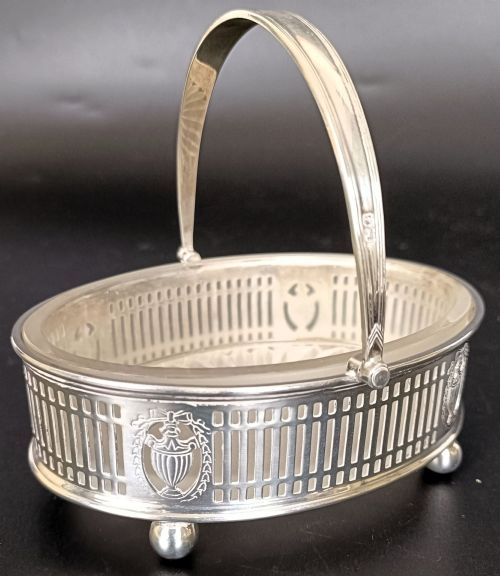


Antique Cake Basket
An antique cake basket brings formal Georgian and Victorian hospitality straight to the dining table with swing handles and pierced metalwork.
Antique Cake Basket
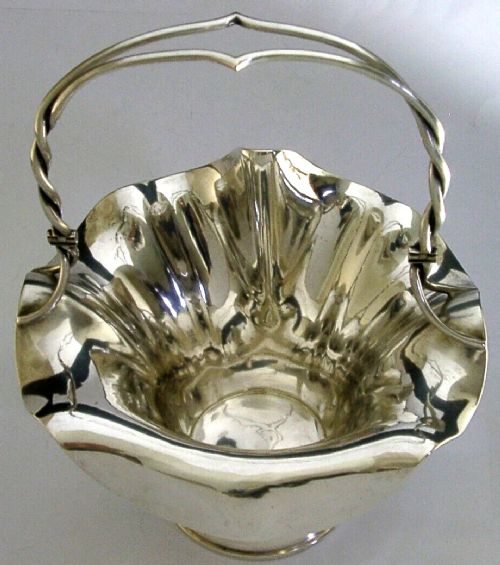
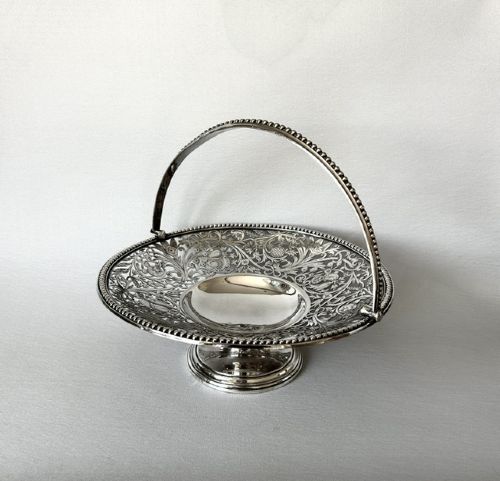
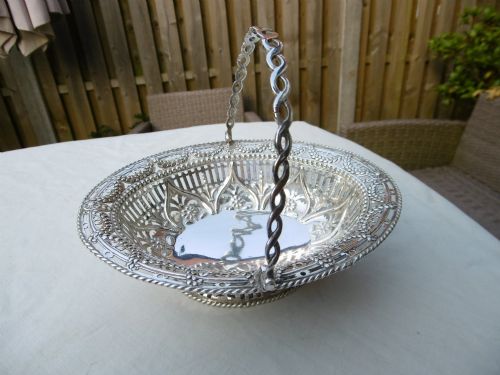
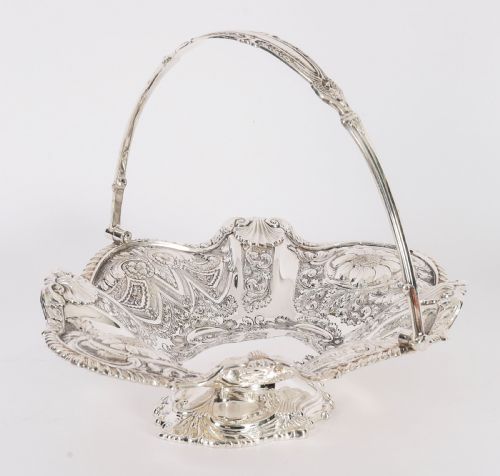
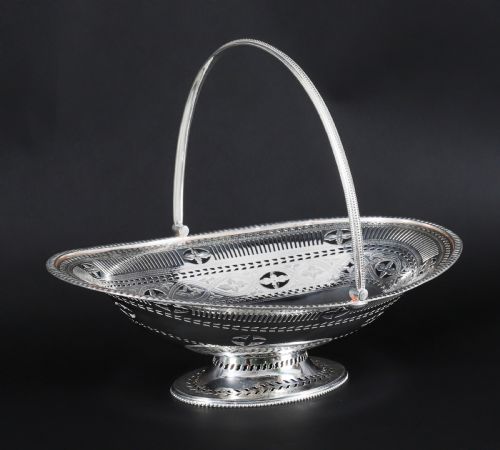
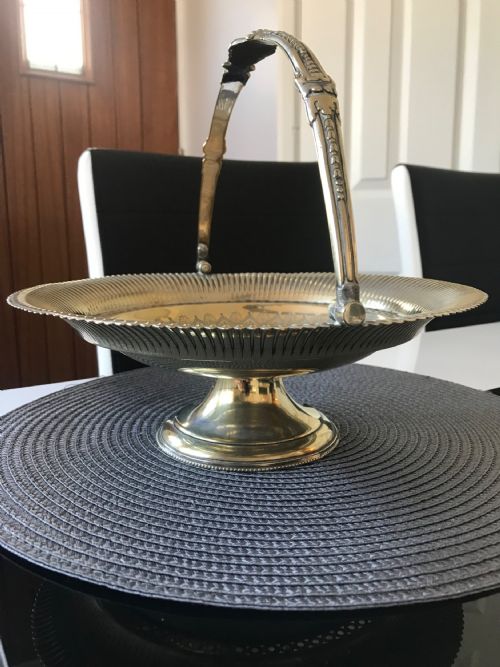
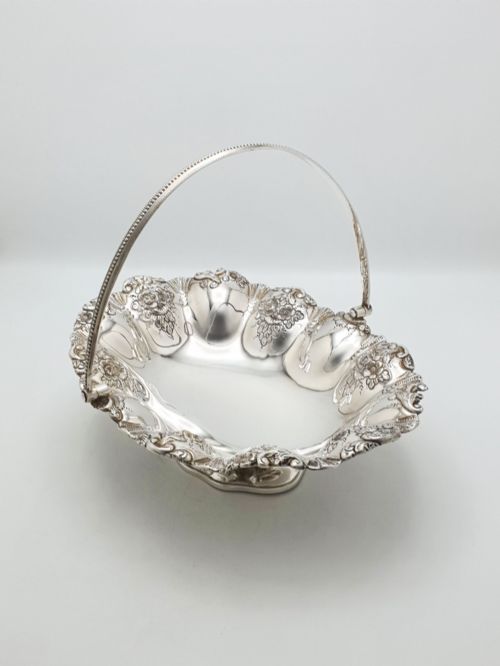
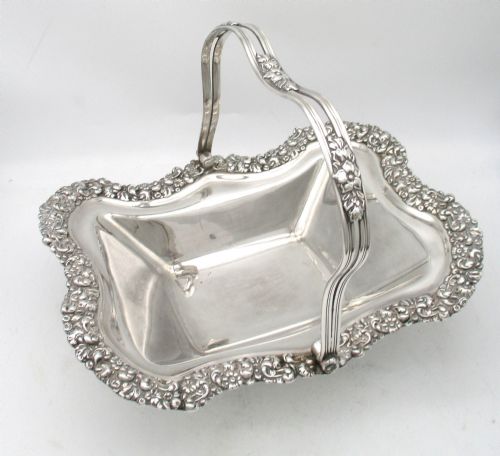
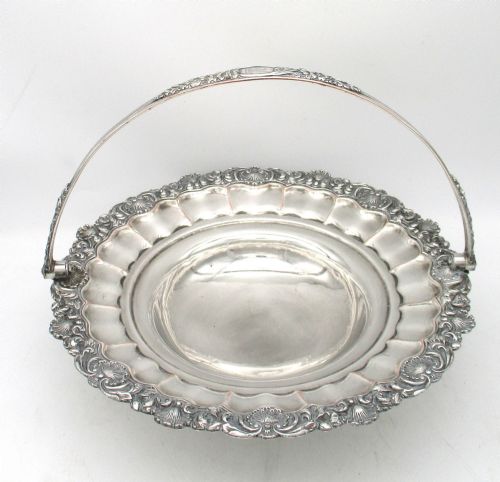
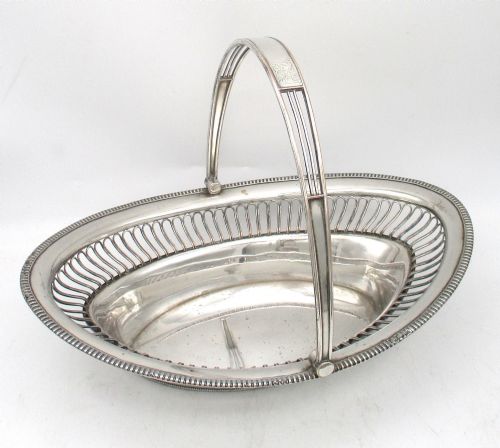
When you search for an antique cake basket, you encounter domestic serveware designed for displaying baked goods, fruit and bread on the table. These vessels typically feature a circular or oval form supported on a foot or small feet, paired with an arched swing handle.
The examples on this page span the Georgian, Victorian and Edwardian periods, stretching from the eighteenth century into the early twentieth century. Sterling silver and various plating methods such as Old Sheffield Plate and silver plate dominate the material record.
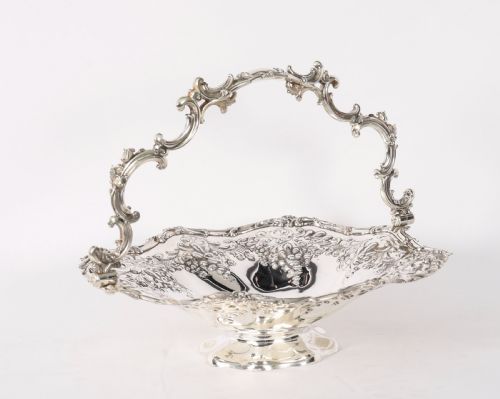
Makers shaped these pieces through piercing, embossing, repoussé and wirework techniques, shifting from neoclassical symmetry to ornate floral motifs and sinuous Art Nouveau lines. Forms range from heavy solid silver centerpieces to lighter plated wirework baskets.
How they were made
Silversmiths constructed solid pieces by hammering sterling silver into sheet form, then cutting, piercing and soldering the components together. Handles were hinged to swing freely on pivot pins fitted into cast mounts.
Makers of Old Sheffield Plate fused a thin layer of sterling silver to a copper core by heat and pressure before rolling it into sheets, often finishing the rims with applied silver wire borders. Later electroplated wares deposited a silver coating onto nickel silver or copper bases through an electrical current.
Decorative detail relied on hand piercing, chasing, and repoussé work, where designs were hammered into relief from the reverse side. Cast decorative elements like feet and swing-handle mounts were soldered onto the main body.
Materials documented across the inventory include sterling silver, silver plate, Old Sheffield Plate, copper, brass, glass, and nickel silver.
What varies in quality
The standard of an antique cake basket rests on the crispness of its metalwork and the weight of the material in the hand. Substantial gauge silver or thick Old Sheffield Plate resists distortion and holds intricate piercing without bending.
Design execution separates standard domestic items from superior studio output. Hand-pierced geometric lattices and deeply chased floral repoussé require precise craftsmanship, whereas stamped or shallow press-work lacks distinct definition.
The integrity of the construction dictates overall excellence, including sturdy hinge mechanisms for swing handles and flush, clean solder joints where feet and mounts join the bowl.
George W. Scott & Sons Ltd·Mappin & Webb·John Hunt·Samuel Herbert·Hammond, Creake & Co·James Deakin & Sons·William Hutton & Sons·James Dixon & Sons Ltd·W M F·John Walton·Roberts & Belk
The Antique Cake Basket Glossary
- Swing handle
- A movable arched handle attached to the sides of a basket by pivots, allowing it to drop flat. This feature enabled easier storage on sideboards and clearer access to the contents.
- Old Sheffield Plate
- An early fusing technique where a sheet of silver is bonded to a copper base before shaping. Edges often reveal a thin line of copper where the silver layer terminates.
- Piercing
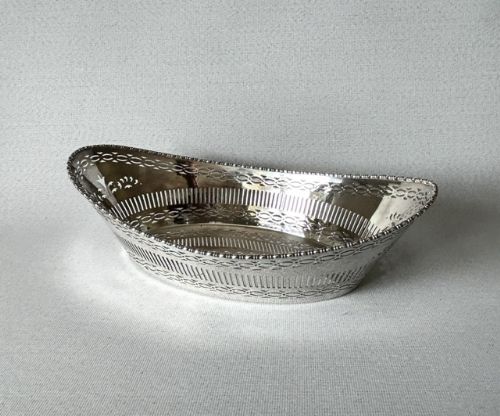
- The practice of cutting decorative patterns out of the metal sheet using a small piercing saw. This technique lightens the vessel and creates intricate geometric or floral lattice designs.
- Repoussé
- A method of metalworking where designs are hammered into relief from the reverse side. It creates rich, tactile surface textures across the rim and body of the vessel.
- Wirework
- Construction built from drawn metal wires soldered together into open frameworks. This method produces lightweight baskets common in eighteenth-century designs.
Antique Cake Basket: Frequently Asked Questions
What were antique cake baskets used for?
These vessels held cakes, sweetmeats, bread and fruit during formal tea services and dining room dessert courses. The elevated design presented baked goods clearly to guests seated around the table.
Over time, the domestic role expanded from purely functional serveware to decorative centrepieces displayed on sideboards when not in active use.
How do I care for a silver cake basket?
Gentle washing in warm soapy water using a soft cloth removes everyday dust and oils. Avoid harsh abrasive cleaners that wear away thin silver plating or old silver surfaces.
Occasional polishing with a dedicated silver cloth maintains the natural lustre without stripping the historical patina built up over generations.
How can I tell Georgian from Edwardian pieces?
Georgian examples often display neoclassical symmetry, delicate piercing and bright-cut engraving, reflecting eighteenth-century design ideals. They are frequently marked by simpler forms and heavier hand-wrought construction.
Edwardian pieces tend to embrace revival styles, heavier floral repoussé or flowing Art Nouveau contours, utilising mass-production techniques alongside traditional hand finishing.
Can I use an antique basket for food today?
Solid silver and well-maintained silver plate remain suitable for serving dry foods like bread, fruit and biscuits. Direct contact with acidic foods should be minimised to protect vulnerable surfaces.
Peculiarities in older plating, such as exposed copper on worn Old Sheffield Plate, mean some owners prefer to use these items exclusively for display.