
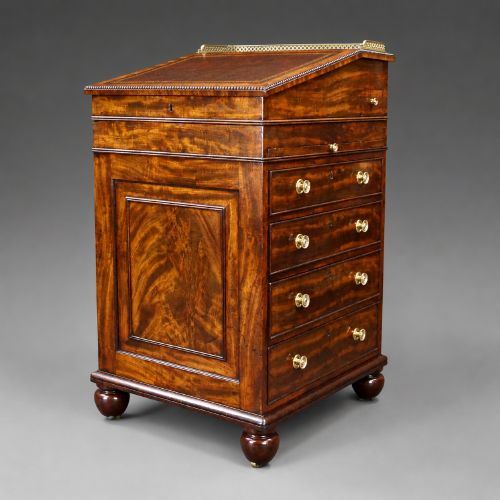
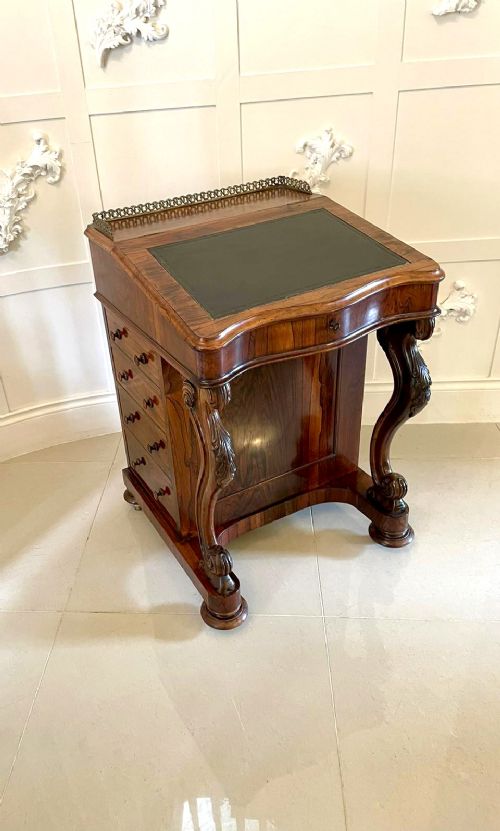
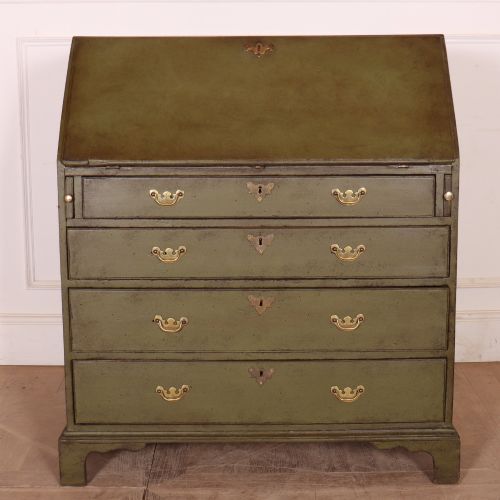
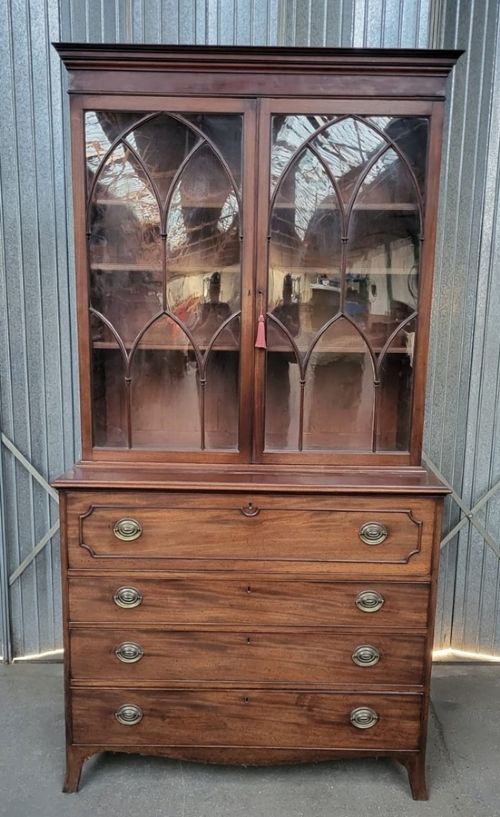
Antique Cabinet with Desk
An antique cabinet with desk combines storage with a fitted writing surface, offering practical workspace alongside fitted shelving or drawers.
Antique Cabinet with Desk
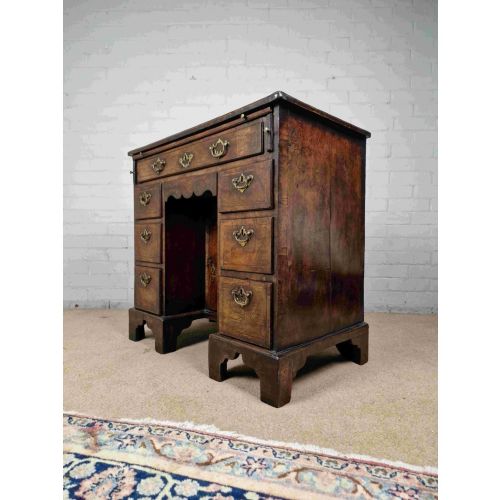
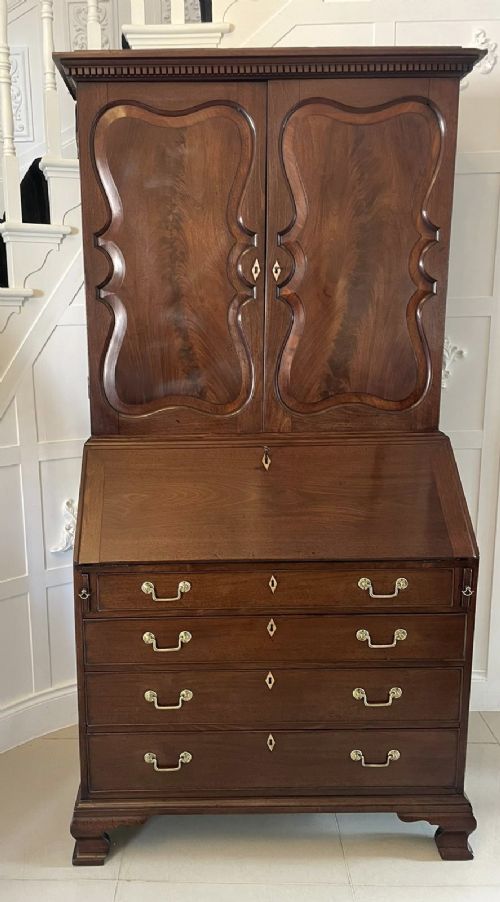
An antique cabinet with desk most commonly appears in the listings as a bureau, bureau bookcase, or secretaire, spanning periods from the 18th century through to the Edwardian era and the 1920s.
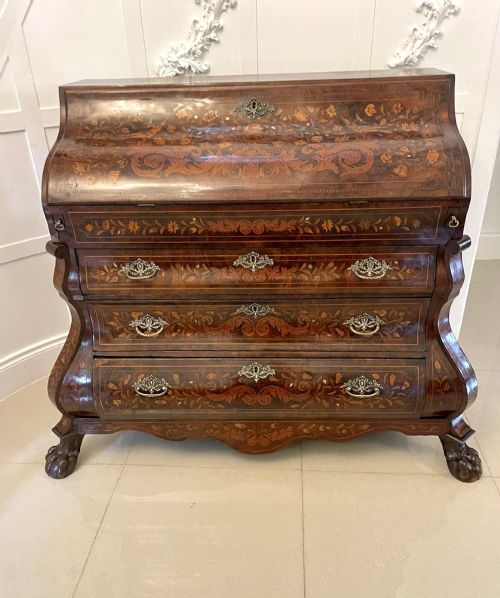
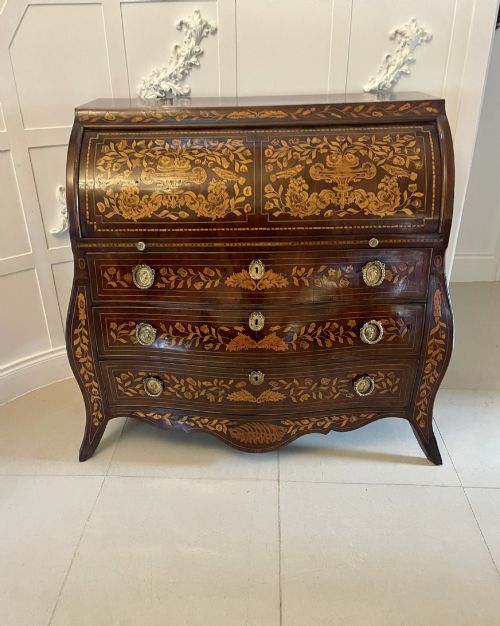
Makers and craftsmen constructed these dual-purpose pieces in various regional styles, ranging from simple oak and mahogany examples to more ornate walnut and rosewood iterations with marquetry or inlaid details.
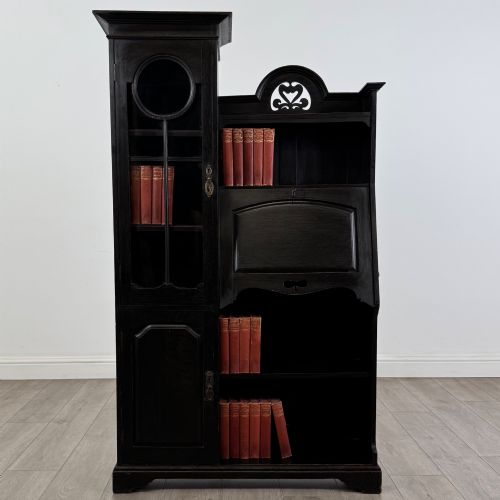
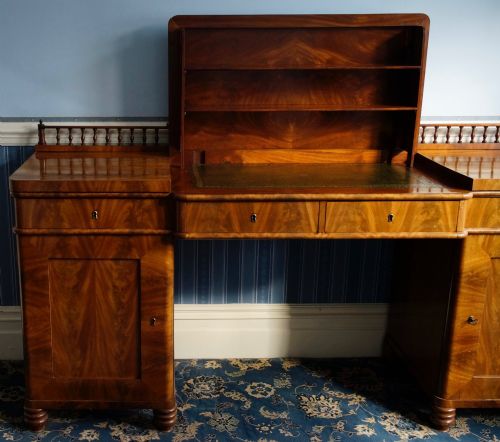
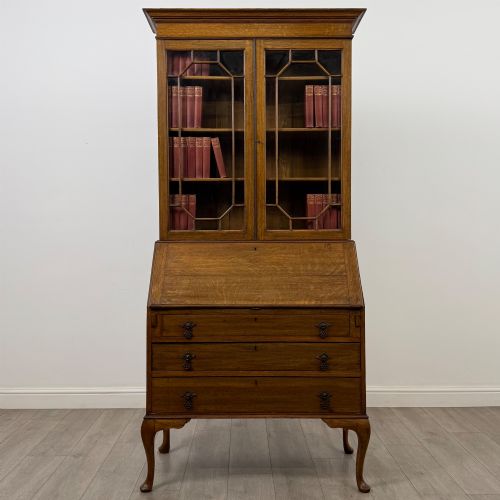
Buyers will encounter tall bureau bookcases with glazed upper doors, compact fall-front desks, and specialised writing cabinets designed for domestic studies and parlours.
Distinctions in Quality
The standard of a piece depends heavily on the selection of timber veneers, such as figured mahogany or burr walnut, and the crispness of any carved or inlaid ornamentation.
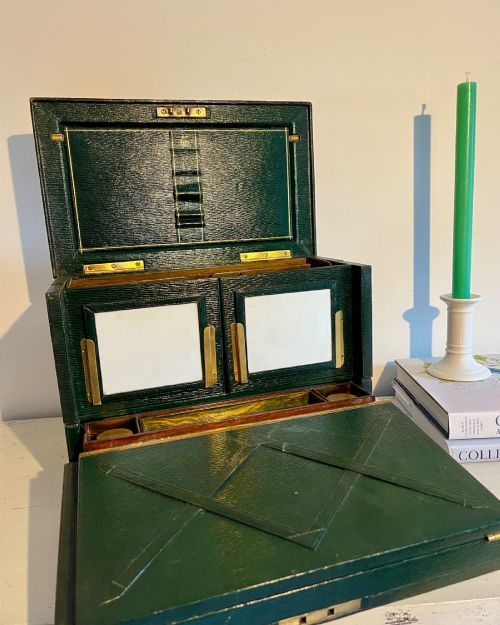
Interior execution distinguishes superior examples, where fitted pigeonholes, secret compartments, and original leather or tooled writing surfaces demonstrate thoughtful craftsmanship.
Some Edwardian writing desks managed to sneak built-in calendar mechanisms and piano-top cylinder actions into the parlour.
Gillows·Tudor and Burrey Shrewsbury
The Antique Cabinet with Desk Glossary
- Bureau
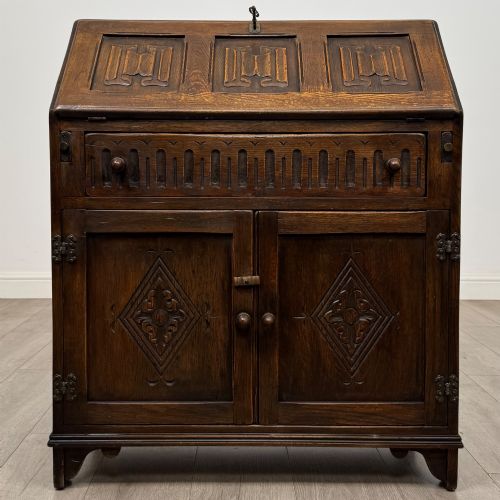
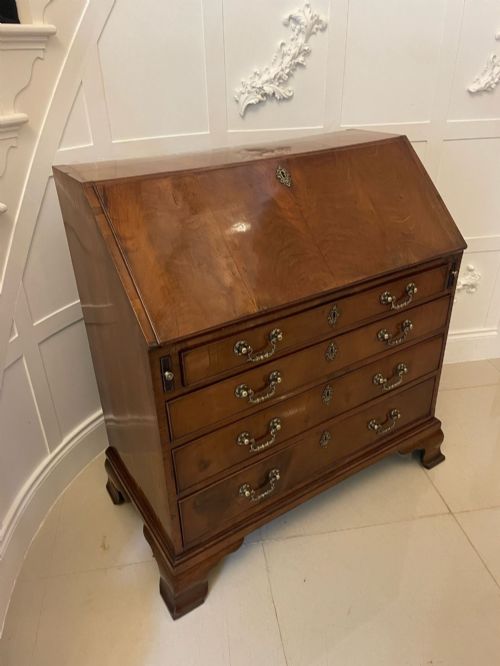
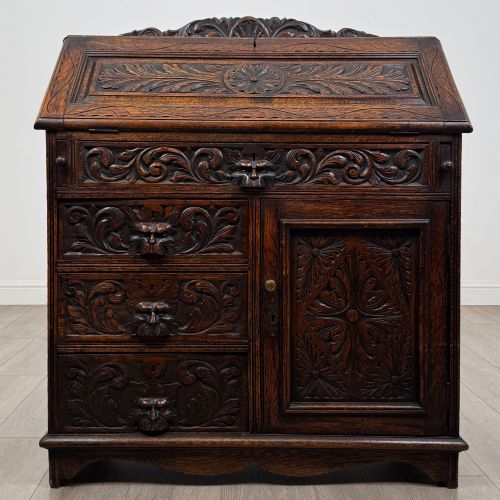
- A desk featuring a sloping hinged lid or fall-front that opens to reveal a fitted interior of small drawers and pigeonholes.
- Secretaire
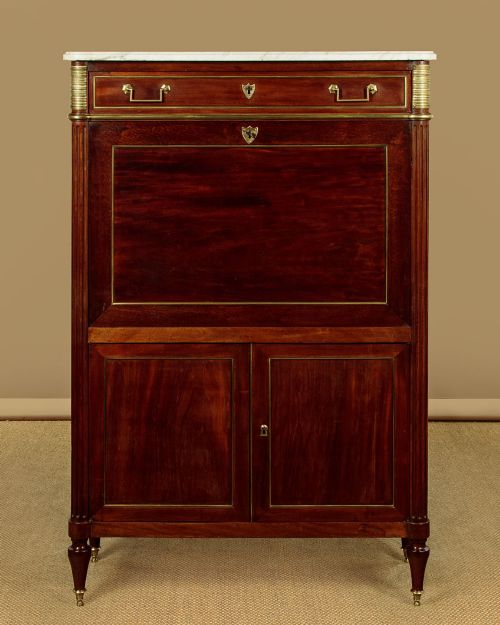
- A piece of furniture containing a drawer or compartment that pulls down or folds out to serve as a writing desk.
- Bureau bookcase
- A dual-function cabinet comprising a lower desk section combined with an upper shelving unit enclosed by doors.
- Fall-front
- A hinged writing flap that drops into a horizontal position to provide a surface for writing.
- Ormolu
- Gilded bronze ornamentation applied to decorative furniture, common on Continental pieces.
Antique Cabinet with Desk: Frequently Asked Questions
What is an antique cabinet with desk?
It is a hybrid furniture form that integrates enclosed shelving or storage with a dedicated writing surface, such as a drop-front bureau or a pull-out secretaire drawer.
These pieces served as functional workstations for correspondence and record-keeping while maintaining the tidy appearance of a cabinet when closed.
How do I date an antique bureau?
Dating relies on observing construction characteristics, timber choices, and hardware styles associated with periods like the Georgian, Victorian, or Edwardian eras.
Earlier 18th-century examples often feature solid oak or walnut construction with stepped internal compartments, whereas later pieces incorporate machine-sawn elements and different veneer techniques.
Where should I place a bureau bookcase?
These tall combination pieces require adequate wall space and clearance for doors to open fully without obstruction in a study, library, or living room.
Because they combine storage and workspace, they function well in rooms where vertical storage is necessary alongside a surface for occasional writing.
What woods were used for these desks?
Cabinetmakers primarily worked with native and imported hardwoods, selecting oak and mahogany for robust construction during the Georgian and Victorian periods.
Finer decorative variations utilised walnut, burr walnut, rosewood, and satinwood, often enhanced with contrasting stringing or marquetry inlay.