




Antique Butler Platter
An antique butler platter delivers grand scale and solid construction to drinks service, bringing period weight to a modern room.
Antique Butler Platter
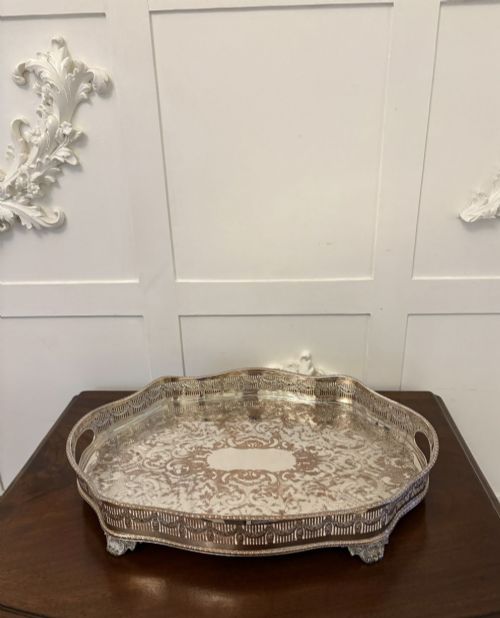
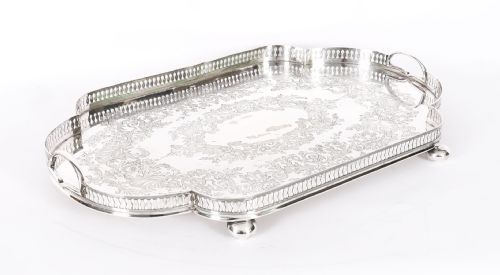
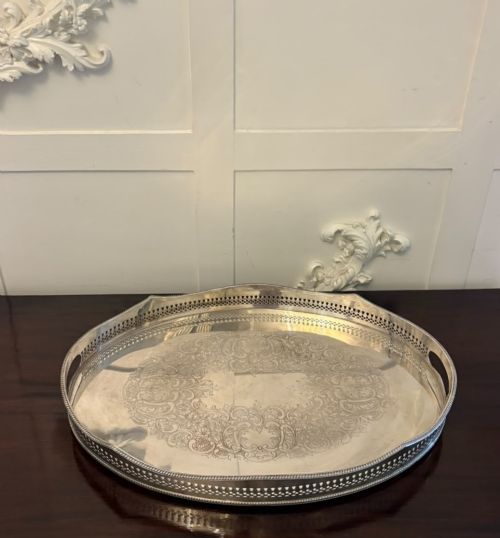
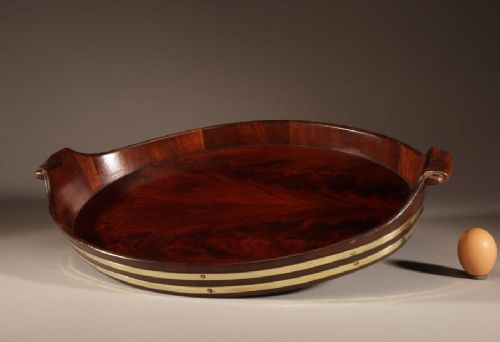
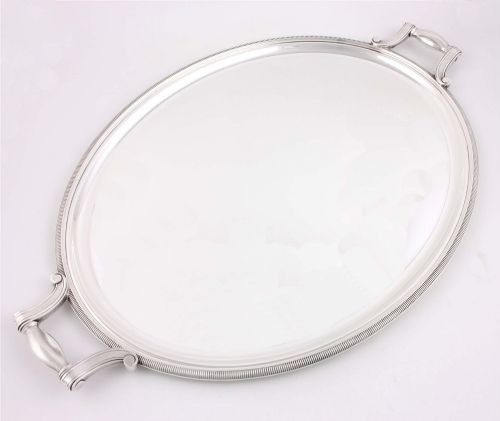
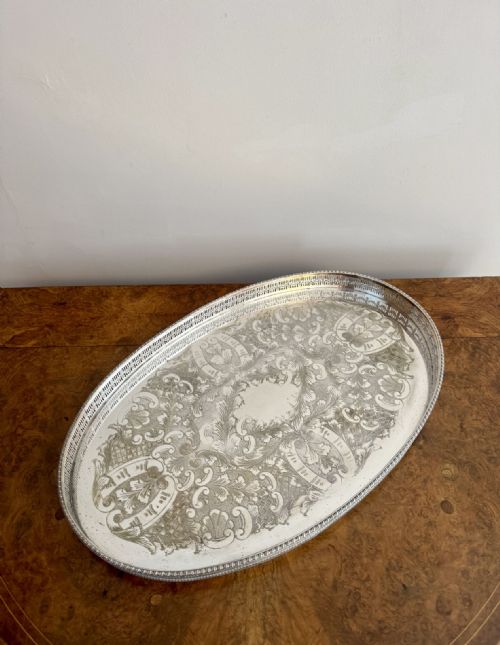
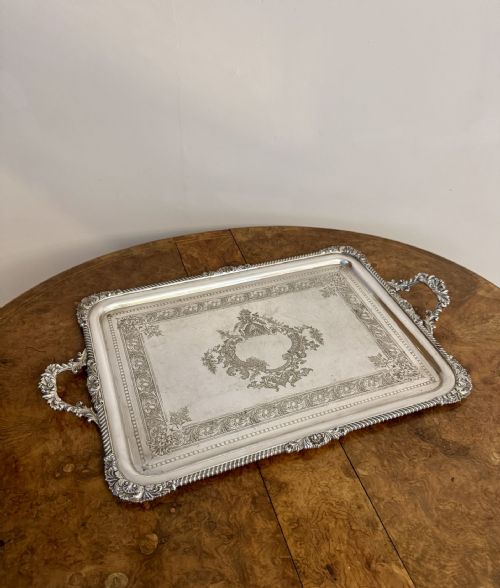
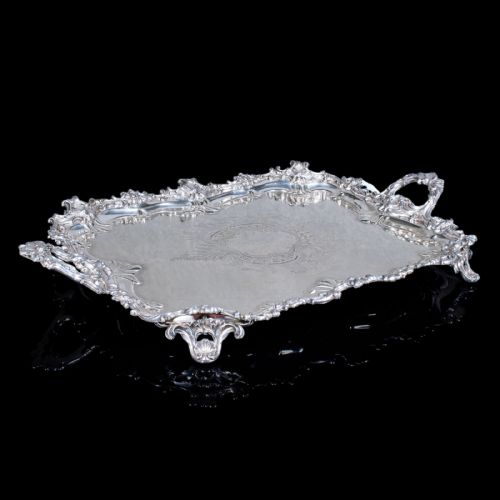
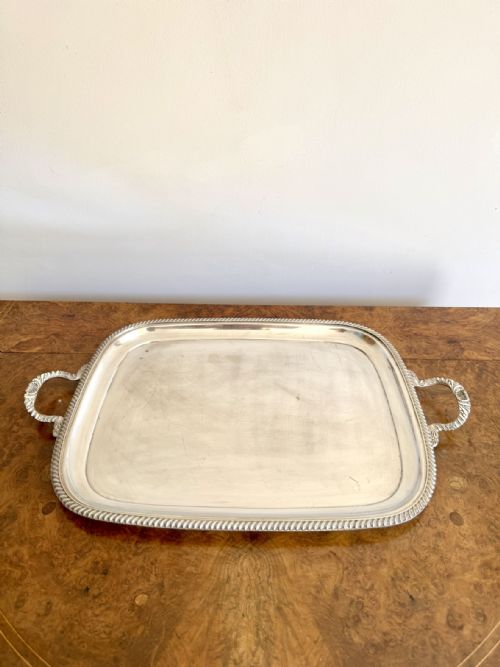
When you search for an antique butler platter, you are looking at substantial serving pieces designed for carrying tea, coffee, or cocktails across large formal rooms. The pieces available here span Georgian, Victorian, and Edwardian periods, crossing both timber construction and heavy silver plate.
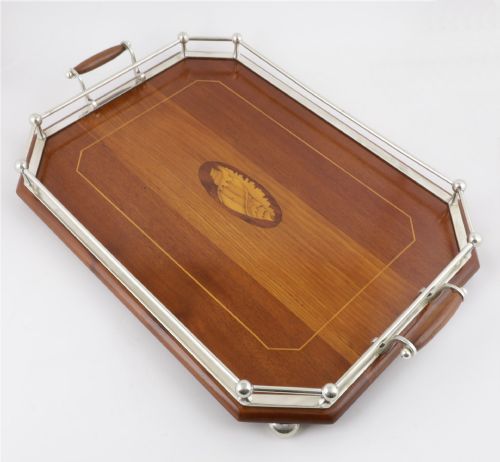
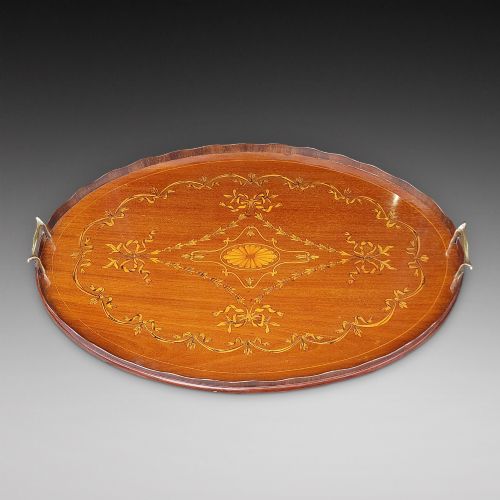
You will most commonly meet Edwardian silver-plated trays alongside mahogany examples featuring raised galleries and inlaid details. These items range from simple afternoon tea platters to large presentation pieces equipped with handles and decorative engraving.
Originating in grand British houses, these platters served practical domestic roles before finding favour as decorative table centrepieces or cocktail trays. Their enduring appeal lies in the combination of robust timber frames and gleaming metal surfaces.
How they were made
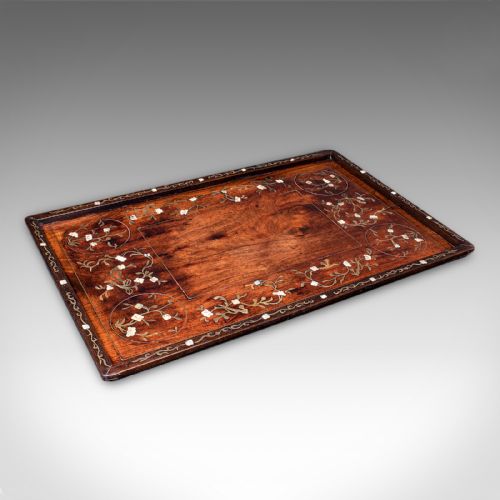
Makers built timber versions using solid mahogany, satinwood, and teak, frequently employing coopered construction or oyster veneering for stability and visual texture. Cabinetmakers added brass handles, gallery rails, and intricate marquetry or shell inlay to enrich the wooden surfaces.
Metal platters relied on silver plate, electroplated nickel silver, or solid sterling silver shaped into large oval or octagonal forms. Artisans applied hand-engraved scrolls, embossed borders, and applied handles to finished silver and copper bases.
Listings for an antique butler platter span the Georgian, Victorian, and Edwardian eras, uniting silver plate and mahogany forms.
What varies in quality
The distinction between standard domestic wares and top-tier pieces rests on the weight of the silver plating and the precision of the timber joinery. Superior items display crisp hand-engraving, substantial metal thickness, and tight marquetry without gaps in the inlay.
Makers mark quality through the presence of recognised silversmith stamps and the selection of figured timbers such as burl or satinwood. Lesser examples show thinner plating that reveals the base metal, simpler stamped decoration, and plain timber boards.
James Deakin·Mappin & Webb·Harrison Bros·Christofle·Elkington & Co·Hukin & Heath·J B Chatterley & Sons
The Antique Butler Platter Glossary
- Gallery tray
- A serving tray fitted with a raised pierced metal or wooden border around the edge. This rail prevents decanters and glasses from sliding off during transport.
- Silver plate
- A layer of silver fused to a base metal such as copper or nickel silver. This technique provided the appearance of solid silver at a lower cost.
- Marquetry
- Decorative veneer patterns assembled from thin slices of wood applied to a carcase. Craftsmen used contrasting timbers to create floral or geometric pictures.
- Coopered
- Timber construction formed from vertical staves joined tightly together, similar to barrel making. This method gave curved wooden trays structural strength.
- EPNS
- Electroplated nickel silver. A common base metal composition for late nineteenth and twentieth century trays.
- Salver
- A flat metal serving plate, usually footed. These pieces typically handled smaller drink service than a large butler platter.
Antique Butler Platter: Frequently Asked Questions
How do I clean an antique silver plated tray?
Use a soft cloth and a gentle silver cream formulated specifically for plated items to preserve the remaining silver layer. Avoid abrasive cleaners that strip the plating.
Wash wooden trays simply with a damp cloth and dry them immediately to protect the polish and any delicate inlay work.
Can I use these trays for serving drinks today?
Most antique butler platter examples remain structurally robust enough for daily use in serving cocktails, tea, or coffee. Their solid construction handles the weight of heavy crystal decanters with ease.
Protect delicate polished surfaces from standing moisture by using coasters or linen runners during regular service.
How do I tell a Georgian tray from an Edwardian one?
Georgian trays lean towards restrained mahogany construction with understated oval shapes and subtle brass handles. They rely on the grain of the wood rather than heavy applied ornament.
Edwardian pieces often feature brighter silver plating, elaborate machine or hand engraving, and more eclectic revival styles reflecting earlier design periods.
What is the difference between a tray and a platter?
Trays generally feature raised edges, galleries, or handles specifically designed for carrying multiple items across a room. They prioritize secure transport over flat presentation.
Platters tend to be flatter serving surfaces historically used for food presentation, though the terms overlap frequently in antique listings.