


Inlaid Wooden Tea Tray
An inlaid wooden tea tray brings tactile warmth to a room, offering a functional surface shaped by Georgian, Victorian and Edwardian makers.
Inlaid Wooden Tea Tray
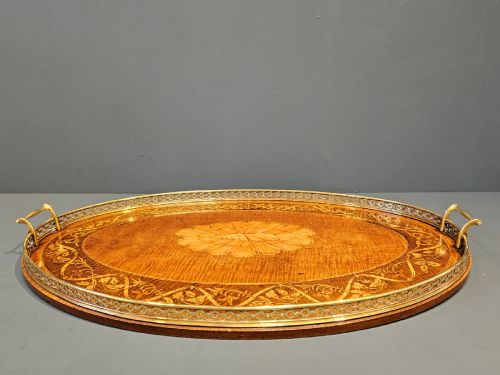
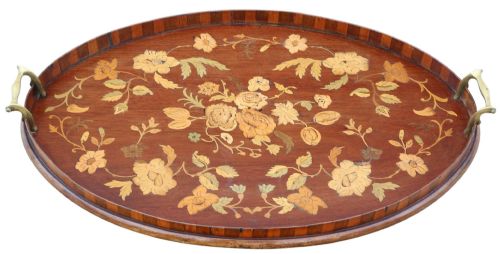
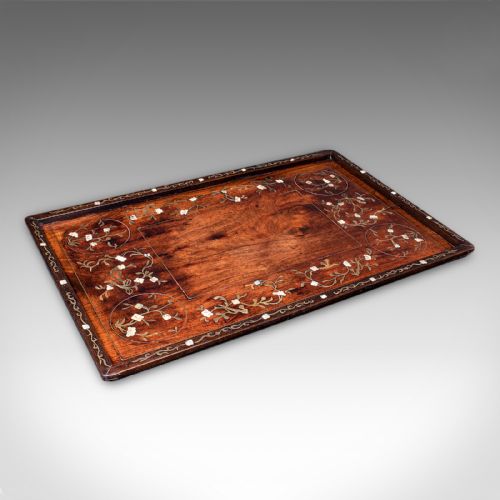
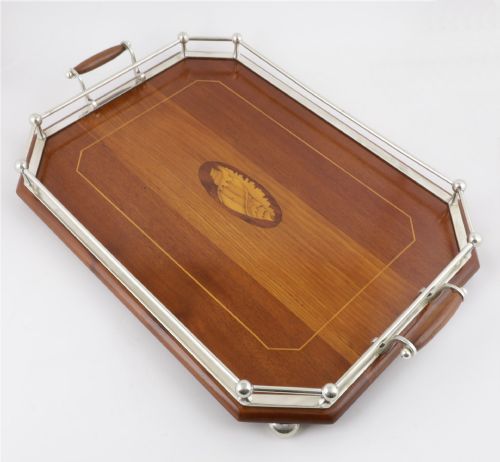
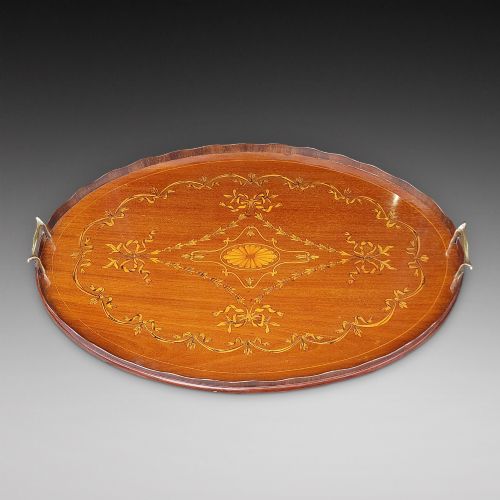
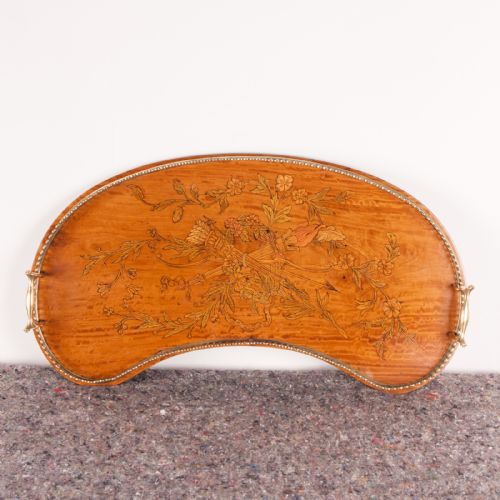
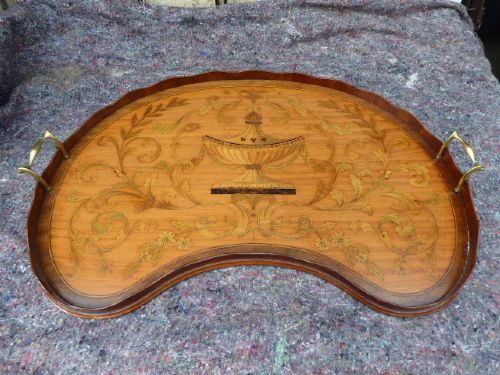
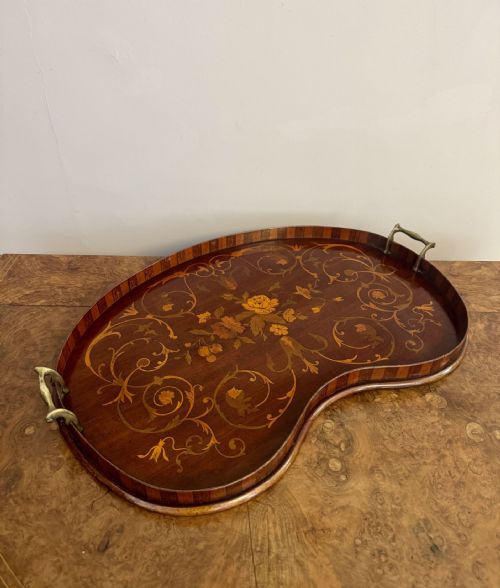
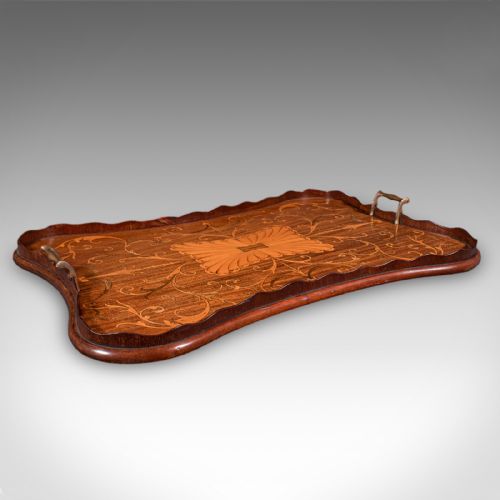
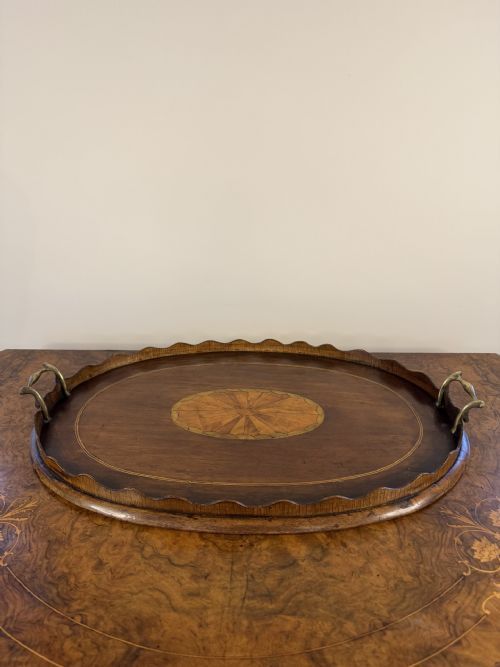
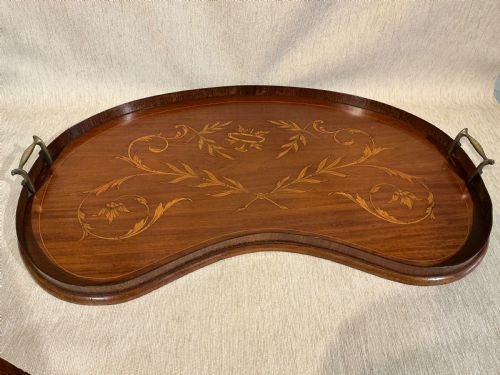
An inlaid wooden tea tray is a portable serving surface decorated with contrasting timbers, shells or metal details. When you search for an inlaid wooden tea tray, you meet oval, kidney-shaped and rectangular forms designed for afternoon hospitality or display.
The pieces on this page span the Georgian, Victorian and Edwardian eras, running from late eighteenth-century circular wine trays to crisp Edwardian satinwood designs. Many examples feature integral handles, raised rims or brass galleries to keep vessels secure during transport.
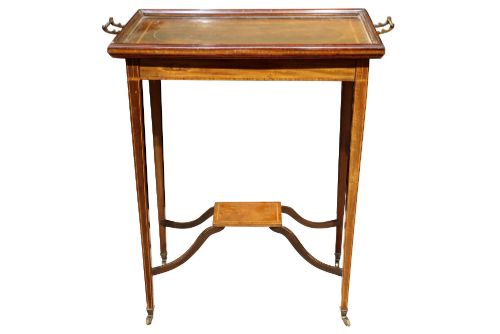
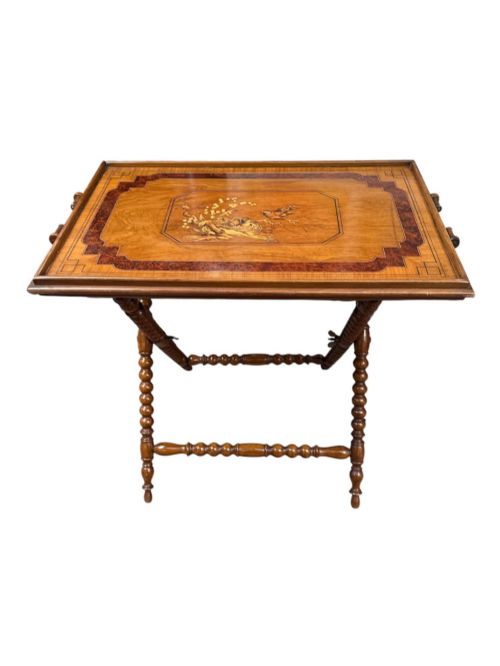
Alongside standard serving platters, the selection includes occasional tables and butler's trays mounted on folding or fixed stands. These convertible formats show how hosting furniture adapted over the nineteenth and early twentieth centuries.
Materials and construction
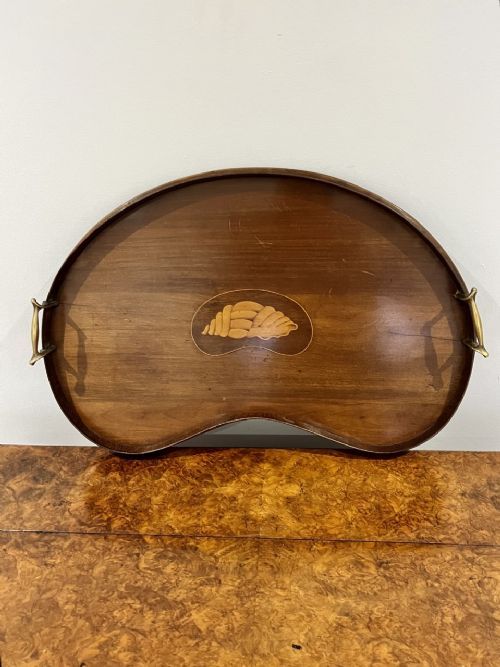
Cabinetmakers built these trays using solid and veneered timbers including mahogany, satinwood, walnut, burr yew and teak. Artisans cut contrasting woods such as boxwood to create geometric stringing, floral medallions and neoclassical shell motifs.
Marquetry inlay forms pictorial or patterned veneers assembled on a paper backing before being pressed into the primary wood base. Sorrento ware examples utilise specialised micro-mosaic wood techniques to cover entire surfaces with intricate Italian townscapes or geometric tessellations.
Many trays incorporate brass handles, corner brackets or openwork galleries screwed directly to the wooden body. Silver plating occasionally appears on gallery borders, adding structural rigidity and a reflective contrast to the dark or honey-toned timber.
Listings feature mahogany, satinwood and walnut trays spanning the Georgian, Victorian and Edwardian periods.
Distinctions in quality
Quality rests in the crispness of the cabinetwork and the precision of the timber junctions where inlay meets the ground wood. Superior pieces maintain tight, seamless joints without visible gaps or excessive filler around delicate boxwood stringing.
The choice of primary timber and veneer heavily influences the character of a piece, with figured satinwood, burr yew and rich old mahogany marking out the more ambitious commissions. Finer trays display balanced, hand-cut marquetry rather than stamped or stenciled decoration.
Structural integrity in the handles and gallery mounts separates utilitarian domestic items from high-end drawing-room pieces. Well-made trays feel balanced in the hand, with secure joints that resist flexing when carrying heavy silver or porcelain.
Edwards and Roberts
The Inlaid Wooden Tea Tray Glossary
- Marquetry Inlay
- The art of creating decorative patterns by fitting together thin veneers of different coloured woods, shells or ivory. This technique allows for complex pictorial scenes and repeating geometric borders across the tray surface.
- Satinwood
- A lustrous, hard timber native to Ceylon and the West Indies, prized for its golden-yellow colour and shimmering grain. It served as a favoured background veneer for high-status Edwardian and late Georgian serving pieces.
- Brass Gallery
- A perforated or wirework metal railing fitted around the perimeter of a tray to prevent items from sliding off. These galleries are often cast or pierced with intricate decorative motifs.
- Kidney-Shaped
- A curved, concave form popular for drawing-room tea trays during the Edwardian period. This ergonomic shape allowed the server to hold the tray closer to the body.
- Butler's Tray
- A heavy-duty serving tray, often with hinged sides, designed to rest upon a folding wooden stand. They function equally well as portable serving implements or permanent low tables.
Inlaid Wooden Tea Tray: Frequently Asked Questions
How were tea trays used?
These trays served to transport teapots, cups and saucers from the kitchen to the parlour or drawing room. Servants and hosts utilised them during afternoon tea rituals to protect delicate table surfaces from hot vessels and spilled liquids.
Over time, many of these portable servers transitioned into permanent domestic furniture. Placed upon folding stands or low bases, they found a second life as occasional tables, coffee tables and lamp stands in sitting rooms.
How do I date an inlaid tray?
Examine the primary wood choice, handle style and the nature of the inlay work to determine the period. Georgian trays often favour simple mahogany with subtle stringing, while Edwardian examples frequently showcase bright satinwood, elaborate marquetry and kidney-shaped profiles.
Construction marks underneath, such as hand-cut dovetails or old screw types, offer further clues to age. Trays mounted on stands frequently incorporate later adaptations, merging older serving tops with twentieth-century bases.
What is Sorrento ware?
Sorrento ware refers to decorative wooden items produced in the Italian town of Sorrento during the nineteenth century. These pieces feature meticulous micro-mosaic marquetry depicting architectural landmarks, floral sprays or complex geometric bands.
Craftsmen applied these tiny wood veneers to butler's trays and occasional tables destined for the European export market. The resulting items offer a distinct, highly pictorial contrast to standard English cabinetmaking traditions.