




Edwardian Inlaid Drinks Tray
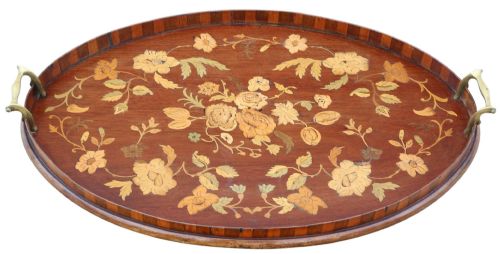
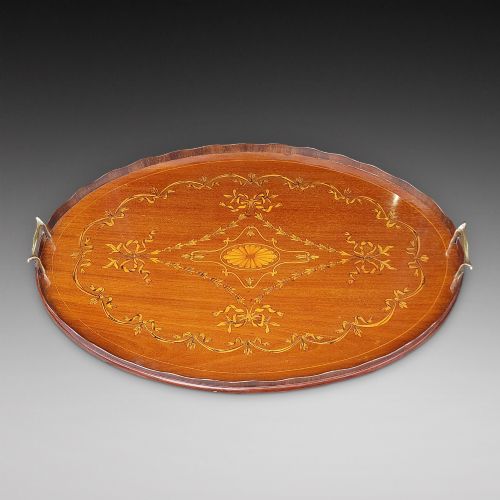
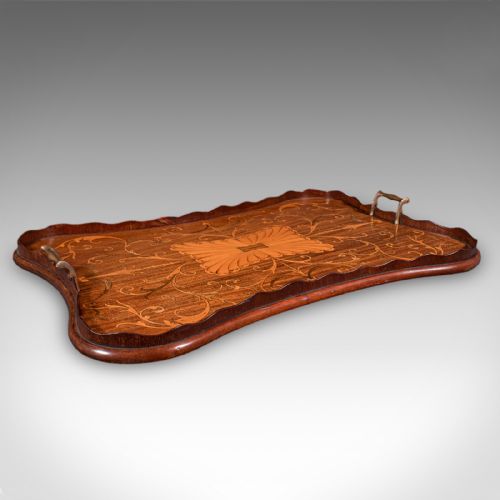
An Edwardian inlaid drinks tray brings effortless hospitality to a room, offering smooth timber surfaces and delicate marquetry.
Edwardian Inlaid Drinks Tray
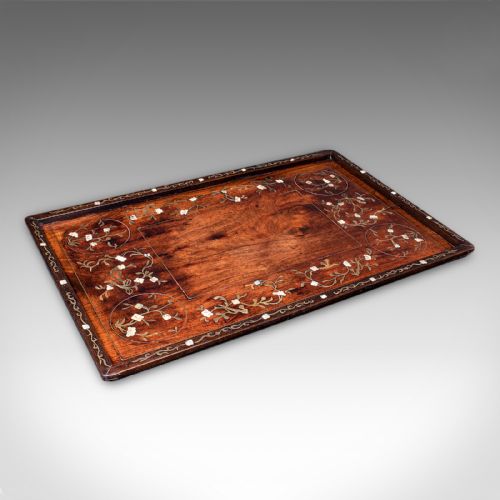
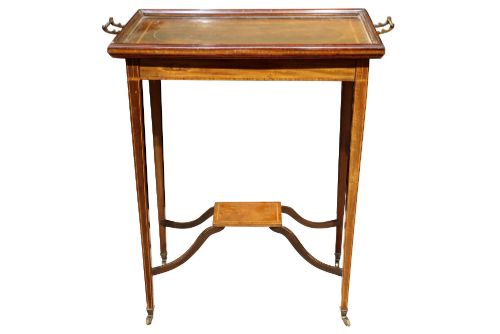
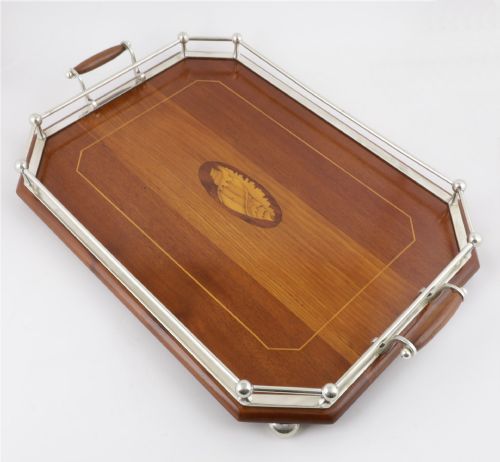
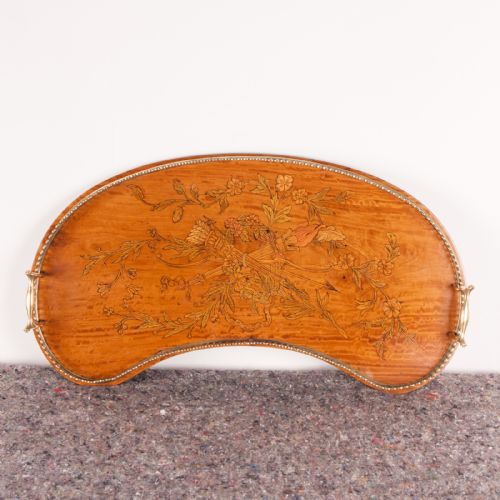
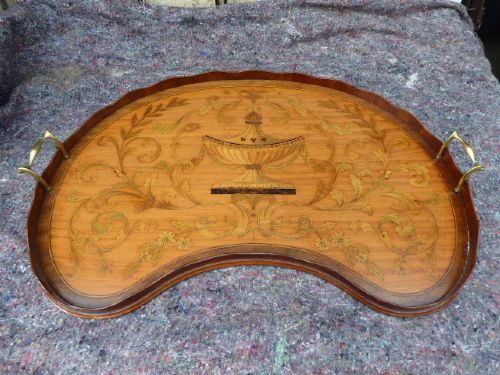
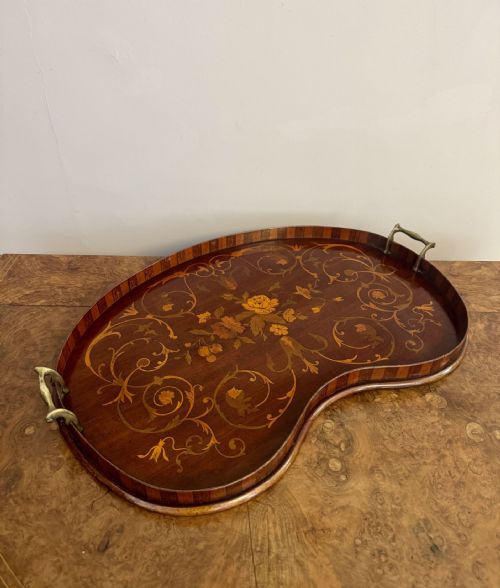
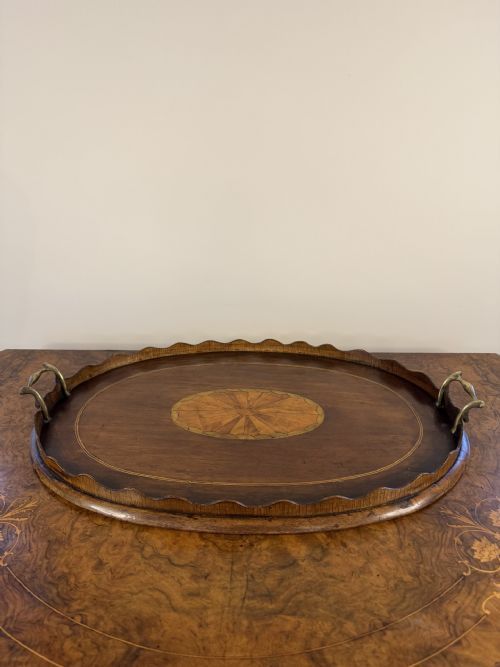
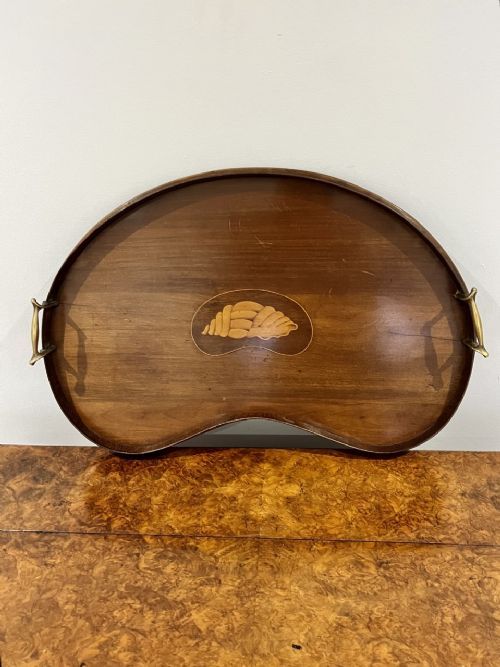
The materials span native and exotic timbers, most notably mahogany and satinwood, frequently enhanced with boxwood stringing and shell or floral marquetry. Variations include brass galleries and silver-plated mounts, alongside occasional Anglo-Indian teak constructions. While some pieces are standalone servingplatters, others form part of two-tier etageres or feature detachable glass tops.
Materials and Technique
Cabinetmakers utilised solid mahogany or satinwood as a foundation, applying contrasting veneers and marquetry details such as boxwood and bone to create intricate patterns. The technique of inlaying demanded precision, fitting thin slivers of pale wood into routed channels within the darker primary timber.
Metal elements such as brass galleries and silver-plated mounts were securely fastened to contain glassware during service. Handles were integrated into the wooden rim or formed by the metal gallery itself, ensuring structural integrity for carrying heavy decanters.
Miniature oval trays exist alongside full-sized butler pieces, proving that Victorians enjoyed miniature afternoon tea just as much.
Judging the Standard
The fineness of the marquetry and the crispness of the timber contrast separate the ordinary from the exceptional. Superior examples display tightly fitted inlay without visible gaps, utilising decorative woods like burr yew or rosewood alongside satinwood.
Structural stability and the preservation of the original polished surface dictate desirability. Trays that retain their original handles, mounts, and unblemished wood grain demonstrate superior craftsmanship from the workshop.
Edwards and Roberts
The Edwardian Inlaid Drinks Tray Glossary
- Marquetry
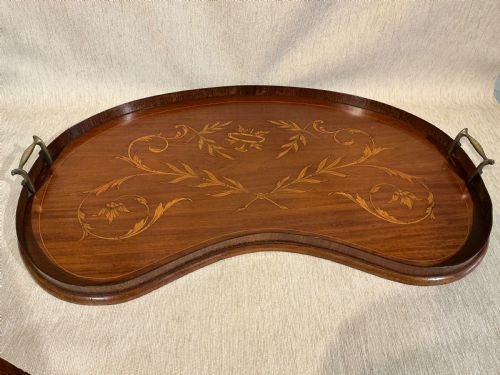
- Decorative veneer work forming pictures or patterns by assembling small pieces of different woods, shell or bone. This technique defines the visual appeal of many Edwardian serving pieces.
- Gallery
- A raised pierced metal or wooden rim surrounding the edge of a tray to prevent items from sliding off during transit. Brass and silver-plated versions are common.
- Etagere
- A set of open shelves or tiers used for displaying small objects or serving tea. Several listings combine this form with a removable tray top.
- Stringing
- A narrow strip of contrasting timber inlaid into the surface in straight or gently curving lines. It forms geometric borders around the central design.
- Kidney shape
- An asymmetrical curved outline resembling a kidney, popular in Edwardian writing desks and serving trays. It allows the user to stand closer to the centre.
Edwardian Inlaid Drinks Tray: Frequently Asked Questions
How were drinks trays used?
These trays served afternoon tea, afternoon tea slides, or evening spirits, moving easily from the pantry to the drawing room. They provided a stable surface for glassware and teaware.
Many featured integrated handles or raised galleries to secure decanters and cups while being carried by staff or family members.
Are these trays sturdy enough for daily use?
Most Edwardian trays remain robust, though their decorative surfaces require thoughtful care to prevent scratching. Using coasters helps preserve the polished mahogany or satinwood.
For heavier service, ensure the handles and base show no structural looseness before carrying liquids across the room.
How do I distinguish Edwardian from Victorian pieces?
Edwardian trays often display lighter satinwood veneers, delicate neoclassical revival motifs, and kidney-shaped outlines. Victorian examples tend to lean towards darker solid mahogany with heavier proportions.
However, style transitions overlapped considerably around nineteen hundred, meaning construction methods offer the most reliable guide to age.
Can these trays be used as side tables?
Numerous trays sit upon dedicated folding stands or fixed wooden bases to function as occasional tables and etageres. Some designs feature detachable glass tops specifically for this dual purpose.
This conversion allows the serving surface to double as permanent furniture in a living room or study.