


Antique Buffet Server Stand
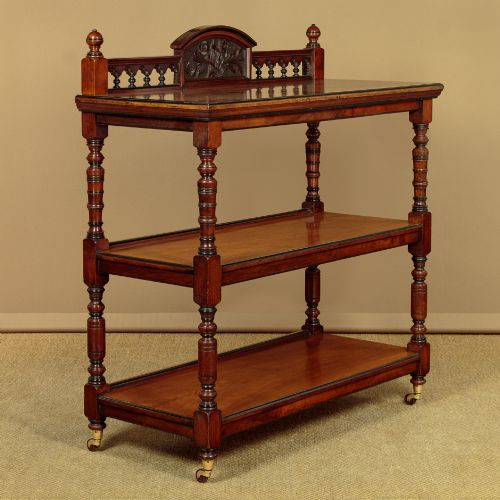
An antique buffet server stand brings tiered timber presence to dining rooms, offering practical tiered tiers for service and display.
Antique Buffet Server Stand
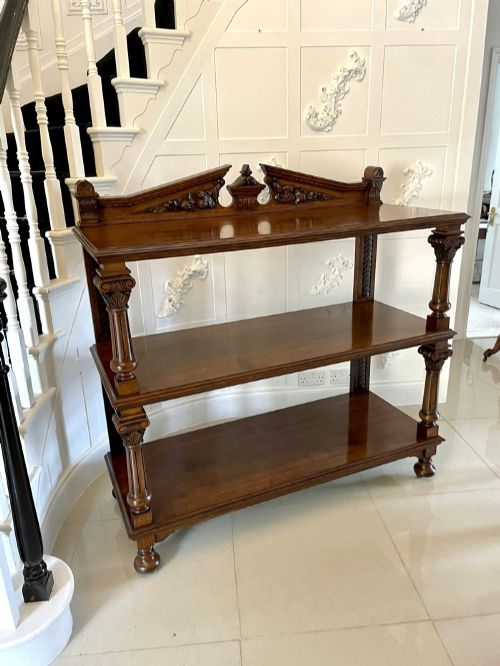
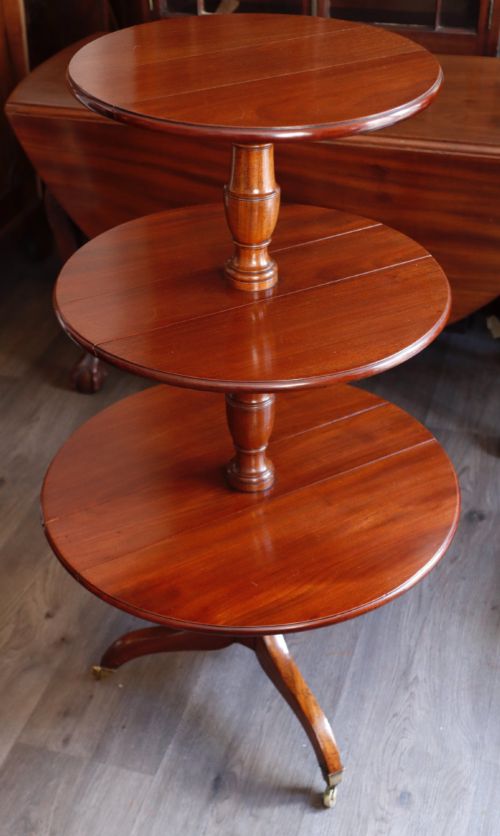
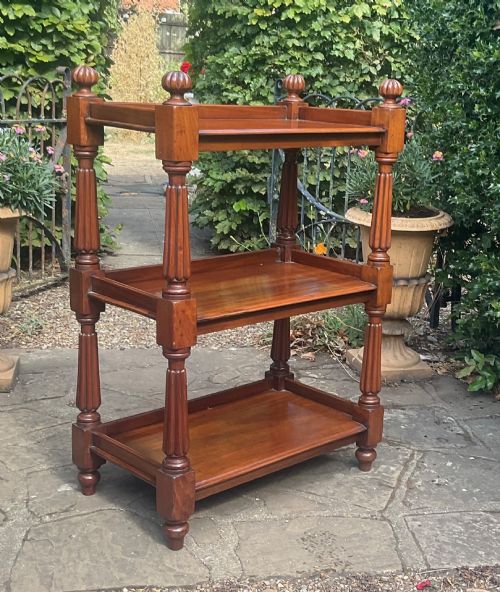
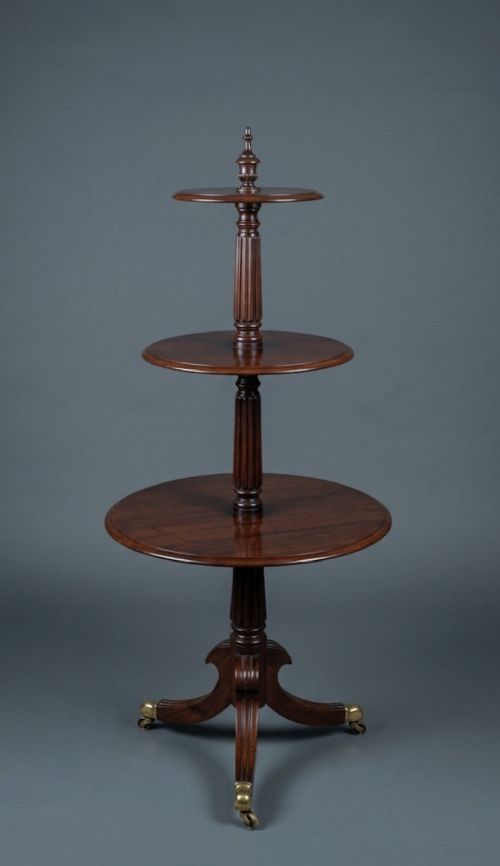
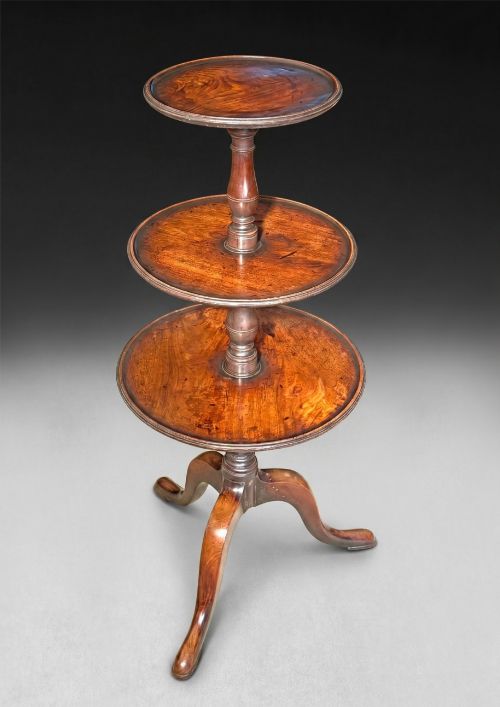
An antique buffet server stand encompasses multifunctional serving furniture such as dumbwaiters, etageres, and side tables designed for dining rooms and parlours. These pieces appear across Georgian, Regency, and Victorian periods, often taking the form of multi-tiered circular stands with revolving shelves or drop-leaves.
The buyer meets many mahogany examples from the eighteenth and nineteenth centuries, alongside walnut, oak, pollard oak, and padauk wood variants. Forms range from tripod-based dumbwaiters to slim three-tier etageres and cabinets on stands.
Materials and Construction
Joinery relies heavily on solid mahogany and oak, often shaped into circular tiers, turned columns, and tripod bases with brass castors. Cabinetmakers utilised figured timbers like pollard oak and walnut, incorporating drop-leaf mechanisms and folding shelves into functional service stands.
Carving appears on oak and padauk wood pieces, reflecting Flemish Renaissance Revival or Aesthetic Movement influences, while secondary elements utilise brass hardware and occasionally silver plate.
Several stands feature folding drop-leaves designed to tuck neatly away when the dining room needed to transform into a ballroom.
Assessing Merit
Quality rests upon the selection of timber, such as richly grained mahogany or pollard oak, and the crispness of turned columns and carved details. The mechanical ingenuity of revolving tiers, adjustable heights, and folding drop-leaves distinguishes finer examples from simpler utility stands.
Proportion and stability define the construction integrity, where slender tripod legs support multiple heavy tiers without wobble, maintaining balance during domestic service.
Gillows·Mappin and Webb·Maple and Co
The Antique Buffet Server Stand Glossary
- Dumbwaiter
- A multi-tiered freestanding piece of dining room furniture used to hold food, plates, or glassware without requiring a servant present.
- Etagere
- A set of open shelves for displaying small objects or serving items, built in slim tiered configurations.
- Tripod base
- A three-legged support structure commonly found beneath the central column of circular dumbwaiters.
- Drop-leaf
- A hinged table leaf that can be folded down to save space or raised to expand the surface area.
- Pollard oak
- Oak timber taken from pollarded trees, prized by cabinetmakers for its dense, clustered knot formation and decorative grain.
Antique Buffet Server Stand: Frequently Asked Questions
What is an antique buffet server stand?
It is a tiered wooden stand, often taking the form of a dumbwaiter or etagere, used historically for serving meals and displaying dining accessories.
These pieces combine functional revolving or fixed shelves with cabinetmaking styles spanning the Georgian, Regency, and Victorian eras.
How were dumbwaiters used in dining rooms?
Dining rooms utilised these stands to hold extra plates, bottles, and dishes close to the table, reducing the need for servants during private meals.
Guests could easily reach for items placed on the revolving tiers without interrupting conversation.
How do I distinguish Georgian from Victorian stands?
Georgian pieces generally show restraint in design with clean mahogany lines, tripod bases, and subtle turning, dating from the eighteenth to early nineteenth century.
Victorian examples often introduce heavier carved ornamentation, walnut or pollard oak timbers, and mechanical adjustability reflecting later industrial capabilities.
How do I care for mahogany tiered stands?
Maintenance involves dusting with a soft cloth and occasionally applying natural beeswax to nourish the timber without building up a heavy residue.
Keeping them away from direct sunlight and radiators prevents the wood from drying out and protects the polished surface.