

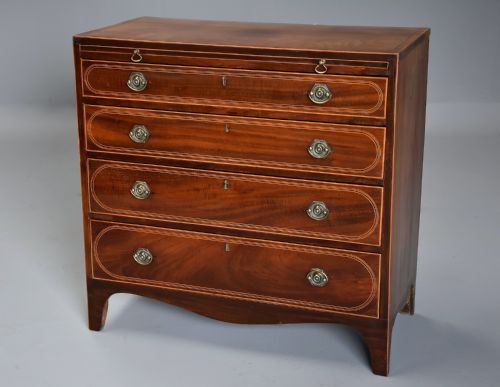
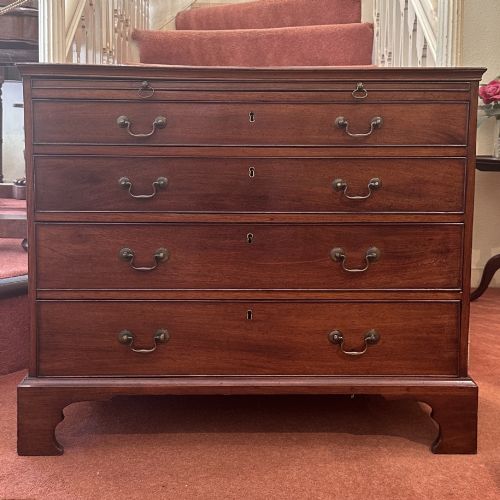
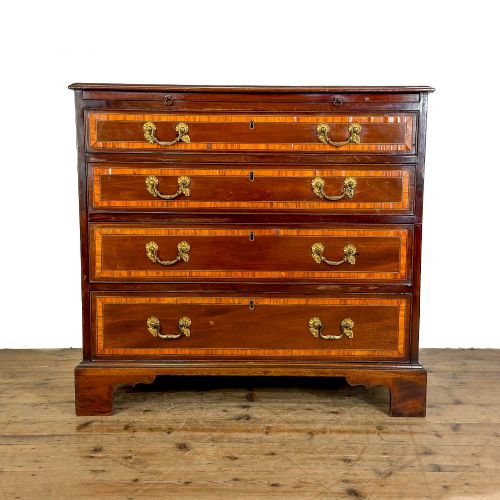

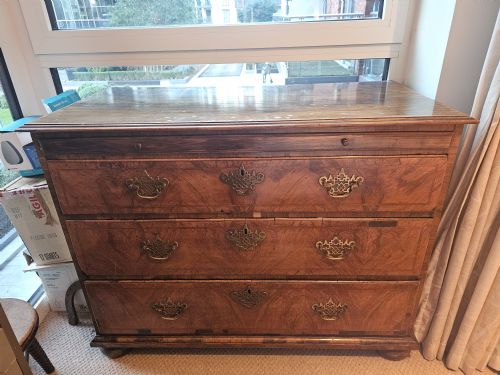
Antique Brushing Slide
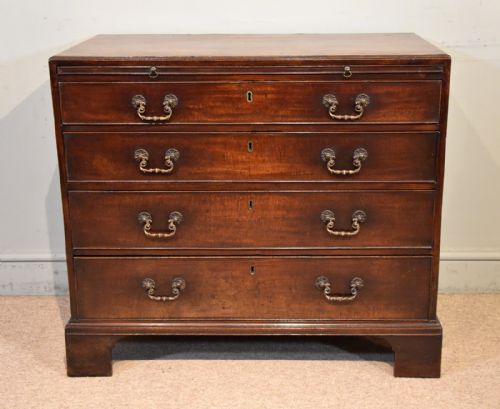
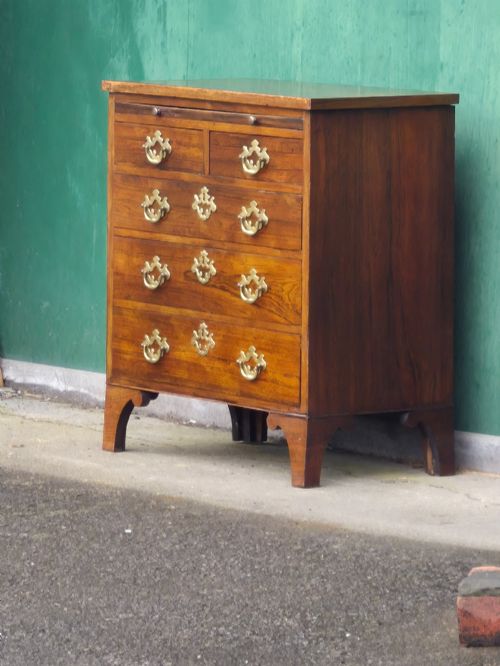
An antique brushing slide offers a concealed pull-out writing surface set above the drawers of a Georgian or later case piece.
Antique Brushing Slide
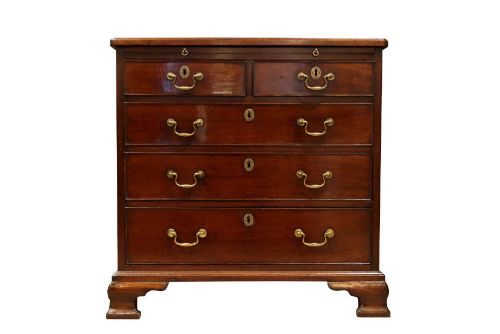
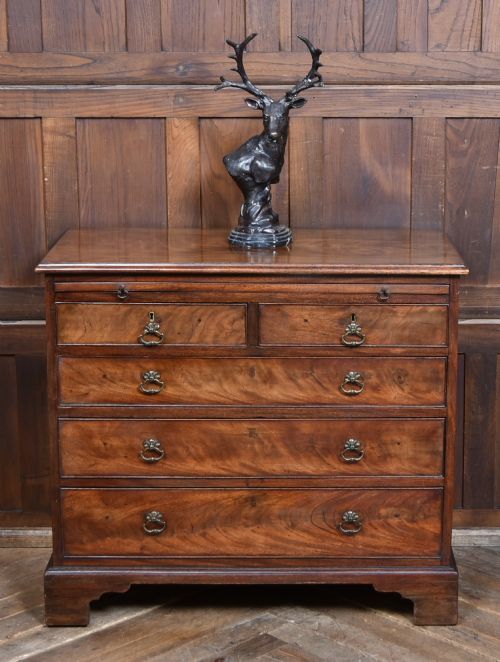
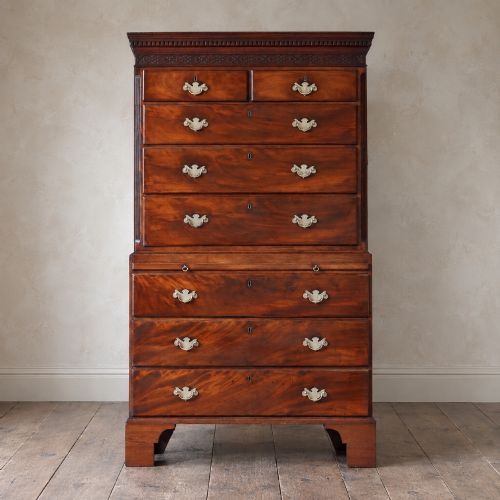
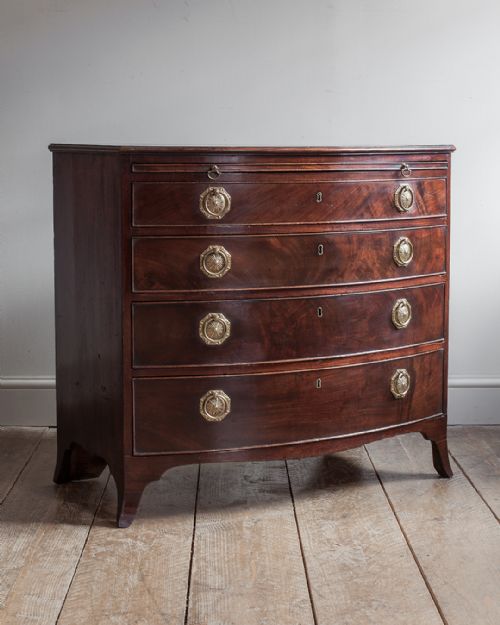
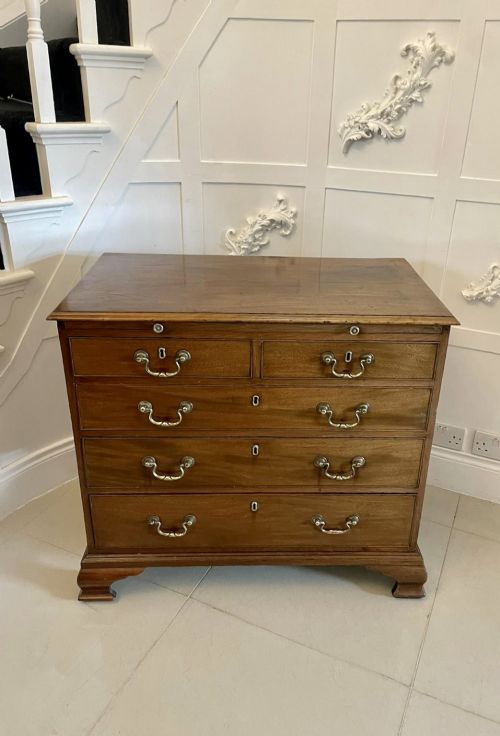
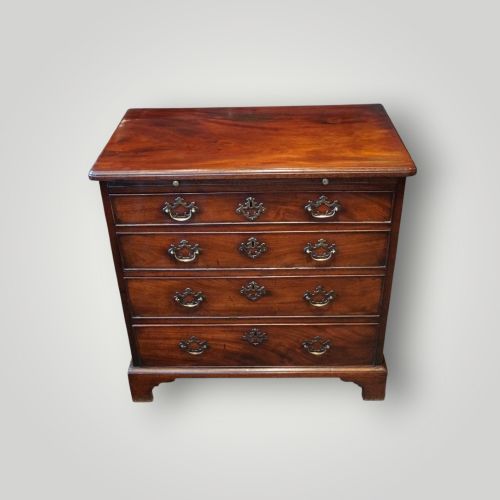
An antique brushing slide most commonly appears integrated into the upper section of a Georgian mahogany chest of drawers, bachelor’s chest, or chest on chest. These pull-out panels provided a clean, flat surface for grooming or correspondence without requiring a dedicated writing desk.
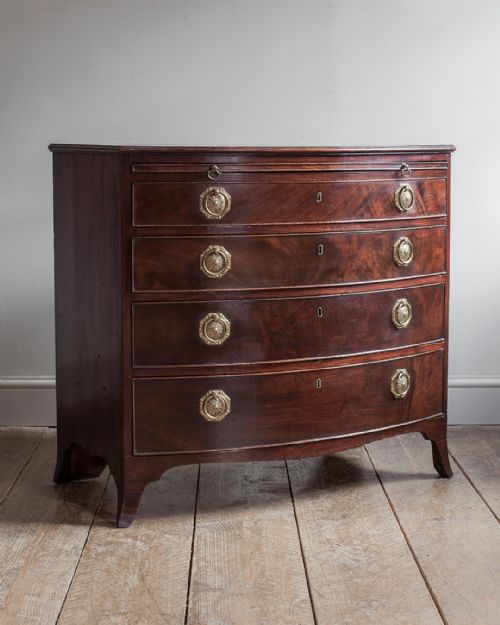
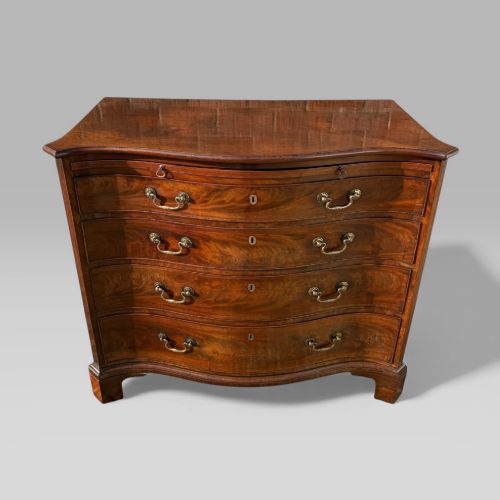
Beyond standard mahogany forms, examples emerge in figured walnut, burr walnut, and oak, occasionally featuring serpentine fronts or bowfront profiles dating from the eighteenth century through to later revival periods.
Materials and Construction
Cabinetmakers utilised dense timbers such as mahogany and walnut, frequently selecting flame mahogany or burr veneers for the primary drawer fronts and the facing edge of the sliding shelf. The timber boards were selected for stability to ensure the pull-out mechanism glided smoothly within its internal runners despite seasonal changes in humidity.
Brass hardware, including loop handles and escutcheons, secured the drawer fronts, while secondary softwoods formed the internal carcase partitions and drawer linings.
Judging Quality
The standard of an antique brushing slide rests on the precision of its fit within the carcase and the thickness of the primary timber used for the panel itself. Superior pieces display uninterrupted grain matching across the drawer fronts and the slide, alongside tight dovetail joinery securing the internal drawer boxes.
Proportions also dictate the grade of the piece, with smaller dimensions and serpentine or bowfront shapes commanding greater distinction among surviving examples.
Druce & Co
The Antique Brushing Slide Glossary
- Brushing slide
- A pull-out wooden shelf positioned immediately above the top drawers of a chest, historically used for powdering wigs or writing letters.
- Bachelor's chest
- A small, compact chest of drawers equipped with a brushing slide, designed for smaller chambers or gentleman's quarters.
- Serpentine front
- A furniture front characterised by a wavy contour, curving convexly in the centre and concavely at the ends.
- Chest on chest
- A tall case furniture piece comprising an upper chest of drawers stacked directly upon a slightly wider lower chest.
- Flame mahogany
- A highly figured veneer cut from the branch forks of the mahogany tree, displaying a distinctive flamelike pattern.
Antique Brushing Slide: Frequently Asked Questions
What was a brushing slide actually used for?
A brushing slide served as a convenient pull-out shelf for brushing clothes or powdering wigs in the dressing room. Later owners utilised the same surface as a temporary desk for reading or writing letters.
The horizontal panel stays tucked flush beneath the top moulding when not in use, preserving the clean architectural lines of the chest.
How do I identify a bachelor's chest?
A bachelor's chest typically presents smaller proportions than a standard bedroom chest and incorporates the characteristic pull-out slide beneath the top surface. These compact pieces date predominantly from the eighteenth century.
The presence of fine drawer dovetails and figured mahogany or walnut veneers further helps distinguish these smaller forms.
How can I tell an eighteenth-century chest from a revival piece?
Eighteenth-century examples display hand-cut dovetails, oak or deal secondary drawer linings, and timber patination acquired through decades of handling. Revival pieces from the Edwardian or later periods often show machine-finished elements and different interior woods.
Examining the construction inside the drawer boxes and along the internal runners reveals the period of manufacture.