


Antique Bronze Musician
An antique bronze musician brings the energy of performance into a room, taking the form of figures cast in metal and stone.
Antique Bronze Musician
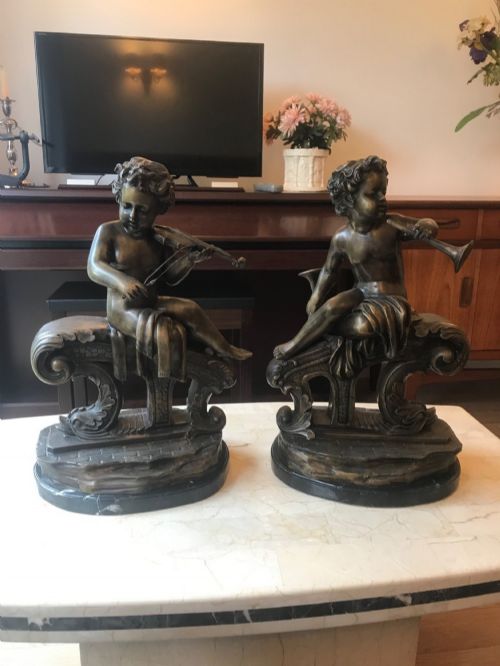
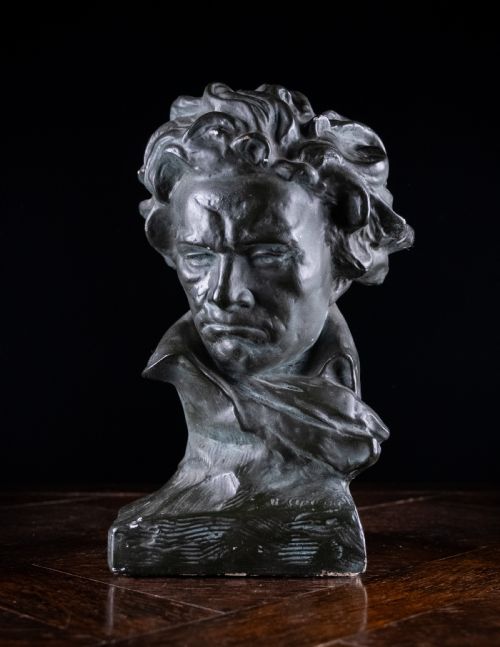
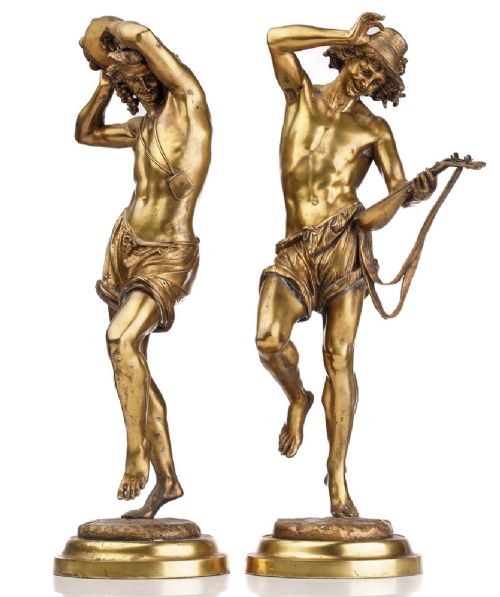
An antique bronze musician captures figures playing instruments, including flutes, harps, lutes, and mandolins, rendered in metal, marble, and plaster. These pieces take the form of single statues, pairs of figures, and candelabra components created across the nineteenth and twentieth centuries.
The nineteenth century yields most of the standing pipers, minstrel figures, and classical youths holding instruments. French studios dominate the offerings, alongside works from Japanese Meiji makers and twentieth-century Art Deco interpretations.
Assessing craftsmanship
Quality rests in the crispness of the casting and the sensitivity of the chisel work applied to the instrument details and facial expressions. Superior examples display natural drape in clothing and precise rendering of hands and fingers.
The integration of the figure with its base indicates the standard of manufacture, where heavy marble or onyx plinths complement the weight and balance of the metal sculpture.
Listings feature works spanning from the eighteenth century through the Art Deco era, encompassing bronze, marble, and painted plaster forms.
Edouard Drouot·Carrier Belleuse·Alfred Grevin·Justo de Gandarias·Aug Moreau·Paul Fournier·Miyao·Josef Lorenzl·Marcel Debut·Renzo Colombo·Barbedienne
The Antique Bronze Musician Glossary
- Patinated Bronze
- Bronze treated with chemical solutions to produce a specific surface colour or dark tone. This finish protects the metal and accentuates sculptural details.
- Ormolu
- Gilded bronze used for decorative mounts and candelabra frames. The technique involves applying a gold amalgam to the bronze base.
- Gilt Bronze
- Metal coated with a thin layer of gold to give a rich surface sheen. It appears frequently on nineteenth-century decorative figures.
- Art Deco
- A design style from the early twentieth century featuring streamlined forms and geometric clarity. Works from this period often depict dancers and musicians in stylised poses.
- Neoclassical
- A revival style drawing inspiration from classical antiquity. Figures from this tradition wear classical drapery and hold traditional instruments like the lute.
Antique Bronze Musician: Frequently Asked Questions
What materials make up these pieces?
The pieces consist mainly of cast bronze with patinated or gilt surfaces, sometimes combined with painted plaster. Bases incorporate stone elements like marble and onyx.
Some examples integrate into ormolu candelabra alongside porcelain figures, demonstrating varied material combinations within a single decorative object.
How do I identify a nineteenth-century figure?
Nineteenth-century figures often display classical or romantic styling, with detailed drapery and traditional instruments like mandolins and harps. Signatures of known makers frequently appear on the bronze bases.
Earlier nineteenth-century works lean towards realism and classical themes, while later pieces transition into Art Deco abstraction by the 1920s and 1930s.
Where were these sculptures made?
France produces a large share of the bronze musicians, emerging from prominent nineteenth-century Parisian foundries and studios. Japanese workshops also contributed patinated bronze statues during the Meiji period.
European makers across various regions shaped the broader selection, ranging from French realist studies to Austrian Art Deco figures.
How should I display a bronze figure?
Place the sculpture on a stable surface that supports its weight, particularly when the base is heavy marble or onyx. Keep the piece away from direct moisture to protect the bronze patina.
Pairing figures with complementary furniture allows the patinated metal tones to stand out against wood or stone surfaces.