


Antique Bronze Mortar
These heavy metal vessels built for crushing herbs and medicines have survived centuries in kitchens and apothecaries.
An antique bronze mortar
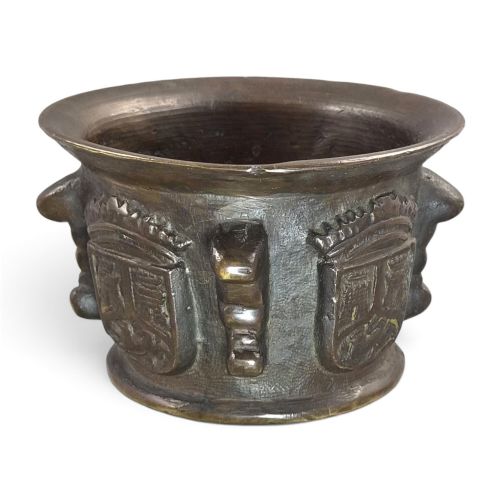
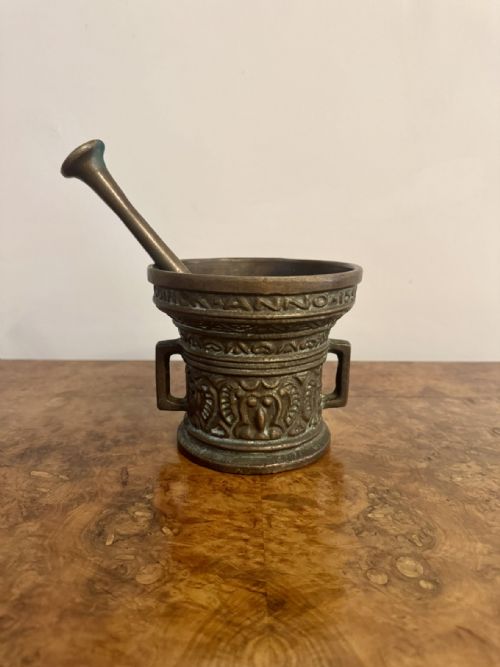
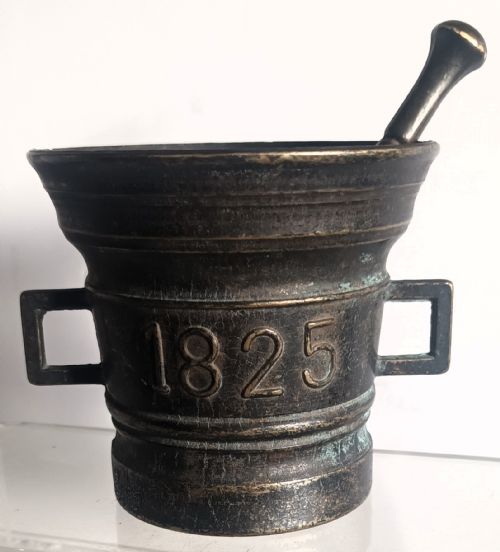
An antique bronze mortar serves as a heavy mixing vessel designed for grinding medicinal ingredients, spices, and domestic preparations. The pieces gathered here span from the sixteenth century through the Georgian era, originating from English, Dutch, Spanish, and French workshops.
Buyers regularly encounter utilitarian forms alongside heavily decorated examples bearing coats of arms, royal motifs, or cast patterns. Many survive alongside their original pestles, though solo vessels remain common across the inventory.
Casting and metalwork
Foundries created these vessels using traditional sand casting or lost-wax methods, pouring molten bronze into moulds formed from patterns. Metalworkers then finished the exterior surfaces using lathes or hand-chiselling to smooth the heavy walls.
Decoration relied heavily on relief casting, impressing stamps like fleurs-de-lis, rosettes, or armorial bearings directly into the mould before pouring. Iron and brass occasionally appear alongside the primary bronze alloy, reflecting regional foundry practices.
Retail Price Guide 2026
Typical UK retail prices for bronze mortar, calculated from the Sellingantiques database of over a million retail prices indexed since 2003. This retail price guide relies exclusively on Sellingantiques data; no external sources or auction records are used, so the figures do not describe the wider market.
Foundry work and decoration
Quality rests in the crispness of the cast relief work and the proportional thickness of the metal walls. Finer pieces display sharply detailed motifs such as crowns, birds, or heraldic cartouches rather than plain utilitarian surfaces.
The survival of a matching pestle and the clarity of maker marks or dates elevate certain examples. Heavier vessels with well-balanced proportions demonstrate superior craftsmanship from established metalworking centres.
Somerset Foundry·House of Enríquez
The Antique Bronze Mortar Glossary
- Bronze
- An alloy primarily composed of copper and tin, valued for its strength and resonance when cast into thick-walled vessels. This material resists corrosion from damp substances.
- Cartouche
- An ornamental frame or tablet, often shaped like a scroll or shield, used to enclose coats of arms or initials on the exterior of a vessel. These panels help identify regional foundry work.
- Pestle
- A heavy, club-shaped tool used with a mortar for pounding and grinding substances. Matching period pestles complete the set.
- Apothecary
- A historical practitioner who prepared and sold medicines and drugs to physicians and patients. Many surviving metal vessels served this medical trade before entering collections.
Frequently Asked Questions
What were antique bronze mortars used for?
These vessels served apothecaries, households, and chemists for crushing herbs, seeds, minerals, and medical ingredients into powders or pastes. The heavy metal walls provided the necessary resistance for forceful pestle strikes.
Over centuries, many transitioned from working kitchen and shop tools into decorative cabinet pieces valued for their sculptural metalwork.
How do I identify the age of a mortar?
Dating relies on stylistic clues such as rim profiles, decorative motifs, and cast dates or armorial bearings. Seventeenth-century examples frequently feature specific regional stamps like fleurs-de-lis or heart-shaped cartouches.
Later Georgian pieces tend towards simpler, more standardised forms influenced by changing domestic and chemical manufacturing methods.
Do mortars usually come with pestles?
Many surviving vessels appear without their original crushing tools, as pestles were easily separated or lost through heavy use over the centuries. Finding a matching period pestle paired with the vessel remains a notable bonus for collectors.
Standalone pieces still command strong interest due to the sculptural quality of the cast bronze bodies alone.
Where were these metal vessels made?
Foundries across England, France, the Netherlands, and Spain produced these heavy metal vessels for local trade and medical use. English examples often show distinct regional characteristics from workshops in London or Somerset.
Continental pieces from Dutch and Spanish makers frequently display elaborate baroque ornamentation and distinct alloy compositions.