


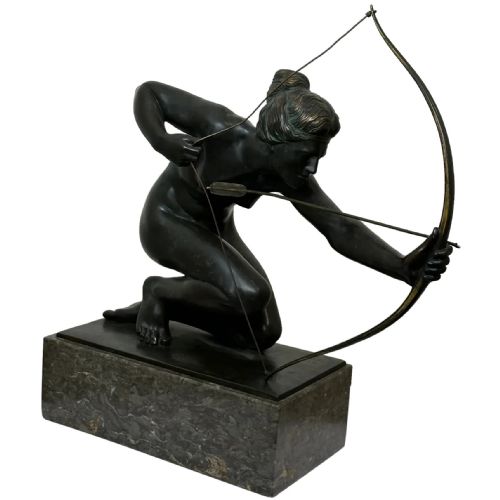


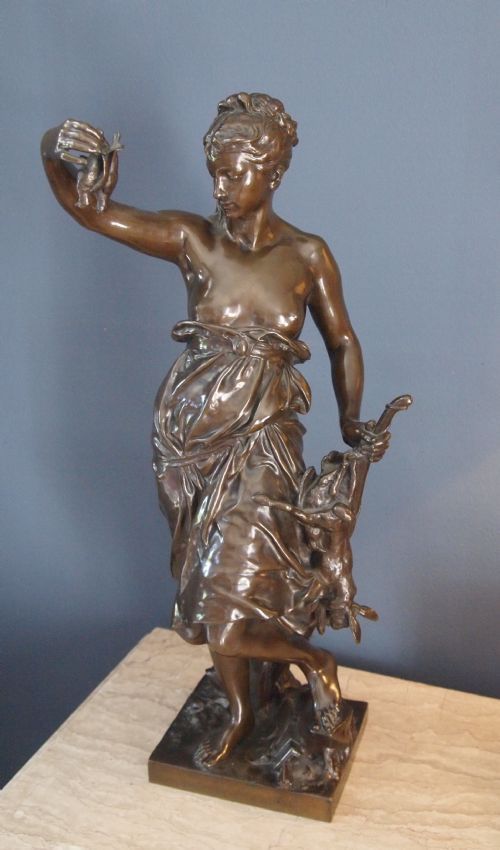

Antique Bronze Huntress
These antique bronze huntress figures capture the mythological deity in bronze, marble, and ormolu, offering classical grace and robust metalwork for the home.
Antique Bronze Huntress
An antique bronze huntress represents the goddess Diana in various classical and modern guises, appearing across mantel clocks, wall reliefs, and standalone sculptures. You will frequently encounter nineteenth-century French works alongside Art Deco interpretations from the 1930s.
The selections span grand tour souvenirs, portrait busts, and full figural groups holding bows and arrows, often mounted on marble bases. These pieces reflect shifting stylistic tastes from Victorian neoclassical to French academic and Napoleon III designs.
Materials and casting methods
The sculptures utilise cast bronze, sometimes complemented by gilt bronze or ormolu mounts, alongside bronzed copper and enamel details. Many pieces pair the metal figure with white marble or standard wood plinths to provide structural weight and visual contrast.
Materials across the inventory include bronze, white marble, ormolu, copper, and wood.
Evaluating the craftsmanship
Quality rests in the crispness of the chase work and the sensitivity of the metal casting, where sharper details in the huntress's hair and clothing distinguish superior examples. The integration of auxiliary materials, such as fitted marble bases and clock movements, also dictates the standard of the piece.
Signatures from recognised sculptors and foundry marks elevate an item's standing within the category, reflecting the skill involved in the original model. The preservation of the original surface patination or gilding remains central to the integrity of the work.
Pierre Le Faguays·Deniere and Cailleaux·Bulio·Louis Ernest Barrias·Alexandre Falguiere·Josef Lorenzl·Edward McCartan·Ferdinand Barbedienne Foundry
The Antique Bronze Huntress Glossary
- Grand Tour
- A traditional travel souvenir purchased by wealthy collectors during tours of continental Europe. These smaller bronze sculptures and reliefs reproduced classical antiquities for domestic display.
- Ormolu
- Gilded brass or bronze applied to decorative objects and clock mounts. This technique provides a bright, gold-coloured finish that contrasts with dark patinated bronze.
- Wall Relief
- A sculptural technique where figures project slightly from a flat background. Bronzed copper examples of Diana were frequently produced in this format.
- Patina
- The surface coloration and sheen developed naturally over time or applied chemically by the foundry. It protects the metal and defines the sculptural contours.
Antique Bronze Huntress: Frequently Asked Questions
How do I spot a grand tour piece?
Grand tour figures typically date from the nineteenth century and reproduce famous classical statues encountered by travellers abroad. They serve as smaller scale cabinet bronzes or decorative desk items.
Look for refined patination and souvenirs cast after ancient models, often bearing foundry or reduction stamps from European workshops.
What periods are common for these figures?
The pieces span from the mid-nineteenth century through the Victorian era into the 1930s Art Deco period. Earlier works favour neoclassical or academic French styles.
Later twentieth-century examples embrace streamlined modernist lines while retaining the traditional iconography of the bow and arrow.
Where were these sculptures made?
France is the primary origin for these works, driven by prominent academic sculptors and commercial foundries operating in Paris. Grand tour pieces also emerged from continental workshops catering to foreign travellers.
French makers utilised specialised casting and gilding techniques across mantel clocks and figural groups.
How should I display a bronze figure?
These sculptures require a stable surface away from direct moisture and extreme temperature fluctuations to protect the metal and any attached marble or wood. Placing them on a sturdy mantelpiece or pedestal allows the three-dimensional form to be viewed clearly.
Ensure the integrated base rests flat, particularly on heavier clock housings and multi-material groups.