




Antique Bronze Figure Clock
An antique bronze figure clock brings neoclassical dignity and theatrical romance into a room through cast metal and white enamel dials.

Antique Bronze Figure Clock
An antique bronze figure clock unites a mechanical timekeeper with a sculptural bronze subject, drawing on classical mythology, military history and theatrical allegories. These pieces most often appear as mantel clocks from the nineteenth century, shaped by French ateliers working in Regency, Empire and Louis XVI revival styles.
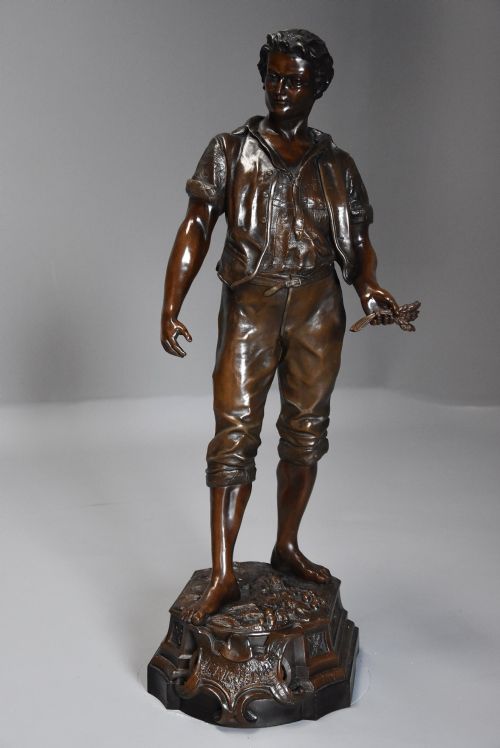
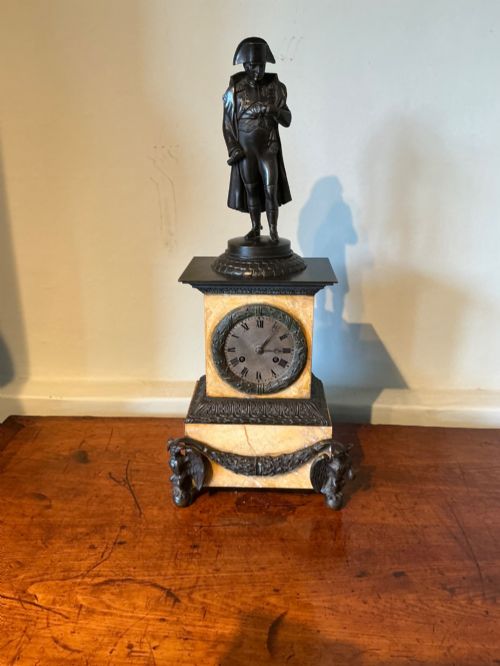
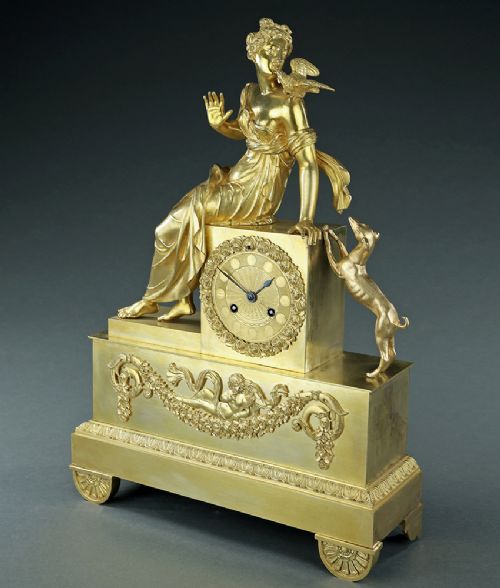
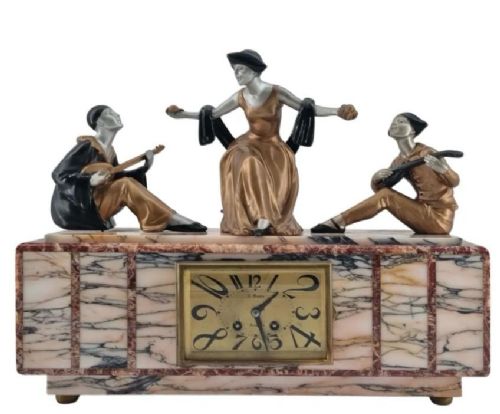
The sculptural figures depict Napoleon, allegorical characters such as Love and Fidelity, or literary figures like Pierrot and Columbine, mounted alongside the dial. Alongside single mantel clocks, buyers encounter larger garniture sets that pair the central timekeeper with matching side ornaments.
The surviving selection spans the nineteenth century, encompassing Victorian interpretations and earlier Regency models. Makers and retailers across Paris and Britain produced these works to anchor the formal drawing room or parlour.
Materials and Construction
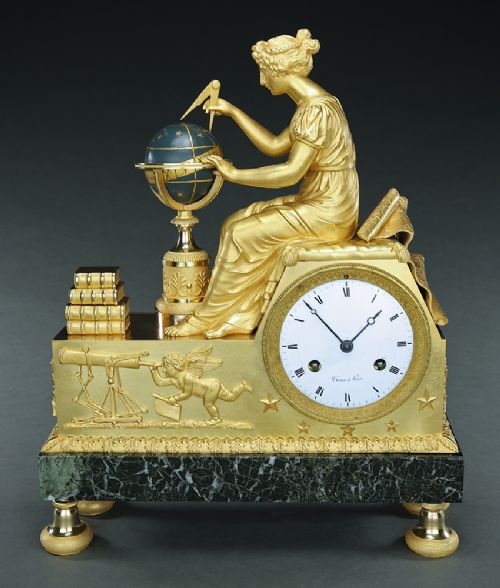
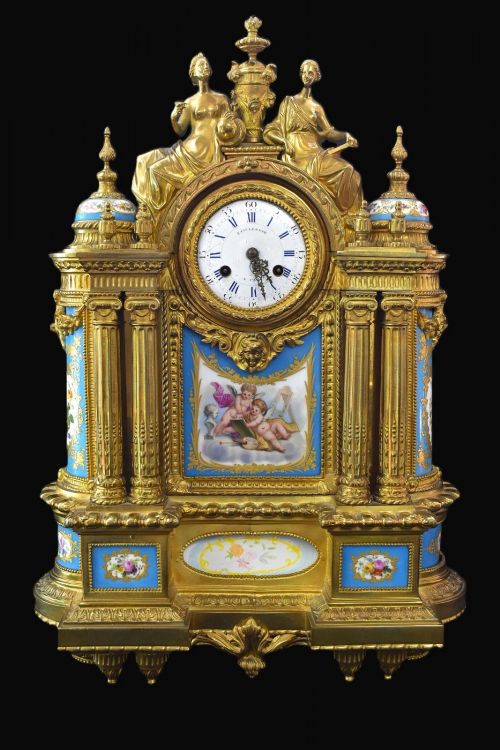
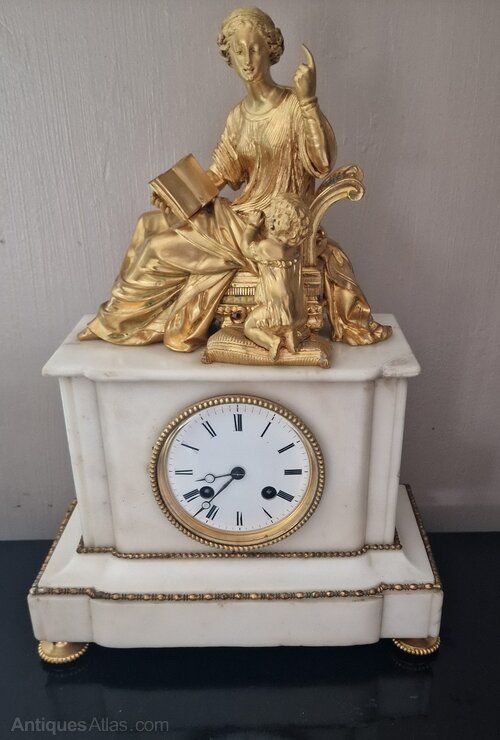
The foundation of an antique bronze figure clock rests upon the union of cast bronze and polished marble, often enriched with fire-gilded ormolu. Metalworkers patinated the bronze surfaces to achieve deep dark tones, contrasting sharply with the bright gleam of mercury gilding.
Clockmakers housed eight-day mechanical movements behind white enamel chapter rings marked with Arabic or Roman numerals. These movements drove both the timekeeping train and the striking mechanism, while the heavy marble bases provided stable housing for the substantial bronze assemblies.
Listings feature eighteenth-century pieces alongside nineteenth-century Victorian, Regency, and Art Deco interpretations.
Distinctions in Execution
The integration of the sculptural subject with the clock case distinguishes workshop output, separating standard commercial productions from the ambitious creations of notable makers. The weight of the materials and the depth of the gilding further determine the standing of each piece.
F.Milliot·Etienne Lenoir·Remond·Charpentier Paris·Lemerle Charpentier·Deniere Et Fils·Japy Freres·Russels Liverpool
The Antique Bronze Figure Clock Glossary
- Ormolu
- Finely chopped leaf gold amalgamated with mercury and applied to a brass or bronze base through heat. The process produces a durable golden surface characteristic of fine nineteenth-century French work.
- Garniture
- A set comprising a central clock flanked by matching decorative objects such as vases or candelabra. These matched suites formed balanced centrepieces for grand mantelpieces.
- Patination
- The surface sheen and coloration developed on bronze through age and chemical treatment. It provides depth and protects the underlying metal.
- Cartel
- A wall-mounted clock featuring an ornate frame typically cast in gilt bronze or ormolu. They depart from freestanding mantel designs by hanging directly on the wall.
- Enamel
- A glassy substance fused to a metal dial through firing, providing a smooth white background for painted numerals. Enamel dials require careful handling to avoid hairline cracks.
Antique Bronze Figure Clock: Frequently Asked Questions
How do I wind the clock?
Use the appropriate key on the winding squares located on the enamel dial to tension the mainspring.
Take care not to overwind the movement, stopping as soon as resistance is felt.
Where should I place it?
Position the clock on a stable, level surface away from direct sunlight and draughts to protect the delicate marble and mercury gilding.
Mantelpieces and sturdy console tables offer the ideal platform to support the heavy bronze and stone construction.
How do I read the period?
Examine the style of the bronze casting, the shape of the marble base, and the lettering on the enamel dial to identify nineteenth-century French or Victorian origins.
Neoclassical and Empire motifs point toward the earlier decades, while busier revival styles often indicate later Victorian production.
What is a garniture set?
A garniture set groups a central clock with matching decorative side pieces, such as urns or candelabra, designed to sit together on a mantel.
This arrangement creates a unified decorative scheme typical of formal nineteenth-century interiors.