



Neoclassical Figural Clock
These neoclassical figural clock pieces are sculptural timepieces bringing mythological and classical themes into domestic interiors through bronze, marble, and ormolu.

Neoclassical Figural Clock
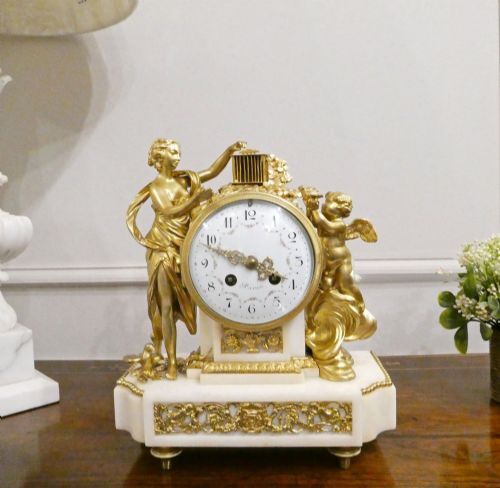
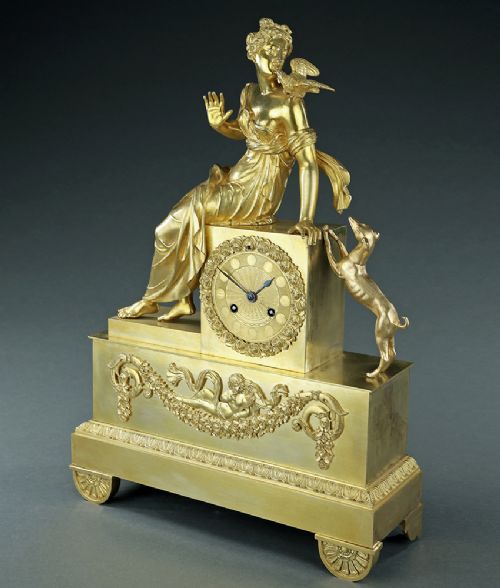
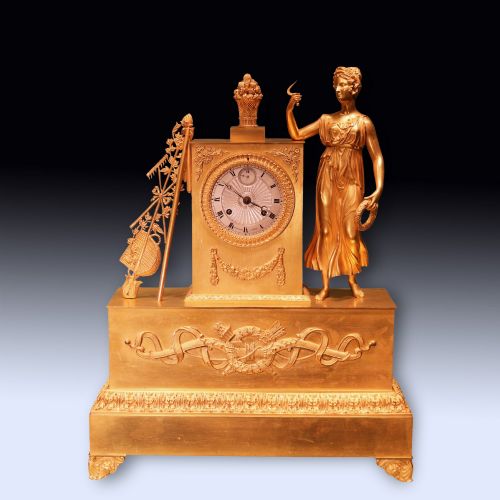
A neoclassical figural clock combines timekeeping with sculptural subjects drawn from classical antiquity, often depicting figures such as Diana the Hunter, Cupid, or allegories of love and fidelity. These domestic ornaments take the form of mantel clocks, sometimes accompanied by matching clock sets and garnitures.
The versions most commonly met on this page originate in nineteenth-century France, reflecting the enduring influence of the French Empire, Louis XVI, and Louis XVI Revival styles. Makers situated these figures upon architectural bases of marble, alabaster, or gilt bronze.
Forms range from compact mantel pieces to large decorative clock sets fitted with glass domes. Each example integrates the dial directly into the sculptural composition, merging utility with decorative metalwork.
Assessing quality
Superior examples demonstrate precision in the chasing and gilding of the bronze and ormolu figures, where facial expressions and drapery retain crisp definition. Lesser pieces show softer casting lines and shallower surface detail.
The selection of materials dictates the standing of the piece, with high-grade specimens utilising multi-coloured specimen marble and rich fire-gilt surfaces rather than plain gilt metal. The complexity of the figural grouping and the inclusion of original glass domes or matching garniture sets further elevate the standard.
Neoclassical Figural Clock Retail Price Guide 2026
Typical asking prices for neoclassical figural clock among the pieces listed under this phrase on Sellingantiques today, from the lower quarter to the upper quarter. They describe what is for sale here now, not the wider market.
Listings feature nineteenth-century pieces spanning the Victorian era, utilising gilt bronze, ormolu, marble, glass, and wood.
Deniere Et Fils·Canaillor of Paris
The Neoclassical Figural Clock Glossary
- Ormolu
- A technique of applying finely ground high-carat gold to a bronze base using a mercury amalgamation process. This finish provides a bright, lasting golden lustre characteristic of nineteenth-century French metalwork.
- Silk suspension
- A method of hanging the pendulum from a fine loop of silk thread behind the dial. It allows for delicate regulation of the beat in older mechanical movements.
- Garniture
- A set of decorative matching objects, usually comprising a central clock flanked by two matching vases or candelabra. These sets were designed to sit harmoniously upon a mantelpiece.
- Specimen marble
- Marble composed of various coloured mineral fragments or different stone types pieced together into a decorative mosaic surface. It was frequently utilised for architectural clock bases.
- Enamel dial
- A clock face formed by fusing powdered glass onto a copper or brass plate at high temperatures. These dials feature painted numerals and remain resistant to discolouration.
Neoclassical Figural Clock: Frequently Asked Questions
What is a neoclassical figural clock?
A neoclassical figural clock is a nineteenth-century timepiece incorporating a cast bronze or metal figure from classical mythology or allegory, mounted upon a stone or metal base. These objects served both to tell the time and to display refined taste in domestic interiors.
They emerged from French workshops influenced by Louis XVI and Empire styles, combining sculpture with functional clockwork movements. Many survive today accompanied by matching side ornaments or glass domes.
How do I maintain the movement?
Mechanical clock movements require careful handling, including professional cleaning and oiling every few years to prevent wear on the brass gears. Winding should be performed gently using the correct key, without over-tightening the spring.
Keeping the clock in a stable environment away from direct sunlight and damp air helps preserve both the delicate silk suspension and the exterior ormolu gilding.
Are these clocks French?
The majority of these clocks originate from France, particularly Paris, which was the primary centre for luxury bronze and clock production during the nineteenth century. Makers there supplied sophisticated pieces incorporating classical motifs to an international market.
Italian workshops also produced comparable works, utilising regional materials such as carved alabaster while housing imported French movements within the stone bodies.
What is a clock garniture?
A clock garniture is a matched set consisting of a central mantel clock accompanied by two matching side pieces, such as urns, vases, or candelabra. These matched groupings were designed to create a balanced display across a mantelpiece or sideboard.
The components share identical materials, styles, and decorative motifs, maintaining visual harmony throughout the arrangement.
How are marble bases cleaned?
Marble and alabaster bases require gentle dusting with a dry, soft cloth to remove surface particles without scratching the polished stone. Water and chemical cleaning agents should be avoided, as moisture can seep into porous stone or damage adjacent gilt bronze mounts.
Professional conservators should handle stubborn marks or damage to specimen marble to preserve the integrity of the fitted stones.