



Antique Bronze Ewers
These antique bronze ewers bring sculptural weight, classical ornament and historic presence to a room.
Antique Bronze Ewers
Antique bronze ewers encompass functional pouring vessels, decorative table objects and historic artefacts spanning centuries of metalworking. When searching for antique bronze ewers, a buyer encounters everything from Grand Tour souvenirs to Persian inlaid vessels and monumental Indian aftabas.
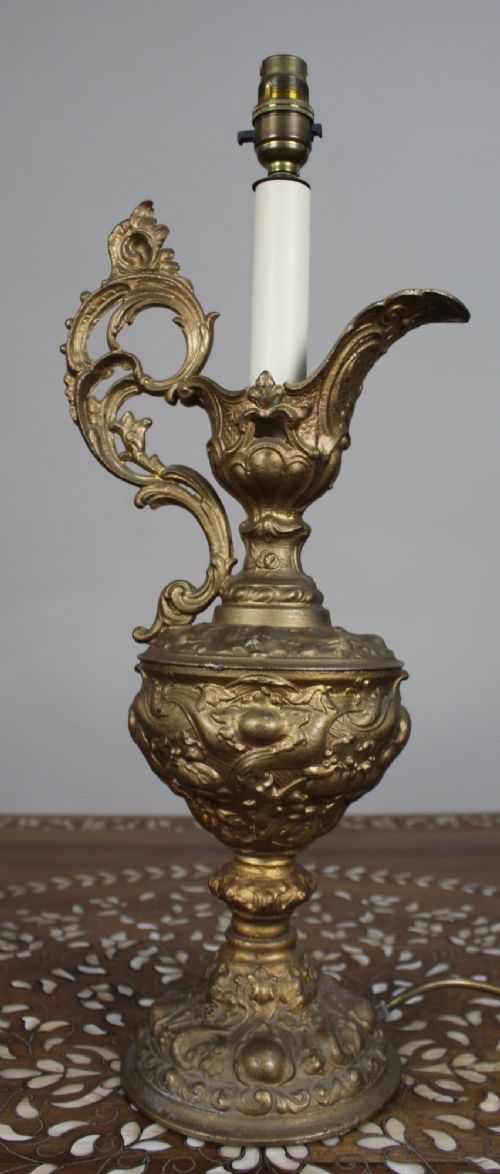
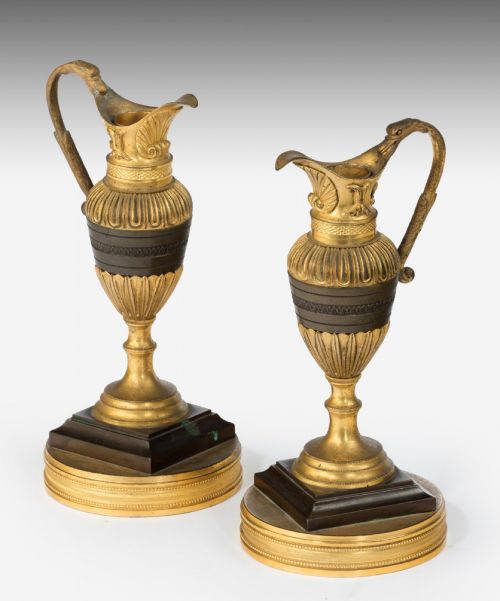
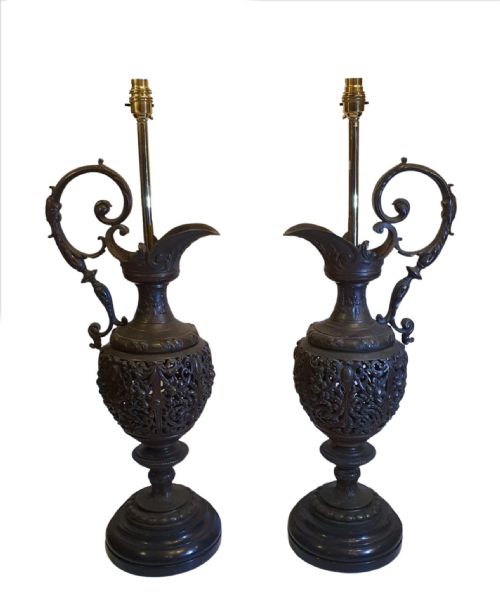
The selection here frequently showcases 19th-century European craftsmanship, particularly French Neoclassical and Victorian decorative pairs fashioned as ornamental pitchers or converted into table lamps. These pieces draw on classical forms, featuring handles shaped as dolphins, Bacchus or mythical creatures.
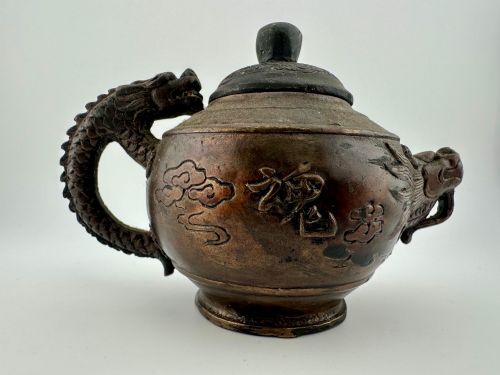
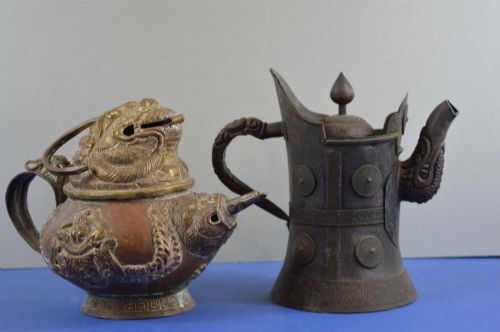
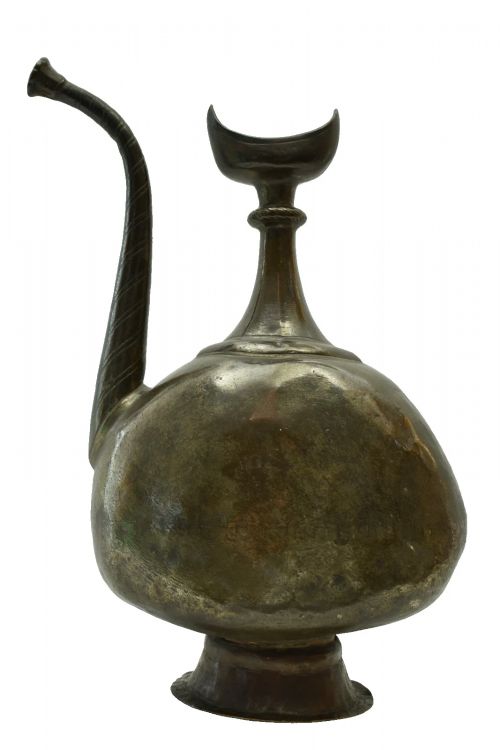
Beyond European workshops, the inventory includes Asian and Middle Eastern examples, such as Tibetan ceremonial monks ewers, Chinese Qing Dynasty dragon teapots and Ottoman Islamic vessels with crescent moon finials. Such variety reflects the global circulation and diverse utilitarian origins of the form.
How they were made
Makers utilised casting techniques to shape bronze, brass, copper and spelter into intricate vessel bodies and figural handles. Molten metal took the impression of complex moulds, allowing artisans to achieve high-relief ornamentation including putti, foliage and mythological figures.
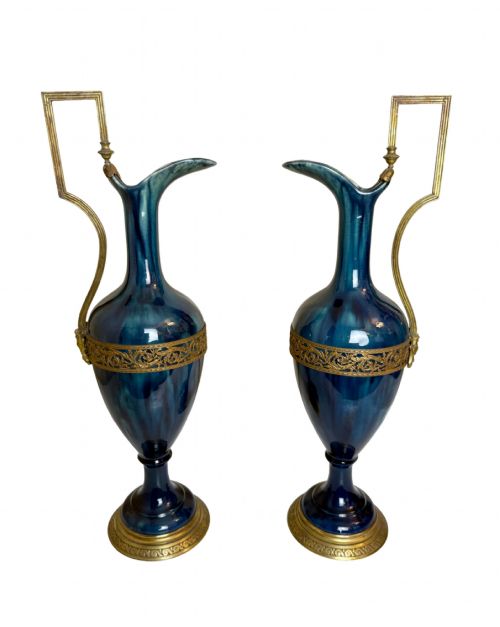
Surface finish defines much of the visual character in these pieces, with patinated bronze, gilt bronze, ormolu and silver inlay applied to the metal substrates. Some items combine metal with contrasting materials like blue porcelain, glass or ceramic bodies to create decorative tension.
Materials recorded across the available pieces include bronze, gilt bronze, brass, ormolu, copper, porcelain, patinated bronze, gilt metal and glass.
What varies in quality
The refinement of the casting and chasing separates standard production from superior work. Crisp detail in figural handles, such as facial expressions on Bacchus figures or scales on dragon motifs, indicates skilled hand-finishing after the initial pour.
The integrity of the surface treatment alters the character of a piece. Well-preserved patination, deep ormolu fire-gilding, and precise silver and copper inlay demonstrate greater original expense and lasting decorative impact.
Georges Van De Voorde
The Antique Bronze Ewers Glossary
- Ewer
- A large jug or pitcher with a wide spout and handle, historically used for pouring water or wine.
- Ormolu
- Finely ground high-carat gold applied to a bronze object through a mercury amalgam process. This technique creates a durable golden finish seen on many 19th-century decorative pieces.
- Grand Tour
- A cultural journey undertaken by wealthy young Europeans in the 18th and 19th centuries. Travellers collected classical antiquities and bronze reproductions as mementos.
- Aftaba
- A traditional long-spouted metal ewer originating in Islamic regions, used for ritual washing or serving water.
- Patination
- The surface coloration and sheen that develops on metal over time or through chemical treatment. It adds depth and visual texture to the bronze.
- Neoclassical
- An artistic style drawing inspiration from the classical art and culture of ancient Greece and Rome. It prioritises symmetry, proportion and classical motifs.
Antique Bronze Ewers: Frequently Asked Questions
What were antique bronze ewers used for?
Originally, these vessels served practical functions for pouring water, wine or tea in domestic, ceremonial or ritual settings. Many examples functioned as ewers and pitchers for washing hands at table or performing religious rites.
Over time, wealthy households utilised similar vessels purely for display on sideboards and mantelpieces. Today, collectors appreciate their sculptural qualities as decorative objects or repurpose them as table lamps.
How do I identify a Grand Tour ewer?
Grand Tour ewers typically date from the 19th century and draw heavy inspiration from classical antiquity, often replicating forms seen in Italian museums and archaeological sites. They frequently appear in pairs and incorporate classical motifs such as Bacchus figures, dolphins or acanthus leaves.
These decorative pieces were brought back by travellers touring Europe. They display refined bronze casting and patination suited for interior display rather than utilitarian service.
How do I care for a bronze ewer?
Maintaining a bronze ewer requires gentle dusting with a soft, dry cloth to prevent the accumulation of grit in crevices and chased details. Avoid harsh commercial metal polishes, which can strip away historic patination or damage original gilding.
Keep the object away from direct moisture and extreme temperature fluctuations to preserve the stability of the metal and any secondary materials like porcelain or glass.
Are bronze ewers heavy?
Most bronze ewers possess substantial physical weight due to the density of the metal alloy used in their construction. Larger decorative pieces and monumental examples require sturdy placement surfaces.
When handling these vessels, support the base rather than lifting solely by the handle, particularly on older or converted items where joints may be vulnerable.