


Antique Brass Music Box
These antique brass music box pieces are intricate mechanical instruments that bring historic melody and motion into a room.
Antique Brass Music Box
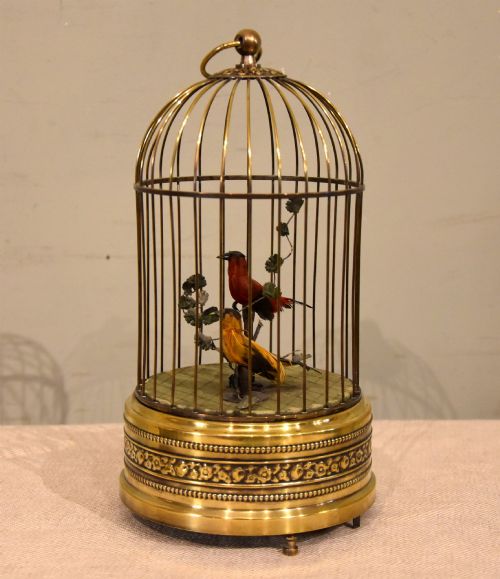
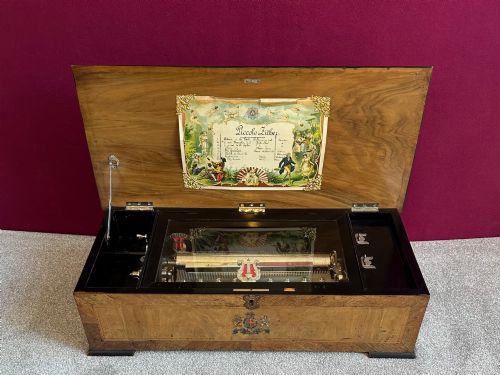
An antique brass music box is a mechanical device designed to play pre-programmed tunes using pinned cylinders or discs, alongside automated elements such as moving singing birds. Buyers searching this phrase will find a selection originating predominantly from the Victorian period, alongside mid-century German examples.
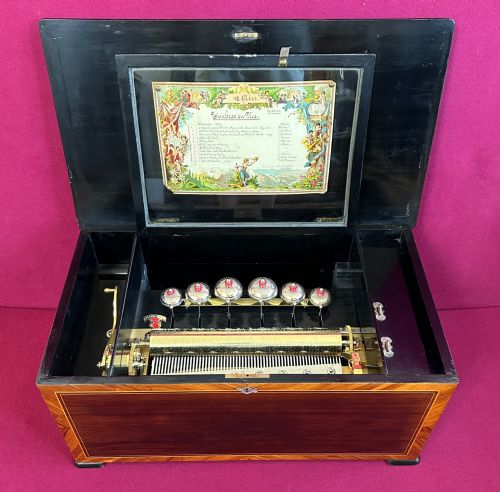
The objects take several distinct forms on this page, ranging from standard cylinder boxes with multiple airs to specialised cages housing mechanical singing birds. Materials vary from brass and glass to ebonised wood, rosewood, walnut, and feathers.
Most examples date from the nineteenth century, particularly around the 1870s and 1880s, alongside pieces attributed to makers such as Nicole Freres, Karl Griesbaum, and LeCoultre. The majority of items reflect Victorian and mid-century German manufacturing traditions.
How they were made
Cases and enclosures utilise timber construction, featuring rosewood, walnut, and ebonised wood often paired with glass panels and metal framing. Caged singing bird automata incorporate delicate materials like feathers to simulate lifelike plumage.
Listings feature Victorian and mid-century German eras, utilising brass, glass, steel, rosewood, walnut, ebonised wood, and feathers.
What varies in quality
Quality in these instruments rests on the precision of the musical arrangement and the complexity of the movement, such as the number of airs a cylinder can play. Finer examples demonstrate superior acoustic resonance and more intricate mechanical execution by established makers.
Nicole Freres·Karl Griesbaum·LeCoultre
The Antique Brass Music Box Glossary
- Air
- A distinct tune or musical piece played by the cylinder of the box. Multiple airs indicate a greater variety of programmed melodies.
- Cylinder
- The rotating metal barrel set with tiny pins that pluck the teeth of the comb to produce music. It forms the core of a traditional musical box.
- Comb
- The tuned steel plate with multiple teeth that vibrates when struck by the pins on the rotating cylinder. Each tooth corresponds to a specific musical note.
- Automaton
- A self-operating mechanical device designed to imitate human or animal action, such as a singing bird moving inside a cage.
- Ebonised wood
- Timber treated with a dark finish to imitate expensive ebony. It provides a stark, formal contrast to bright brass components.
Antique Brass Music Box: Frequently Asked Questions
How do cylinder music boxes work?
A wound spring powers a gear train that rotates a pinned brass cylinder at a regulated speed. The pins on the surface strike individual teeth on a steel comb to create predetermined melodies.
More advanced mechanisms feature interchangeable cylinders or larger numbers of airs to extend the musical repertoire. Regulators and governors control the speed of rotation to ensure the tempo remains steady.
What is an 8 air musical box?
An 8 air musical box is an instrument programmed to play eight distinct tunes consecutively or by selection. The cylinder shifts laterally to bring a new set of pins into contact with the comb.
This configuration offers greater variety than single-air models and indicates a more complex internal mechanism. Such pieces often date from the late Victorian era.
How do singing bird boxes operate?
Singing bird boxes use a miniature bellows and whistle system hidden beneath the casing to produce avian trills. Cams and levers coordinate the sound with physical movements of the bird's beak and body.
Enclosed in brass cages or decorative boxes, these automata combine clockwork mechanics with tactile materials like feathers. They represent a specialised branch of nineteenth and twentieth-century horology.
What woods were used for cases?
Makers housed movements in sturdy timbers such as rosewood and walnut, prized for their rich grain and durability. Ebonised wood was also employed to achieve a uniform, dark finish that complemented polished brass fittings.
Glass panels frequently protected the internal mechanics while allowing visibility during play. The choice of wood often reflected the prevailing style of the Victorian period.