

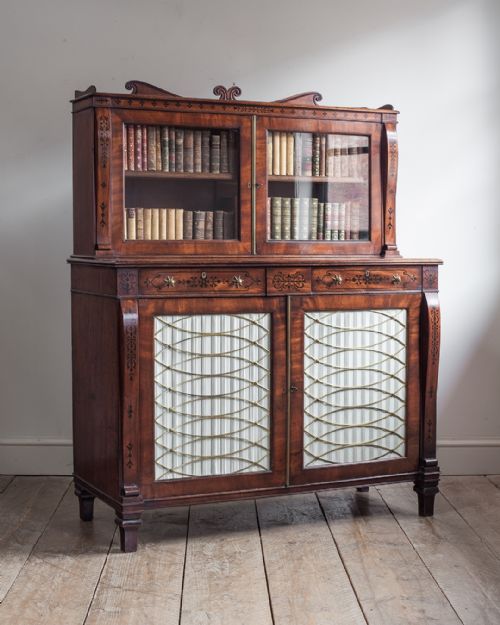


Antique Brass Grills
Antique brass grills bring a refined architectural texture to fine cabinets and sideboards.
Antique Brass Grills
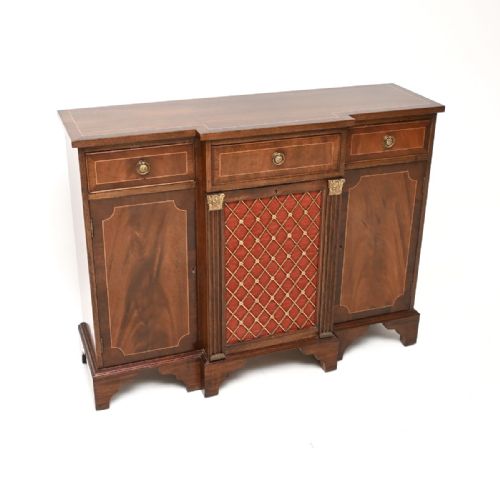
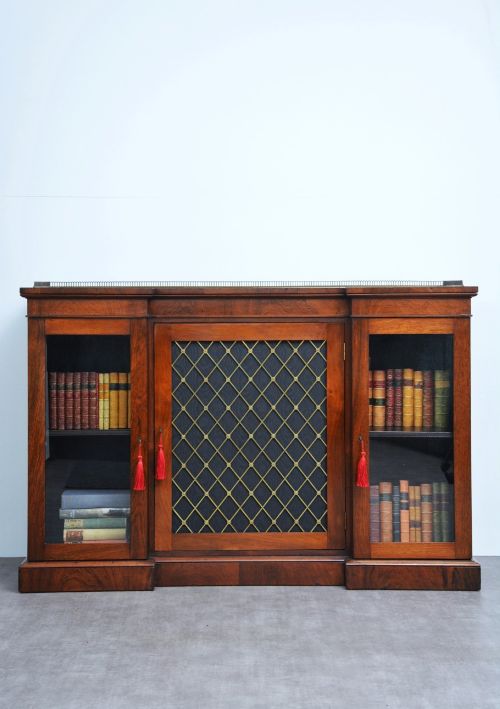
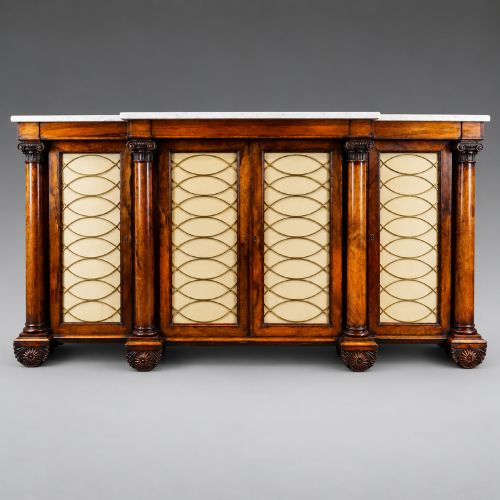
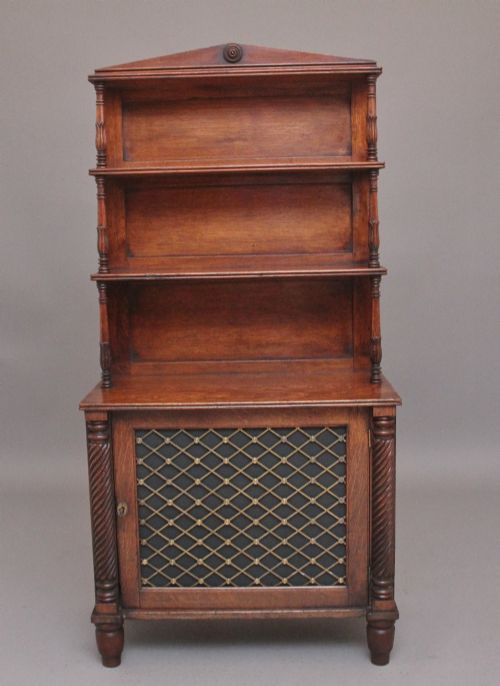
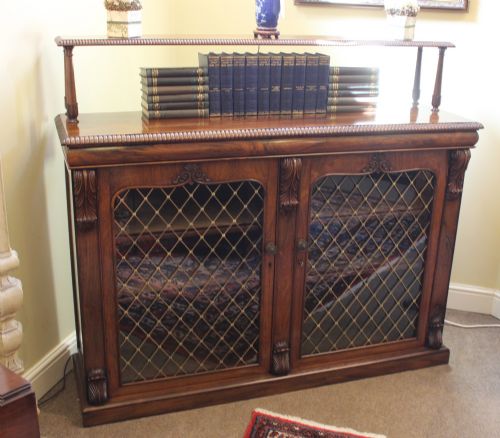
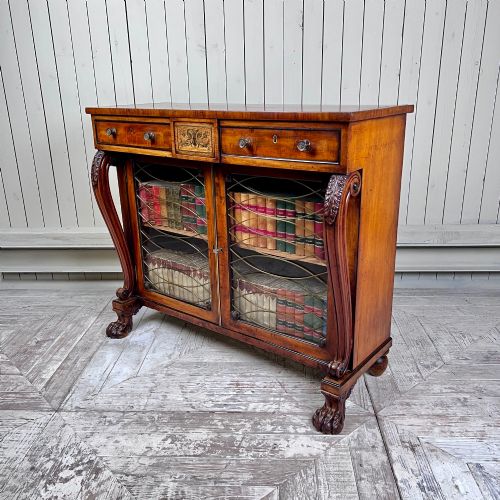
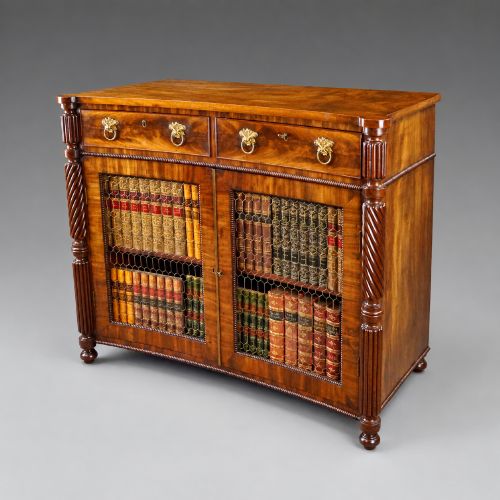
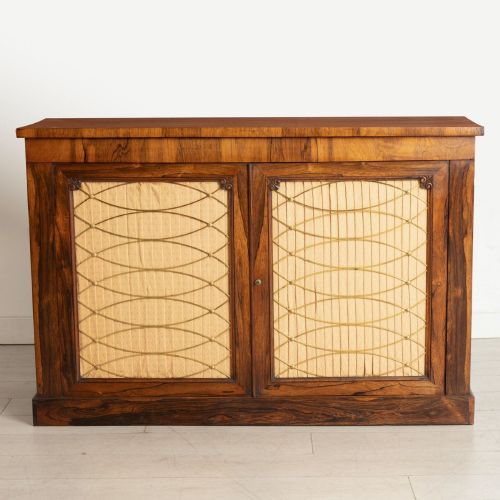
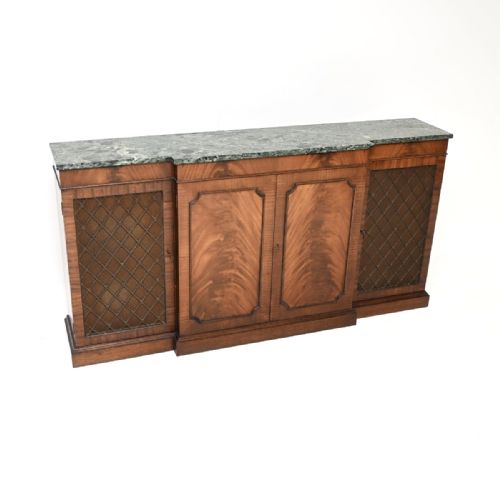
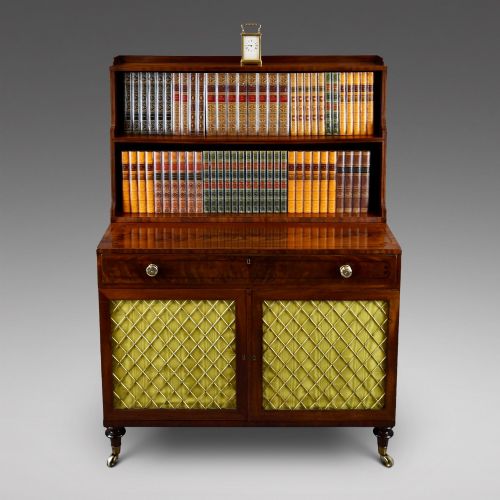
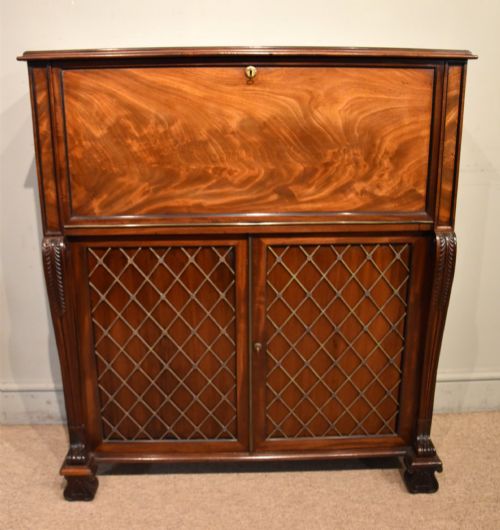
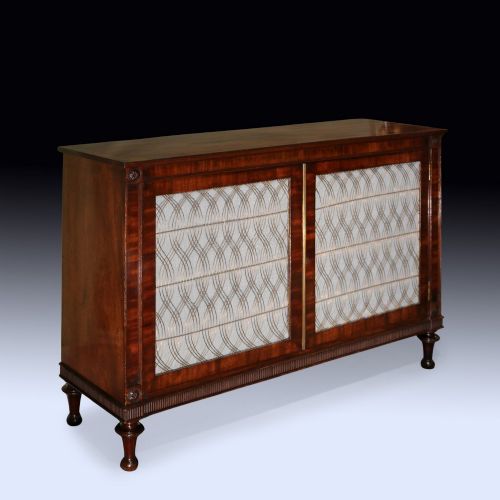
Antique brass grills form the distinctive wirework or fretwork panels fitted to the doors of cabinets, bookcases, and chiffoniers. When searching for antique brass grills, buyers typically encounter these woven or geometric metal insertions mounted in front of pleated silk, glass, or open space to conceal or display cabinet contents.
The pieces appearing on this page span the Regency, Victorian, and Georgian periods, alongside later 1920 and 1930 interpretations. Most examples integrate into case furniture built from mahogany, rosewood, and walnut, often taking the form of low side cabinets or dwarf bookcases.
Makers such as Gillows and Paul Sormani appear among the cabinetmakers producing refined case furniture incorporating these metal elements. The overarching style leans heavily toward Regency, Neoclassical, and French Empire designs, where fine metalwork punctuates dark timbers.
Materials and construction
Makers constructed these furniture pieces using dense cabinet timbers including mahogany, rosewood, satinwood, and walnut, frequently selecting figured veneers for central door panels and drawer fronts. Brass formed both the wire mesh or pierced grills and the delicate inlay lines that traced the contours of the carcase.
The metal grills were typically woven from fine brass wire or pierced from thin sheet brass, then secured into rebated wooden door frames behind glass or fabric backings. Joinery relied on traditional cabinetmaking techniques, incorporating brass stringing, ebony crossbanding, and architectural cornices appropriate to the Regency and Victorian eras.
Antique Brass Grills Retail Price Guide 2026
Typical asking prices for brass grills among the pieces listed under this phrase on Sellingantiques today, from the lower quarter to the upper quarter. They describe what is for sale here now, not the wider market.
Listings feature case furniture primarily in Regency and Victorian styles, constructed from mahogany, rosewood, and walnut.
Assessing quality
Quality rests on the crispness of the brass grillwork and the selection of the timber grain, where highly figured rosewood or flame mahogany elevates a cabinet above plain stock. Finely executed brass inlay and well-defined Neoclassical mounts distinguish exhibition pieces from standard workshop output.
The integrity of the structural joinery and the retention of original brass grilles, fabric linings, and interior shelving determine the standing of each piece. Maker attribution, such as work originating from Gillows or Paul Sormani, introduces a higher tier of cabinetmaking sophistication.
Gillows·Paul Sormani
The Antique Brass Grills Glossary
- Grill
- A lattice or openwork panel of woven wire or pierced brass fitted to cabinet doors. This element allows ventilation or partial visibility while protecting stored books and objects.
- Chiffonier
- A low cabinet featuring shelves or enclosed cupboards, commonly fitted with drawers and a raised superstructure. These pieces frequently incorporate brass-grilled doors in Regency and Victorian interiors.
- Regency
- An English design period spanning the early 19th century, characterised by classical restraint, architectural proportions, and delicate brass inlay upon dark hardwoods.
- Secretaire
- A cabinet or desk incorporating a pull-down writing drawer fitted with pigeonholes and small drawers. This form often combines writing functionality with enclosed lower shelving behind brass grills.
Antique Brass Grills: Frequently Asked Questions
What are antique brass grills used for?
These brass mesh or fretwork panels serve as door inserts on bookcases, side cabinets, and chiffoniers. They originally protected delicate porcelain or fine bindings while allowing air circulation or partial visibility.
Today, they provide an aesthetic texture that breaks up large expanses of dark mahogany or rosewood cabinetry.
How do I identify a Regency cabinet?
Regency pieces often display symmetrical proportions, classical Neoclassical motifs, and contrasting brass inlay against rosewood or mahogany carcases. Look for architectural cornices, ring-turned legs, and refined brass grillwork on the door panels.
Cabinets from this era emphasise clean lines and precise geometric stringing rather than heavy Victorian carving.
Were brass grills always glazed behind?
Many period cabinets originally featured pleated silk or fabric backing behind the brass mesh to obscure the interior contents. Some examples paired the metal grill directly with glass panes, while others left the wire open.
Fabric behind the grill can often be replaced during conservation to match the historical period of the cabinet.
How do I care for rosewood and brass?
Maintain rosewood furniture by applying appropriate wax polish sparingly to nourish the dense grain without building up residue. Clean the brass grillwork gently with a dry or barely damp cloth to avoid staining the surrounding timber or fabric.
Keep these pieces away from direct sunlight and steady heat sources to protect the wood veneers and prevent the timber from splitting.