



Antique Brass Fireplace Set
An antique brass fireplace set brings warmth and functional elegance to a hearth, combining practical tools with decorative metalwork.
Antique Brass Fireplace Set
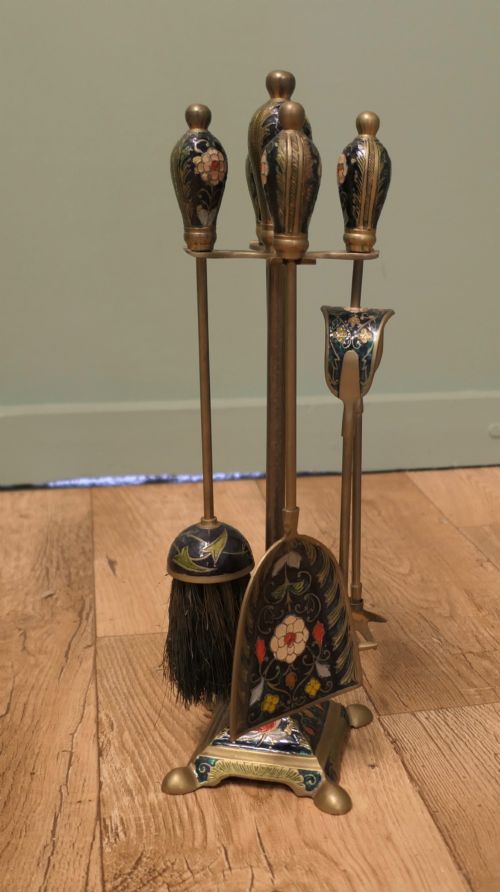
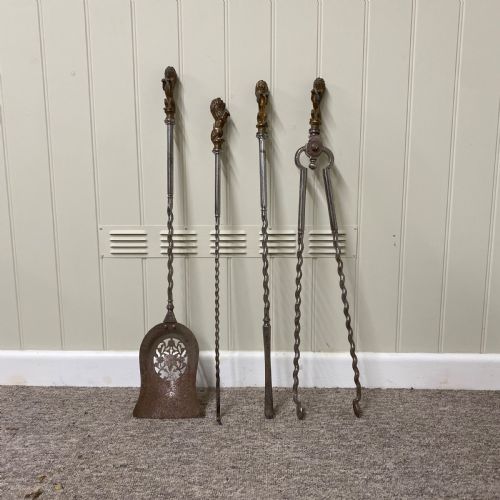
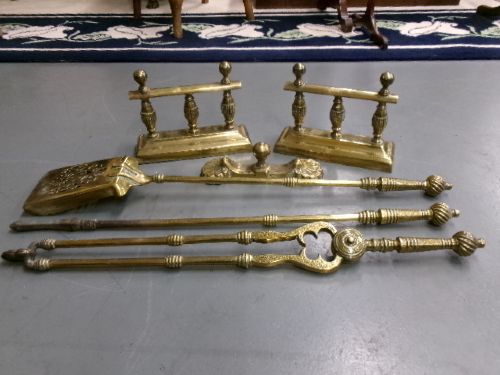
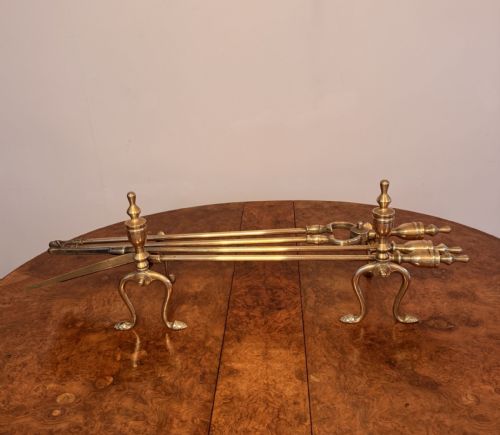
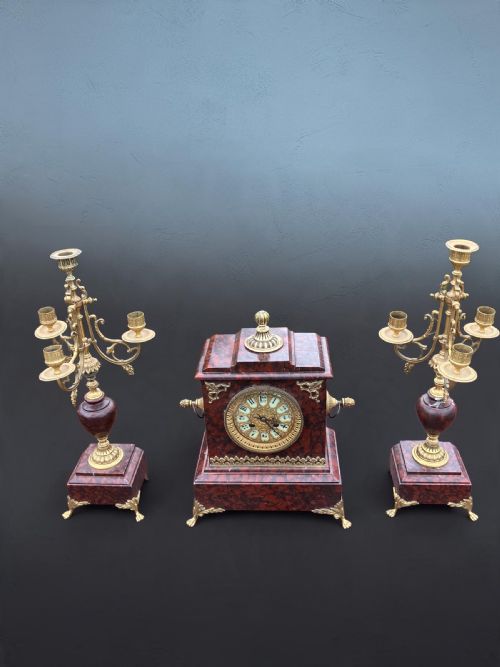
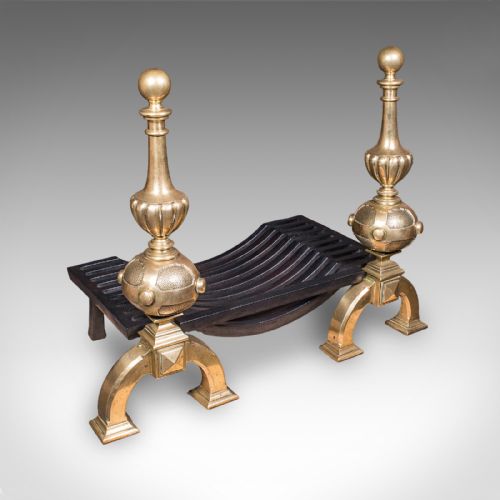
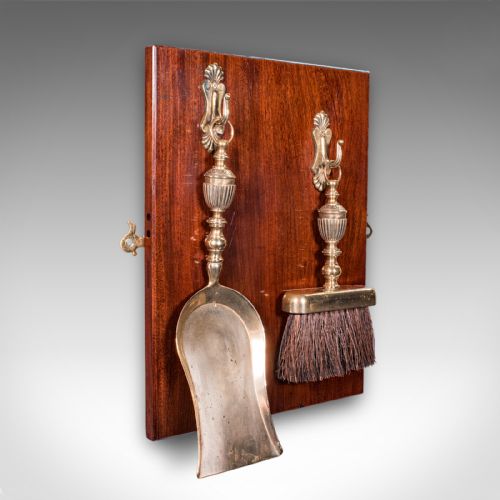
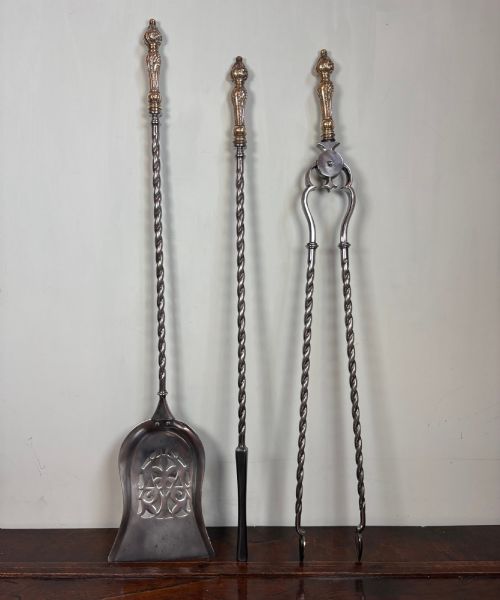
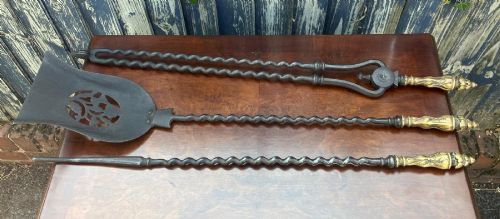
An antique brass fireplace set comprises matching hearth equipment, most frequently fire irons, companion stands, fire dogs, and occasional clock garnitures. These groupings stem from periods spanning the eighteenth century through the early twentieth century, encompassing Victorian, Edwardian, and Georgian designs.
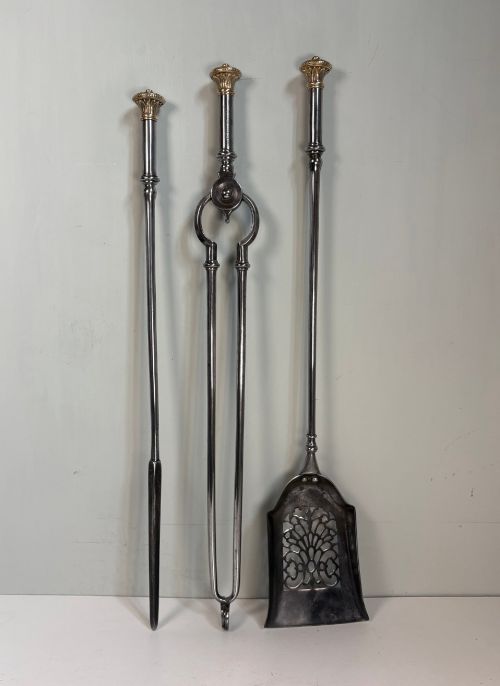
Buyers encounter everything from simple three-piece tool collections with shovels, pokers, and tongs to elaborate ensembles paired with marble clocks and candelabra. English and French workshops produced the majority of these pieces, utilising brass alongside steel and iron for daily hearth maintenance.
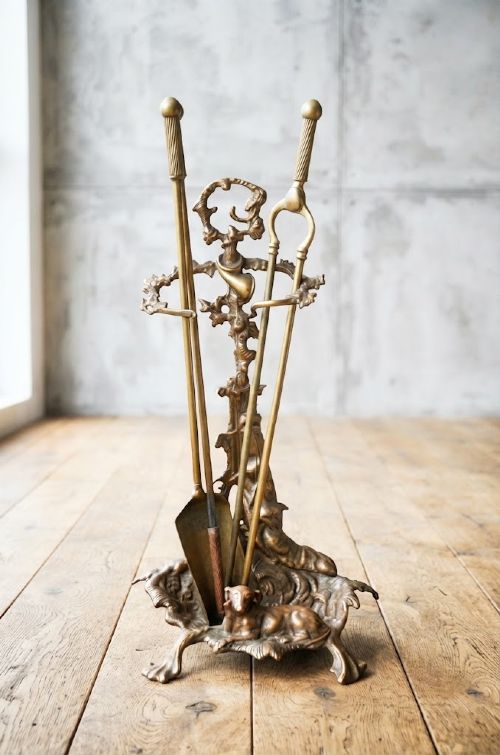
The practical function remains central to these sets, designed for tending coal or wood fires. Companion stands keep the poker, shovel, and tongs organised upright beside the hearth when not in use.
Materials and construction methods
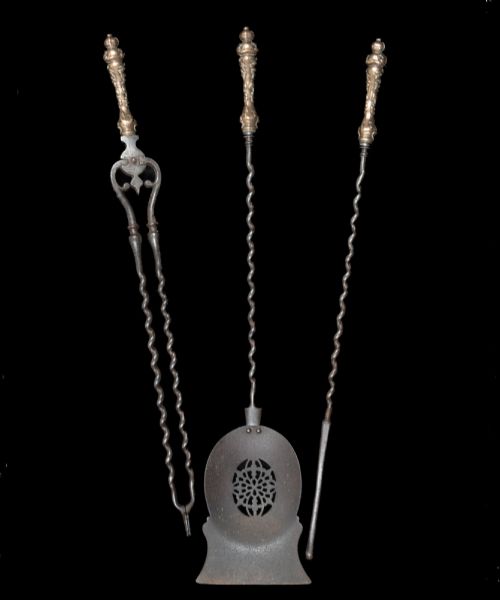
Blacksmiths and metalworkers combined durable steel or iron shafts with cast brass handles, utilising techniques such as rope twisting and ornate moulding. Fire irons required robust steel or iron for the working ends that contacted burning fuel, while brass provided decorative polish and warmth for handles and stands.
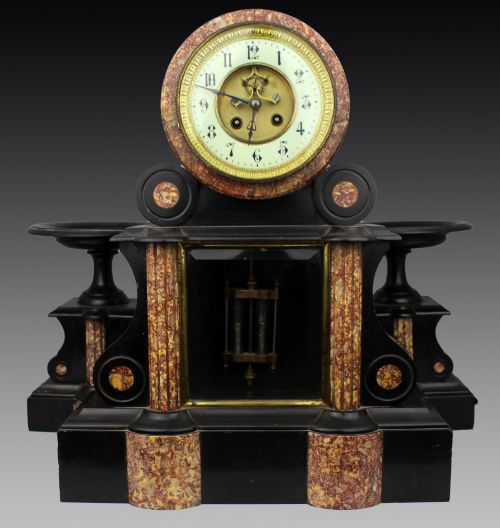
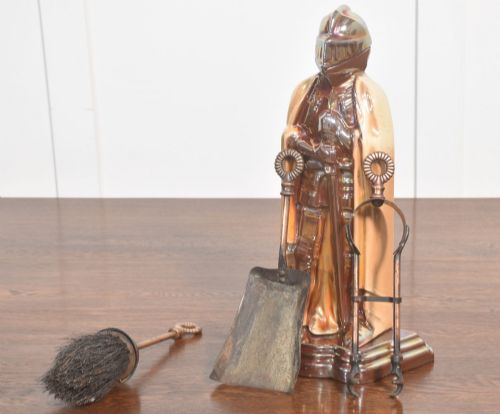
Gilt bronze, ormolu, and marble appear on French garniture sets, adding weight and sculptural presence to the brass elements. Makers shaped the metal through casting and hand-finishing, applying detailed motifs including hunting scenes, Rococo scrolls, and Knight figures.
Antique Brass Fireplace Set Retail Price Guide 2026
Typical asking prices for brass fireplace set among the pieces listed under this phrase on Sellingantiques today, from the lower quarter to the upper quarter. They describe what is for sale here now, not the wider market.
Listings feature brass, steel, iron, and marble across Victorian, Georgian, and Edwardian periods.
Determinants of quality
The distinction between standard utility sets and superior examples rests on the crispness of the casting, the heaviness of the gauge, and the integrity of the joins. High-quality companion sets display substantial weight in the brass and steel, with handles securely fastened to resist loosening during regular hearth use.
Design execution separates basic production from exceptional artistry, particularly evident in rope twist handles, hand-chased surface details, and matching fire dogs. Sets retaining their original stands or corresponding clock garnitures demonstrate superior preservation and cohesive workshop origin.
Japy Frères
The Antique Brass Fireplace Set Glossary
- Fire irons
- A matched set of poker, shovel, and tongs used for tending an open fire. These tools often hang from a dedicated stand or rest against fire dogs.
- Garniture set
- A decorative matching group of three or more objects, commonly comprising a mantel clock flanked by candelabra or urns in marble and brass.
- Fire dogs
- Andirons placed on either side of a hearth to support logs. They frequently coordinate with companion sets in brass or cast iron.
- Ormolu
- Gilded brass or bronze applied to decorative hardware and clock mounts. This technique provides a rich, gold-coloured finish characteristic of French pieces.
- Companion stand
- A vertical frame holding the poker, shovel, and tongs together in one compact unit. These stands keep hearth tools upright and accessible.
Antique Brass Fireplace Set: Frequently Asked Questions
What tools come in a standard set?
A standard set typically includes a poker for moving logs, a shovel for clearing ash, and tongs for handling fuel. Many configurations also incorporate a companion stand to hold these pieces upright.
Some larger ensembles add fire dogs or matching mantel clocks to complete the hearth arrangement.
How do I clean antique brass?
Antique brass benefits from gentle dusting and occasional cleaning with a soft cloth to preserve its natural patination. Avoid harsh chemical polishes that strip away the aged character accumulated over decades of use.
Steel portions of fire irons require light oiling if stored in damp conditions to prevent active surface corrosion.
Were these sets purely decorative?
While many sets possess ornate handles and fine casting, they were manufactured for active daily hearth maintenance. The steel working ends of pokers and shovels show that smiths prioritised durability alongside visual appeal.
Clock garnitures served a decorative mantel function, whereas companion sets remained strictly utilitarian.
How do I date a fireplace set?
Dating relies on stylistic clues, such as the curved Rococo scrolls of later Victorian periods or the restrained lines of Georgian steel and brass work. Material combinations, including black marble bases or gilt bronze mounts, also indicate specific nineteenth-century manufacturing decades.
Tool construction methods, like hand-forged steel joints versus later cast components, help narrow the period of origin.