

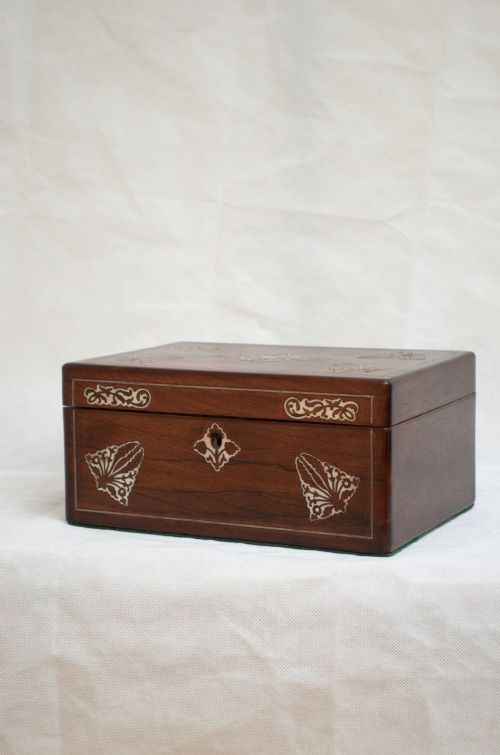


Antique Brass Dressing Box
An antique brass dressing box brings together heavy timber and polished metal to hold letters, trinkets and travelling essentials.
Antique Brass Dressing Box
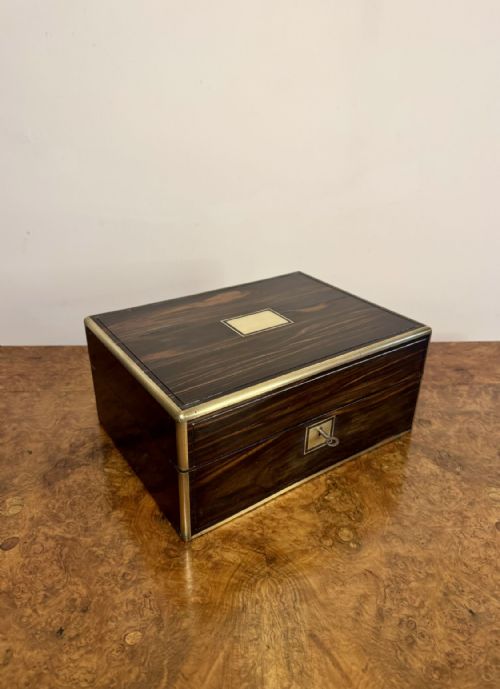
An antique brass dressing box is a heavy timber casket strengthened with brass banding, corner mounts and fitted interiors. These pieces date principally from the Regency and Victorian periods, alongside occasional examples from the nineteenth century. Buyers seek them out for their robust construction and clever internal compartments designed for bottles, razors and jewels.
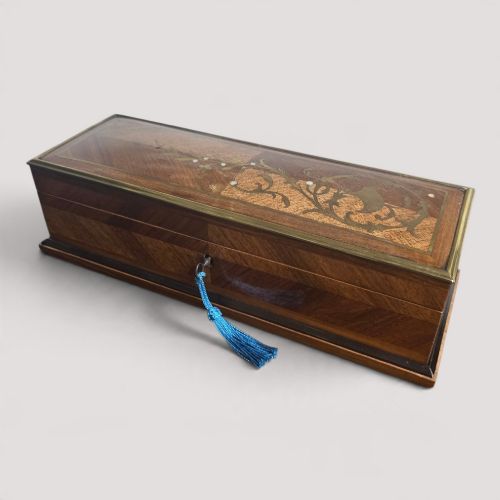
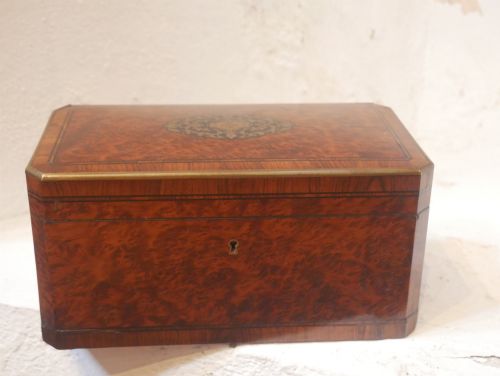
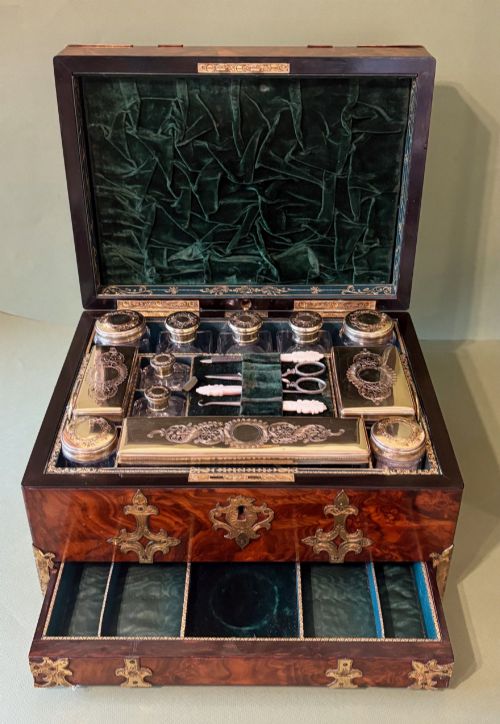
The objects appearing on this page take several forms, including gentleman's vanity cases, travelling dressing chests, and jewellery caskets. Many retain velvet linings, trays and glass bottles with metal tops. They originate from English and French workshops working in rosewood, mahogany, coromandel and burr walnut.
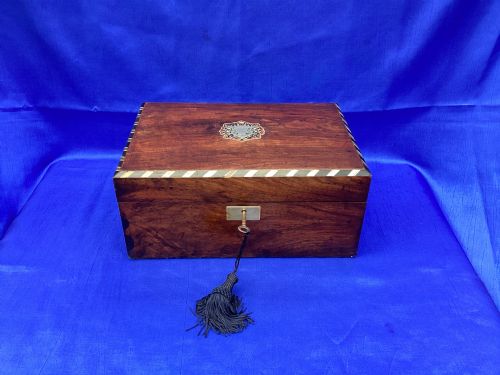
Victorian and Regency examples dominate the selection, often bearing flush handles and operational locks with working keys. A buyer will encounter boxes bound entirely in brass straps as well as those featuring delicate brass inlay set into dark hardwoods. Each piece serves as a desktop organiser or a decorative chest for private valuables.
Materials and Construction
Cabinet makers constructed these boxes using dense timbers such as rosewood, mahogany, coromandel and burr walnut over solid pine carcasses. They applied brass as protective corner brackets, strapwork bindings, and intricate cut inlay across lids and fronts. Interiors utilised fitted wooden trays, silk panels and velvet surfaces to cushion delicate contents.
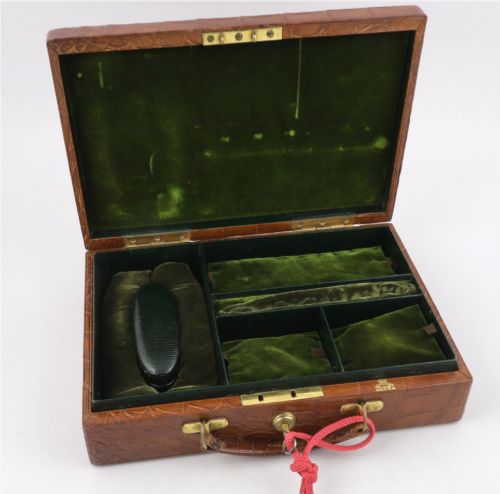
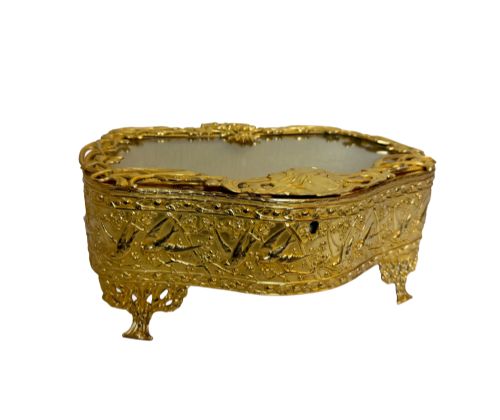
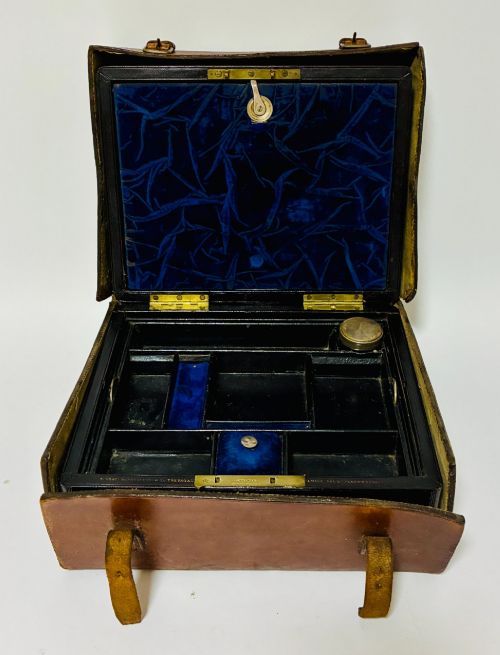
Metalwork involved cast or engraved brass mounts secured with tiny roundhead screws, alongside ormolu details and gilt bronze frames. Leather bound versions employed thick hide stitched over wooden foundations, often stamped or tooled around the edges. Glass scent bottles and jars with metal collars completed the fitted travelling arrangements.
Antique Brass Dressing Box Retail Price Guide 2026
Typical asking prices for brass dressing box among the pieces listed under this phrase on Sellingantiques today, from the lower quarter to the upper quarter. They describe what is for sale here now, not the wider market.
The selection spans the Regency, Victorian and Edwardian periods, utilising materials including rosewood, coromandel, burr walnut, leather and brass.
Distinctions in Quality
Quality rests in the precision of the brass work and the selection of the timber veneer. Superior boxes display book-matched burr walnut or figured coromandel with tight grain, whereas lesser pieces utilise plain mahogany or simple stained woods. The thickness and weight of the brass mounts also separate standard commercial boxes from bespoke cabinet work.
Internal organisation dictates value, with top-tier examples retaining complete sets of glass bottles, original velvet or silk linings, and multi-tiered lift-out trays. The integration of secret drawers, spring-released compartments and robust operational locks signed by makers indicates a higher grade of craftsmanship.
Tahan Paris·J C Vickery·F. West·H Mitchell·Lund Of Cornhill
The Antique Brass Dressing Box Glossary
- Coromandel
- A dense, heavily figured southeast Asian hardwood prized for its dark brown colour and striking black stripes. Cabinet makers used veneers of it on luxury Victorian boxes.
- Ormolu
- Gilt bronze mounted onto furniture and boxes as decorative trim or handles. The technique involves applying a gold amalgam to bronze before firing.
- Boulle
- A form of marquetry employing brass and tortoiseshell inlaid in ornate patterns. It appears on French nineteenth-century boxes.
- Burr Walnut
- Timber taken from the abnormal growth of a walnut tree, yielding a swirling, knotted grain pattern. It forms the exterior of many high-status Victorian dressing cases.
- Writing Slope
- A desk box that opens to reveal a slanted leather or velvet writing surface and compartments for ink and pens. Many examples combine writing and jewellery storage.
Antique Brass Dressing Box: Frequently Asked Questions
How were antique dressing boxes used?
These boxes travelled with owners on long journeys to hold cosmetics, grooming tools, jewellery and personal letters. At home, they sat on dressing tables or writing desks to keep small valuables secure.
Many contained removable trays and glass bottles with metal lids for perfumes and oils. Secret compartments inside allowed owners to hide currency or private papers.
What is the difference between a dressing box and a jewellery box?
A dressing box typically includes fitted spaces for glass bottles, jars and grooming implements alongside jewellery storage. They were built for complete personal grooming routines while travelling or at home.
Jewellery boxes focus specifically on partitioned space, ring rolls and velvet-lined trays for gems and trinkets. They often lack the larger compartments needed for glass bottles.
How do I date an antique brass box?
Dating relies on timber choices, brass mount styles and construction methods. Regency pieces from the early nineteenth century often feature cut brass inlay and satinwood interiors.
Victorian examples frequently utilise heavy brass strapwork, coromandel veneer, or burr walnut. Lock stamps, maker signatures and historical inscriptions also provide precise chronological markers.
Can I use these boxes for daily storage today?
These boxes function well on modern desks or dressing tables for storing watches, cufflinks and everyday jewellery. Their sturdy timber construction and lined interiors protect small items effectively.
Care should be taken to protect antique wood finishes from moisture and direct sunlight. Working locks offer basic security, though keys should be handled gently.
What woods were most commonly used?
Mahogany and rosewood dominate earlier nineteenth-century boxes, offering deep tones and durability. Mid-to-late Victorian pieces frequently showcase burr walnut and exotic coromandel.
Secondary woods like pine or oak form the hidden interior structures and drawer linings. Timber selection usually reflects the status and intended market of the box.