


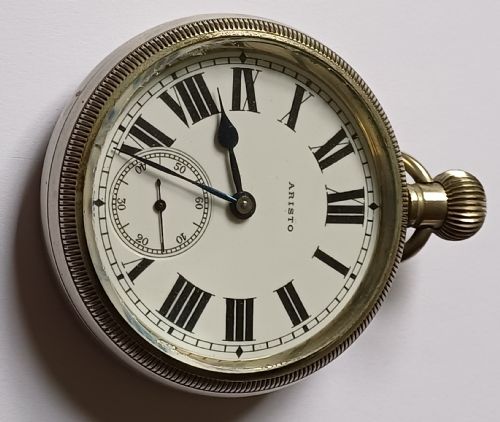


Antique Brass Chronometer
An antique brass chronometer is a precision timekeeper built for navigation at sea, combining solid brass casing with delicate marine movements for absolute accuracy.
Antique Brass Chronometer
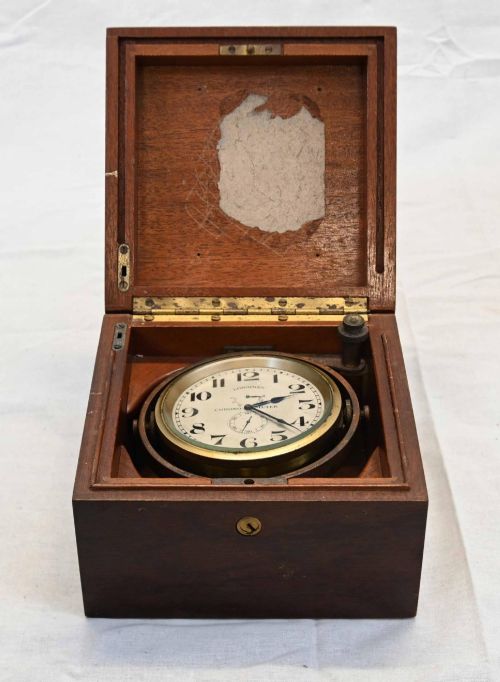
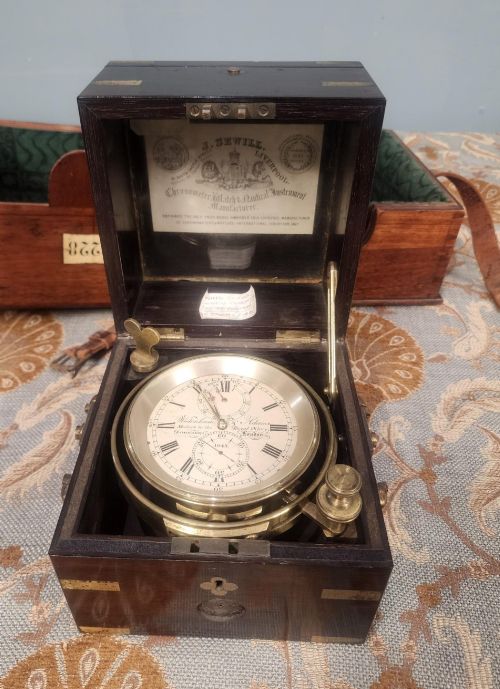
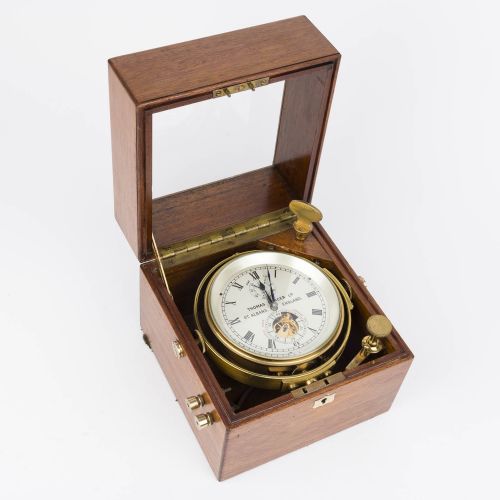
When you search for an antique brass chronometer, you encounter specialised timekeepers designed to determine longitude on board a vessel. These maritime instruments range from sophisticated two day marine chronometers housed in mahogany or rosewood boxes to bulkhead wall clocks and pocket watches.
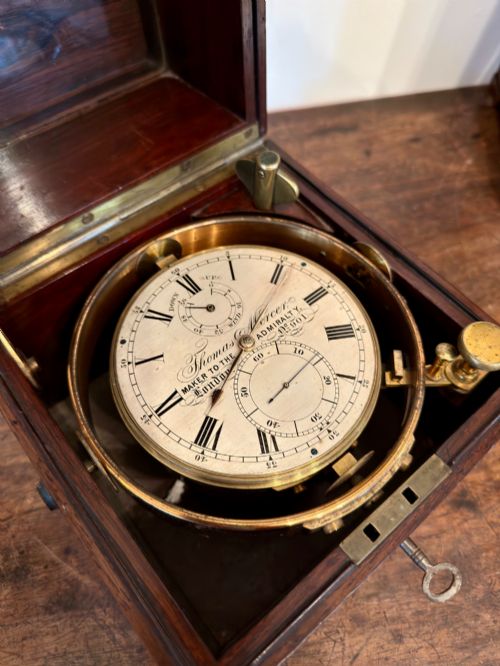
The pieces appearing on this page span the nineteenth century up to the mid twentieth century, covering Victorian maritime designs alongside military issues. You meet works by notable makers such as Mercer of London, Litherland Davies of Liverpool, and James McCabe.
The most common forms are enclosed in brass bound wooden cases with silvered metal dials, though brass cased ships wall clocks with fusee movements also feature strongly. Each piece represents a distinct era of nautical engineering and dependable mechanical timekeeping.
How they were made
The construction relies heavily on durable brass for the outer housings, gimbals, and bezels, paired with seasoned hardwoods like mahogany and rosewood for the protective fitted boxes. Interior components utilise steel and silvered metal for the graduated dials and intricate gear trains.
Mechanisms often incorporate fusee movements and chain drives to ensure even power delivery to the escapement as the mainspring unwinds. Glazed bezels and viewing ports protect the delicate hands and engraved dials from moisture and salt air.
Antique Brass Chronometer Retail Price Guide 2026
Typical asking prices for brass chronometer among the pieces listed under this phrase on Sellingantiques today, from the lower quarter to the upper quarter. They describe what is for sale here now, not the wider market.
Many of these boxes carry tiny ivory or bone keyhole escutcheons, whispering of captains locking away seconds against the rolling sea.
What varies in quality
Quality rests upon the reputation of the maker and the precision of the mechanical movement housed within the brass and wood casing. Signed dials by renowned makers such as Thomas Mercer or James McCabe command particular attention for their superior finishing and accuracy.
The integrity of the original cabinetry, the preservation of the silvered metal dial, and the presence of matching numbers on the gimbals and movement distinguish finer examples. Simpler bulkhead clocks and later military issue pieces present a more utilitarian standard of finish compared to deluxe marine chronometers.
Mercer of London·Thomas Mercer·Litherland Davies Of Liverpool·Aristo·KELVIN WHITE HUTTON LONDON·James McCabe
The Antique Brass Chronometer Glossary
- Chronometer
- A high precision timekeeper designed to maintain accuracy under variable conditions at sea. It is adjusted for temperature and position.
- Fusee
- A conical pulley used with a cord or chain to maintain equal driving power as the mainspring runs down. This smooths out the decreasing force of the spring.
- Gimbals
- A pivoted ring system that allows the chronometer box to remain level despite the rolling and pitching of a vessel. This protects the delicate balance wheel from motion disturbance.
- Silvered Metal
- A brass or copper dial plate treated with a silver compound to create a bright, legible surface for engraving numerals and maker signatures.
- Bulkhead Clock
- A clock designed to be mounted directly onto the interior wall or partition of a ship cabin. They usually feature heavy brass bezels and secure fastening lugs.
Antique Brass Chronometer: Frequently Asked Questions
What is an antique brass chronometer used for?
These instruments served as precise navigational aids on ships to determine longitude by keeping Greenwich Mean Time.
Navigators relied on their steady accuracy at sea where standard pendulum clocks would fail.
How do I wind a two day marine chronometer?
Winding requires opening the brass bowl within the wooden case and using a dedicated key to wind the mainspring through the dial or movement back.
Care must be taken not to overwind the delicate mechanism.
Why are some chronometers housed in wooden boxes?
The polished mahogany or rosewood boxes protected the sensitive brass movement from sea spray, dust, and temperature fluctuations.
Brass carrying handles and secure locking hooks kept the instrument stable during transport.
How do I date an antique marine chronometer?
Dating relies on maker signatures, serial numbers, style changes in the dial engraving, and accompanying brass plaque inscriptions.
Records of known workshops and makers help narrow down the period of production.