


Antique Boxed Clock
An antique boxed clock brings portable timekeeping and cabinet-maker's joinery together, offering a fitted case alongside a mechanical movement.
Antique Boxed Clock
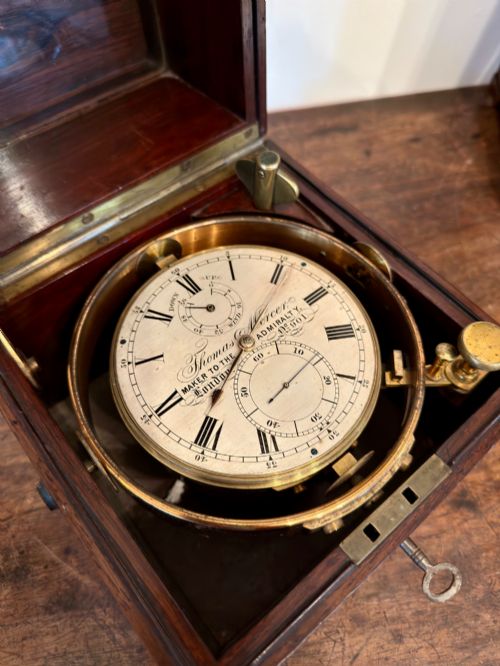
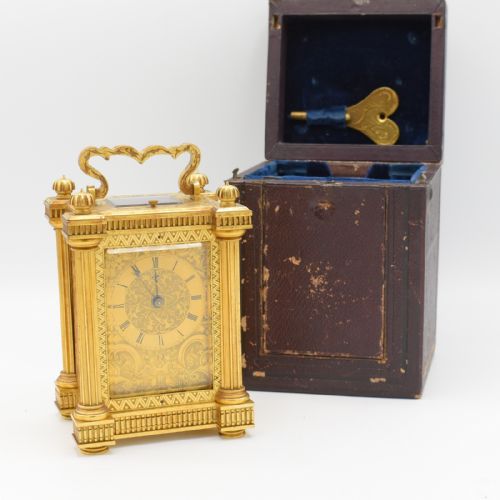
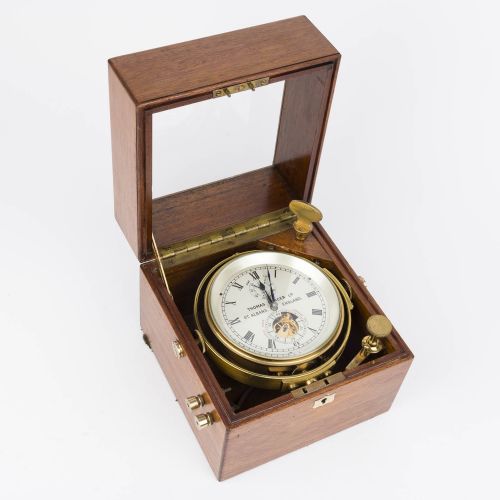
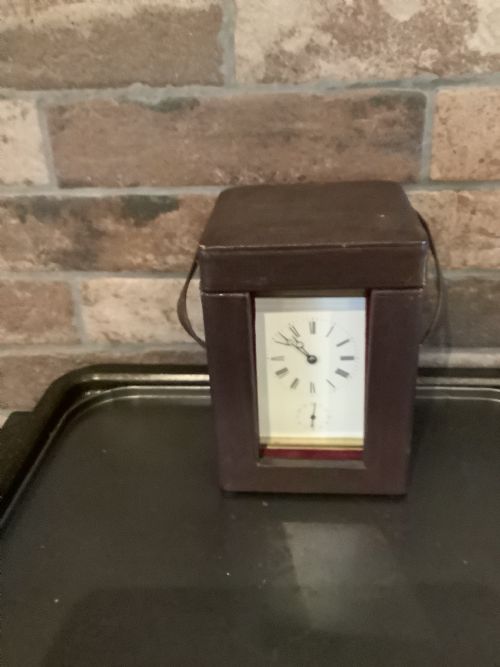
When searching for an antique boxed clock, collectors encounter several distinct forms spanning the nineteenth and twentieth centuries. The selection ranges from portable marine chronometers in wooden housings to carriage clocks nestled in original leather or gilt-accented cases.
The most common examples on this page are carriage clocks with fitted boxes, alongside specialised maritime and railway timepieces. These objects combine precision horology with protective cabinetry, often utilising materials like mahogany, brass, and glass.
Pieces from the nineteenth century predominate, reflecting an era when reliable portable time was essential for travel and navigation. Styles vary from traditional French and Victorian designs to utilitarian railway equipment.
Materials and construction
Horological housings rely on dense hardwoods like mahogany and burr yew, joined carefully to protect the delicate internal mechanisms from dust and damage. Brass and gilt bronze form the structural frames and bezels of the timepieces themselves, providing both durability and a polished finish.
Dials incorporate silvered metal, white enamel, and occasionally guilloche enamel for visual clarity and decoration. Glass panels allow the escapement and movement to remain visible while secured inside protective travel boxes and outer trunks.
The inventory encompasses marine chronometers, carriage clocks, wall clocks, and desktop storage chests.
Assessing quality in boxed timepieces
The standard of cabinet-making in the surrounding box distinguishes everyday travel items from exceptional pieces. Superior specimens display tight joinery, quality veneers, and well-fitted hardware that complement the mechanical sophistication of the clock within.
Thomas Mercer·James McCabe·Litherland Davies·John Thwaites·Drocourt·L Epee
The Antique Boxed Clock Glossary
- Marine chronometer
- A highly accurate portable timekeeper used for navigation at sea, typically housed in a gimbaled wooden box to counteract the motion of a ship.
- Carriage clock
- A small, spring-driven clock designed for travel during the nineteenth century, usually featuring a glass-sided brass case and a folding handle on top.
- Repeater
- A mechanical complication in a clock that chimes the hours and quarters when a lever or button is pressed.
- Guilloche
- An intricate decorative engine-turned pattern engraved onto metal surfaces, frequently covered with translucent enamel.
- Fusee
- A conical pulley used in clockwork to maintain equal force on the train as the mainspring unwinds.
Antique Boxed Clock: Frequently Asked Questions
What is an antique boxed clock?
An antique boxed clock is a timepiece that comes with a dedicated fitted housing, storage chest, or travel case. These range from marine chronometers in wooden transit boxes to carriage clocks with leather outer cases.
The housing serves to protect the mechanical movement during transport while adding a layer of cabinet craftsmanship. Many surviving examples retain their original keys and paperwork within these protective enclosures.
How do I date a boxed clock?
Dating involves examining the style of the clock face, the type of escapement, and the construction methods used in the outer box. Maker signatures and serial numbers engraved on the movement plates offer the most precise chronological clues.
Design motifs also point to specific eras, such as ornate Victorian brasswork or the simpler lines of twentieth-century railway and marine equipment. Comparing the hardware of the box to the movement helps confirm the period.
Were these clocks made for travel?
Many of these timepieces were specifically engineered for mobility, particularly marine chronometers and brass carriage clocks. The outer boxes and leather cases absorbed the bumps and shifts of journeys by sea, rail, or coach.
Sturdy construction ensured that delicate internal gears remained aligned despite constant movement. Travel clocks allowed travellers to maintain accurate time away from home before the widespread use of pocket watches.
How should I display a boxed clock?
These pieces look best placed on a sturdy desk, table, or shelf where the exterior wood and glass panels catch natural light. Keeping the box open or closed depends on whether you wish to view the dial or protect the delicate surfaces from dust.
Position the clock away from direct sunlight and heat sources to preserve wooden finishes and enamel dials. Stable surfaces prevent vibrations that might interfere with the mechanical movement.