

Antique Bookcase on Legs
An antique bookcase on legs raises volumes clear of the floor, uniting practical shelving with the lighter proportions typical of revival periods.
Antique Bookcase on Legs
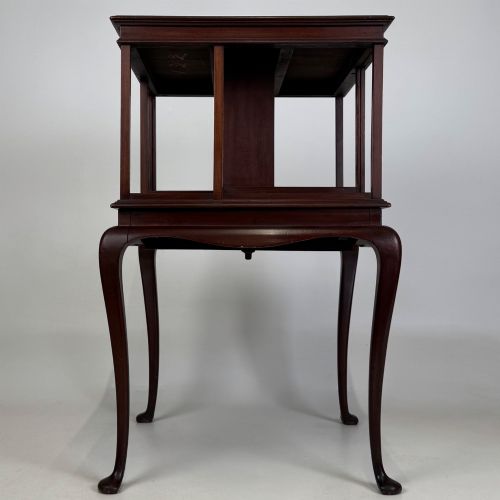
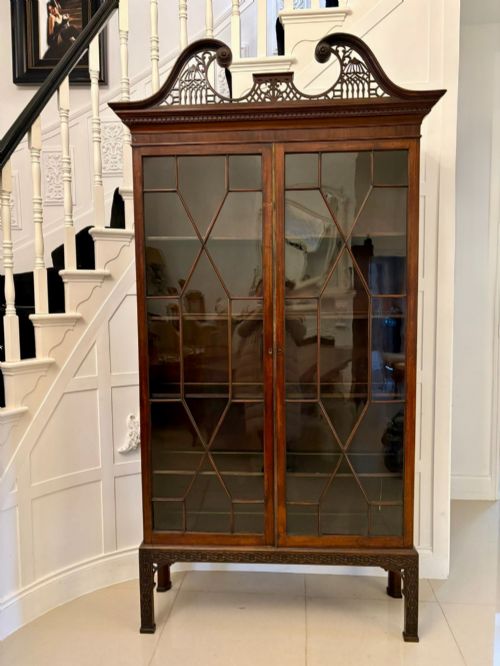
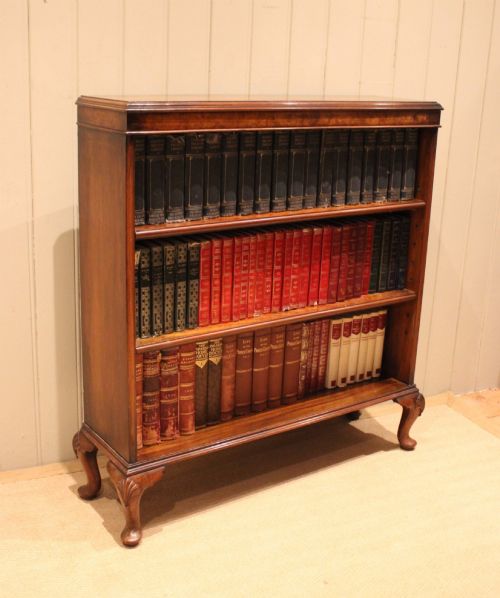
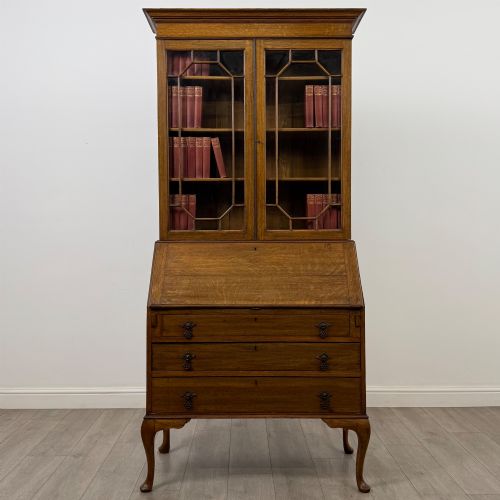
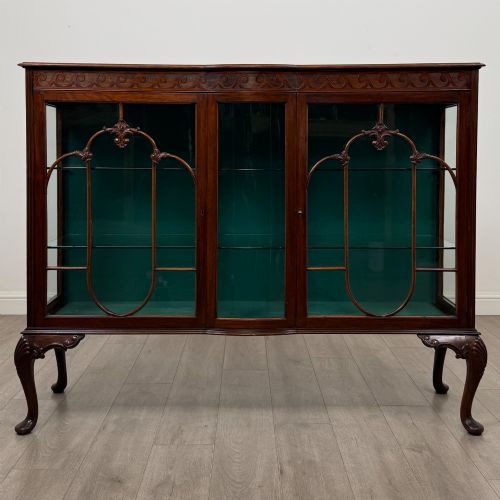
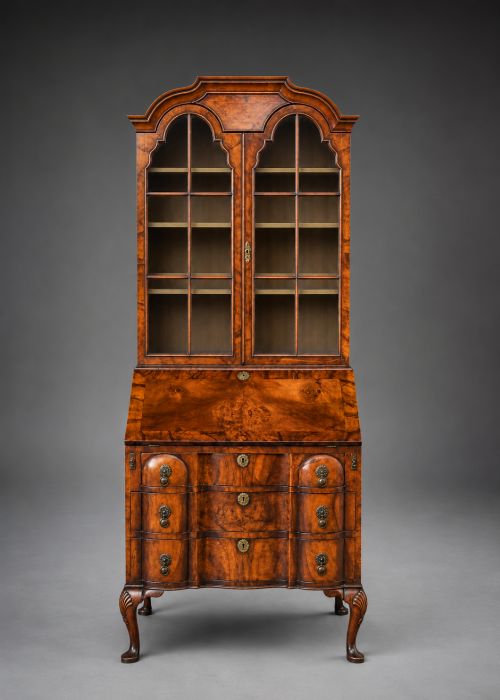
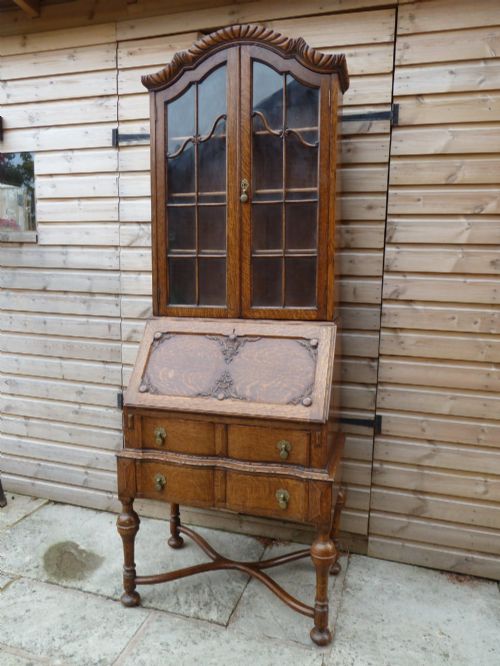
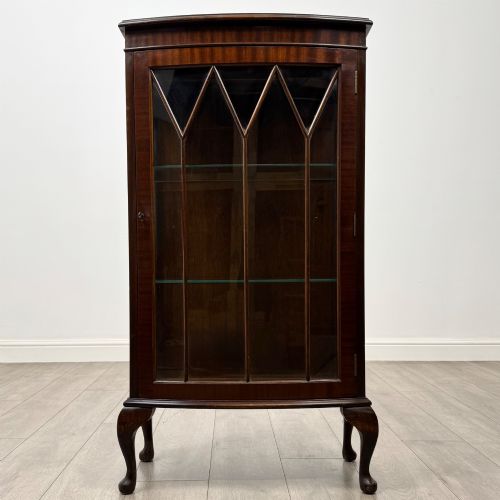
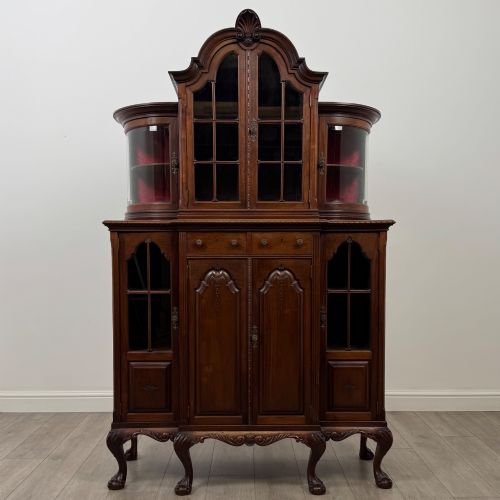
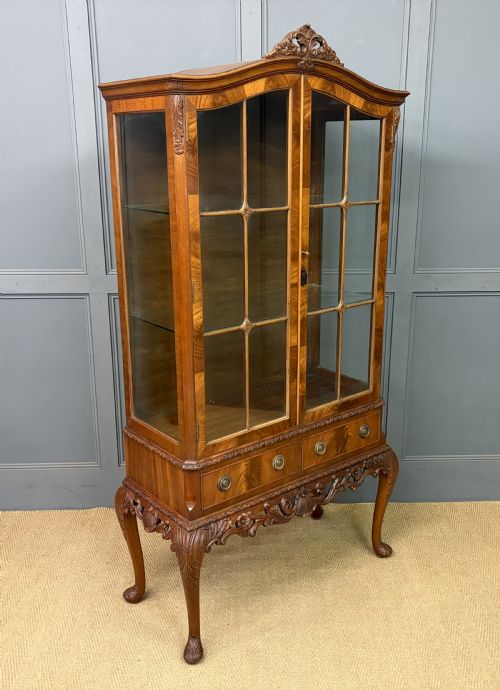
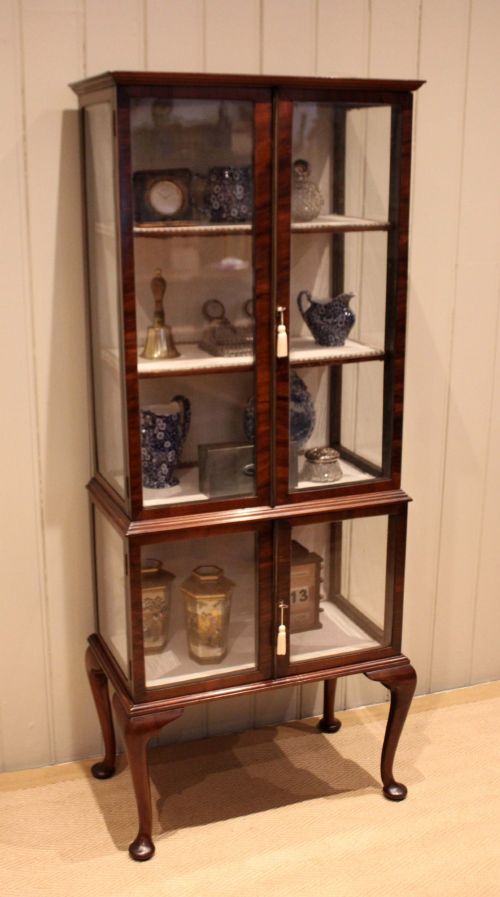
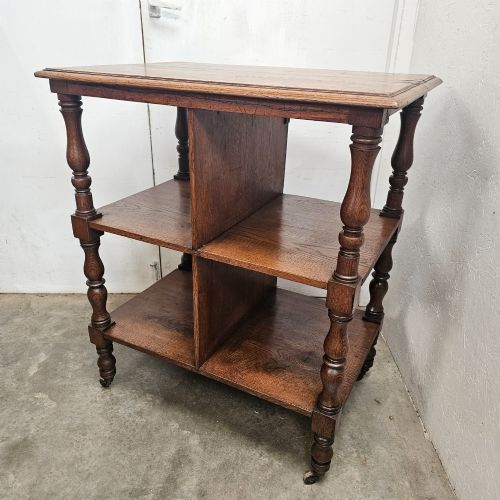
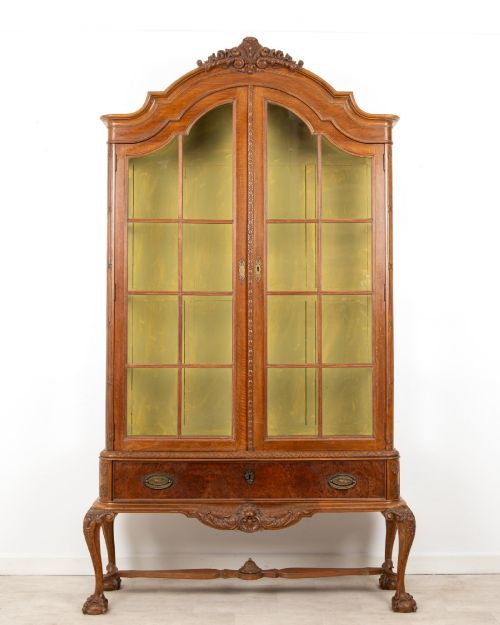
An antique bookcase on legs appears across nineteenth-century and early twentieth-century periods, taking the form of open shelving, glazed display cabinets, bureau bookcases, and revolving bookstands. These pieces emerge in styles ranging from Edwardian and Victorian to Queen Anne, Chippendale, Jacobean, and Sheraton revivals, often incorporating stands or raised supports.
The versions most commonly met on this page span the Edwardian era and the 1920s, constructed in mahogany, walnut, and oak. They serve diverse domestic spaces by combining book storage with glass-fronted display or bureau writing slopes raised off the ground.
Materials and Techniques
Cabinetmakers utilised primary timbers like mahogany, oak, and walnut, frequently applying burr walnut and satinwood veneers to create decorative surfaces on doors and drawer fronts. Inlaid details, brass hardware, and gilt metal mounts accent these timber constructions.
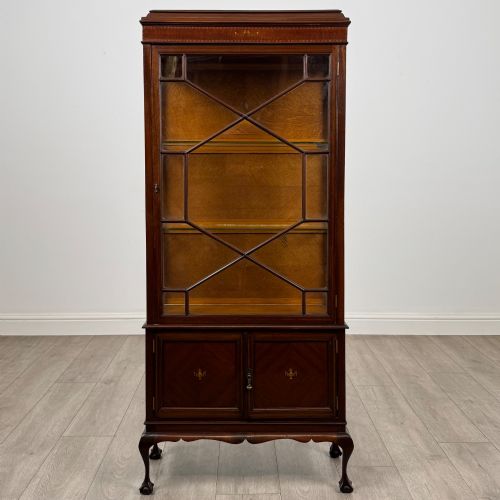
Glazing techniques involve astral-glazed doors that frame the book compartments, while structural supports range from turned legs and stands to serpentine frameworks characteristic of specific revival styles.
Current listings feature pieces spanning the Victorian, Edwardian, and 1920s periods, constructed primarily in mahogany, walnut, oak, and satinwood.
Judging Quality
Quality rests upon the selection of timber and veneer, where figured burr walnut or carefully matched mahogany grain distinguishes superior examples from plain utility pieces. The crispness of carved details, such as those found on revival models, reveals the hand of a more accomplished workshop.
Construction methods determine durability, visible in the integration of the leg supports with the main carcase and the precision of the joinery on bureau drops and glazed door frames. Balance and proportion when elevated on legs define the visual success of the piece.
Maple & Co.·Paul Sormani·Waring & Gillow
The Antique Bookcase on Legs Glossary
- Astral glazed
- A glass door divided into smaller panes by wooden glazing bars. This treatment lightens the visual weight of large book storage.
- Bureau bookcase
- A cabinet combining a sloping fall-front desk compartment with upper shelving for books. These multi-functional pieces often feature fitted interior pigeonholes.
- Revival style
- A design movement looking back to earlier historical periods such as Queen Anne or Sheraton forms. Makers reinterpreted these historical aesthetics for Edwardian and twentieth-century homes.
- Vitrine
- A glass-fronted display cabinet designed primarily for showing objects rather than housing working libraries. They frequently incorporate raised legs or open stands.
- Whatnot
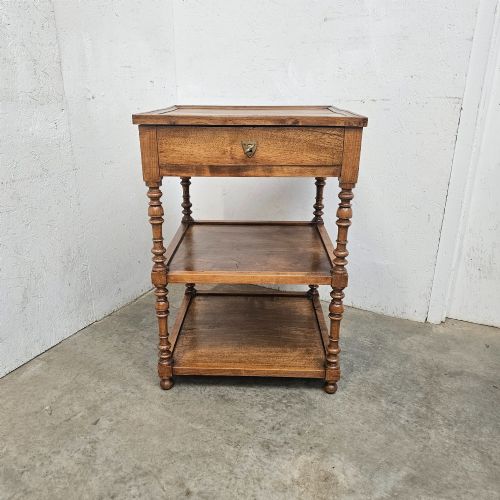
- A piece of freestanding open shelving with multiple tiers supported by slender uprights or legs. They were utilised for books and decorative ornaments.
Antique Bookcase on Legs: Frequently Asked Questions
How do I date an antique bookcase on legs?
Dating relies on combining the stylistic clues of the revival period, such as Queen Anne or Sheraton motifs, with timber selection and construction methods typical of the Victorian, Edwardian, or 1920s eras.
Hardware styles, glass manufacture, and interior fittings provide further chronological markers to narrow down the decade of production.
What is the difference between a bookcase and a vitrine?
A traditional bookcase focuses on housing volumes behind wooden or glazed doors with fixed or adjustable internal shelving.
A vitrine acts primarily as a display cabinet with glass panels on multiple sides, intended for ornaments rather than heavy working libraries.
Are revolving bookcases stable on legs?
Revolving bookcases utilise a central pivoting mechanism mounted upon a sturdy low-slung base or set of feet designed to bear the rotational weight of stacked volumes.
Their stability depends on a heavy, well-balanced cruciform or platform underframe that prevents tipping when books are pulled from one side.
Where should I place a bureau bookcase?
These pieces require adequate clearance for the drop-front writing slope to open fully into a horizontal desk position without blocking room traffic.
Positioning them away from direct sunlight protects vulnerable walnut and mahogany veneers from fading over time.