

Antique Book Storage
Antique book storage encompasses everything from towering mahogany library cabinets to small walnut tabletop boxes, offering timeless utility for housing personal libraries.
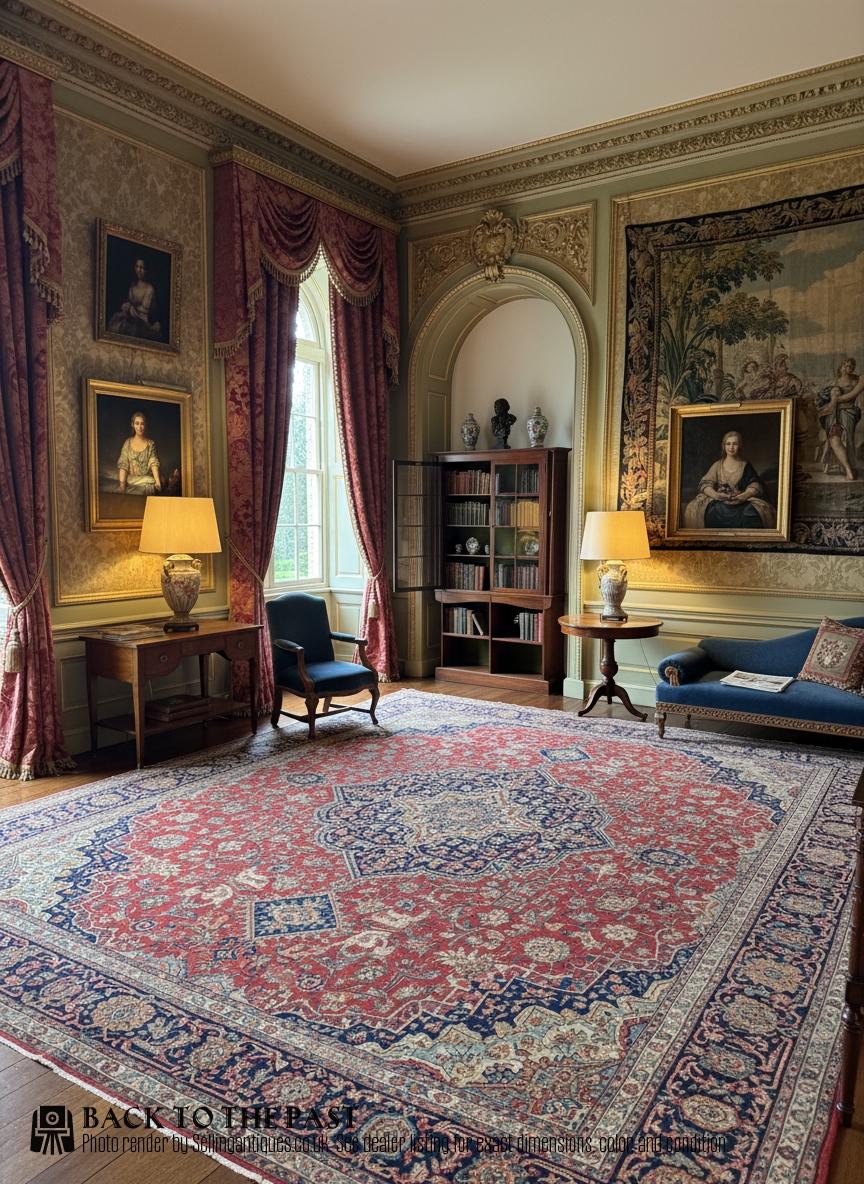
Antique Book Storage
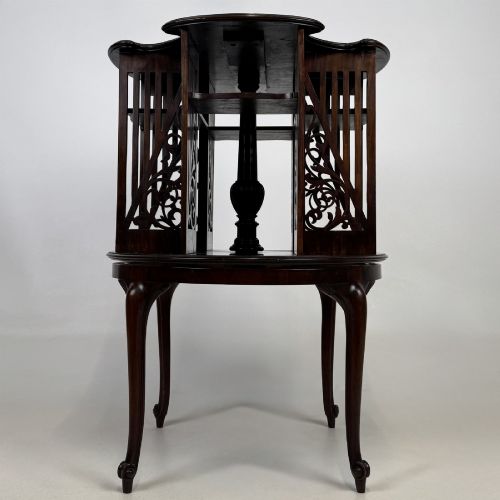
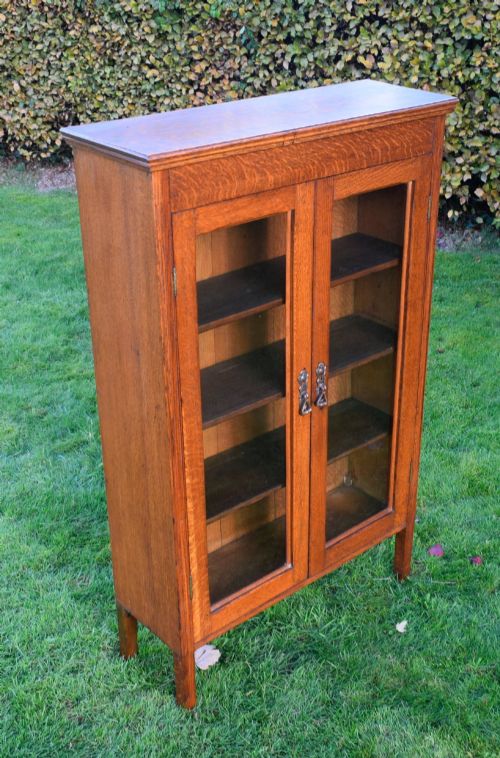
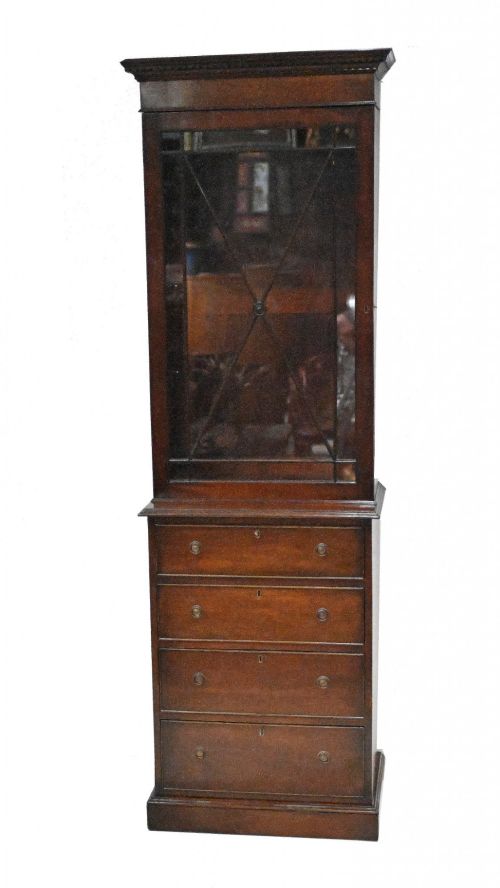
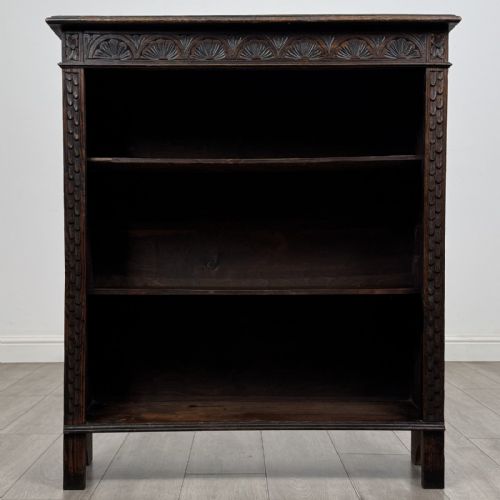
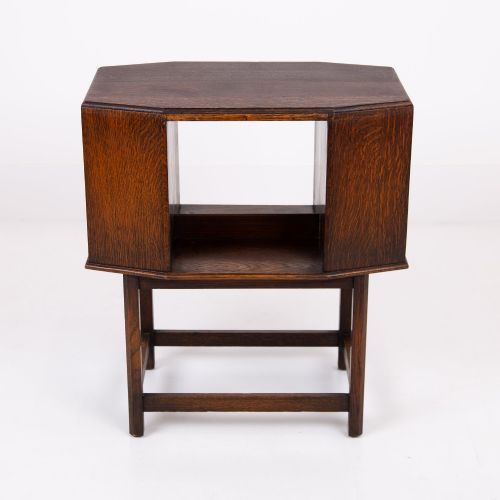
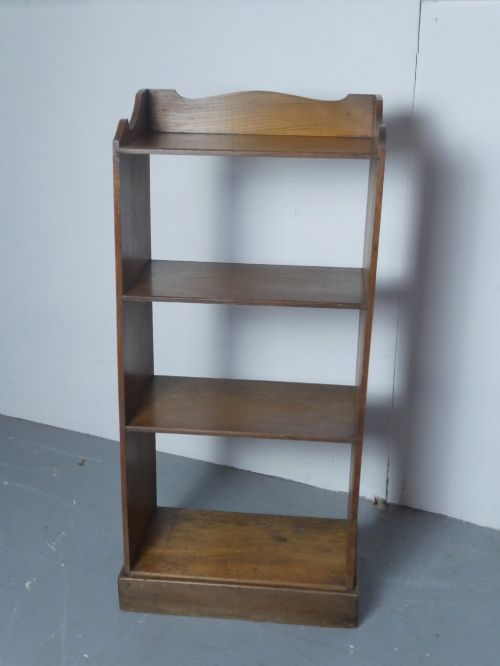
When buyers search for antique book storage, they encounter a diverse range of furniture types spanning multiple centuries. The selection includes tall library bookcases, open oak shelves, revolving mahogany designs, and smaller tabletop cabinets intended for desktop organisation.
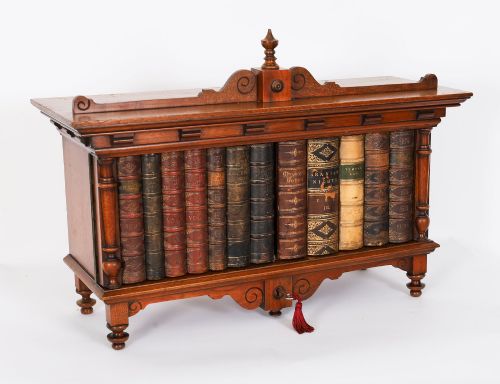
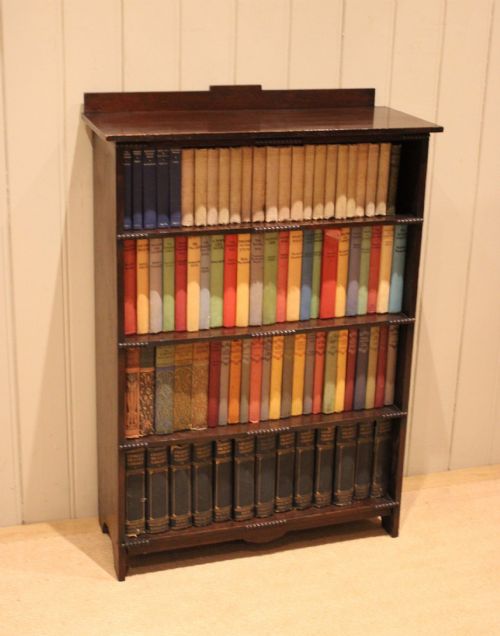
Most pieces seen on this page date from the nineteenth and early twentieth centuries, reflecting Victorian, Edwardian, and later periods. Alongside large glazed cabinets, buyers frequently find compact open shelving and occasional decorative boxes designed to resemble leather volumes.
Materials and construction
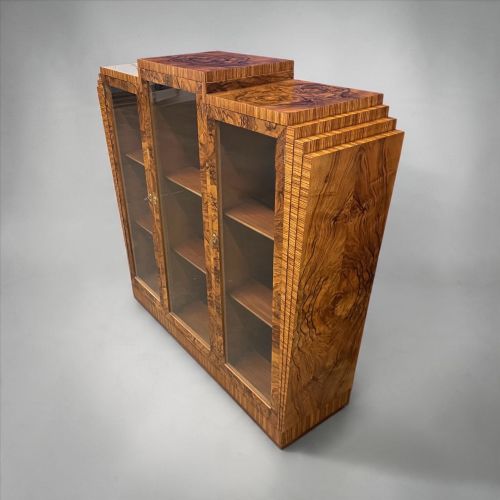
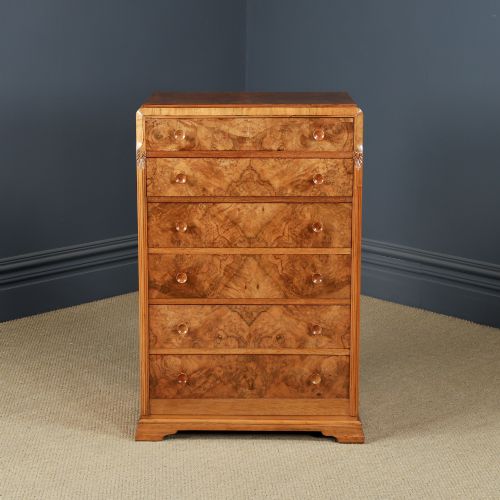
Cabinet makers relied predominantly on dense hardwoods such as mahogany, oak, and walnut, often accentuating surfaces with burr walnut veneers or brass fittings. Glass panels appeared on glazed cabinets, while specialised items incorporated tooled leather and painted finishes.
Construction techniques balanced structural strength with aesthetic detail, seen in beaded edges, carved motifs, and adjustable shelving mechanisms. Makers also produced smaller storage objects like wood and metal caskets disguised as book spines.
Antique Book Storage Retail Price Guide 2026
Typical asking prices for book storage among the pieces listed under this phrase on Sellingantiques today, from the lower quarter to the upper quarter. They describe what is for sale here now, not the wider market.
Biscuit tins shaped like antique book volumes kept late Victorian studies stocked with hidden treats.
Assessing craftsmanship
Quality in these storage pieces lies in the selection of timber and the precision of the joinery rather than mere scale. Superior examples display carefully matched wood grains, solid backboards, and refined decorative carving without excessive wear.
Functional elements such as working adjustable shelves, smooth drawer runners, and original glass panes distinguish finer pieces from simpler utilitarian variants produced in later decades.
Gillows·Huntley & Palmers
The Antique Book Storage Glossary
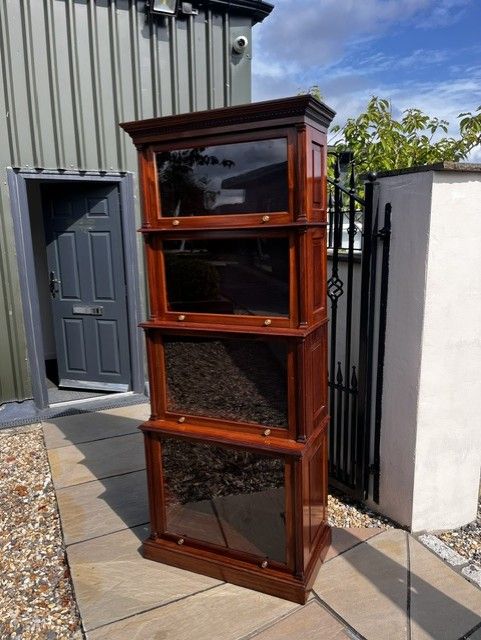
- Barristers stacking bookcase
- A modular bookcase featuring individual glass-fronted shelves that lift and slide inward to open. These units allowed lawyers to transport or expand their libraries easily.
- Waterfall bookcase
- A set of open shelves that progressively deepens from top to bottom, creating a stepped profile. This form was popular during the Regency period.
- Revolving bookcase
- A compact, rotating storage unit mounted on a cruciform base designed to sit beside a desk or chair. It grants access to multiple volumes from a single stationary position.
- Library bookcase
- A large, substantial piece of furniture typically divided into an upper glazed cabinet and a lower enclosed cupboard. These were built to house comprehensive household or institutional collections.
Antique Book Storage: Frequently Asked Questions
What is a barristers bookcase?
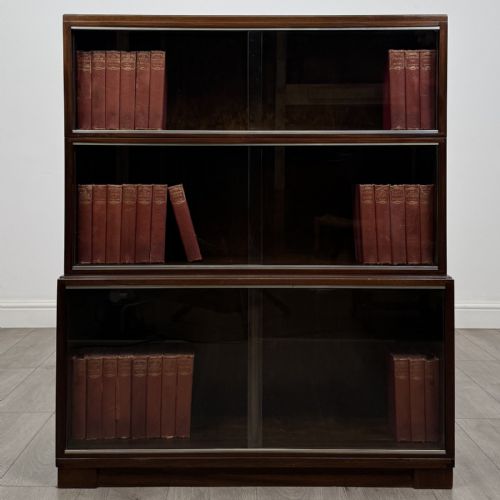
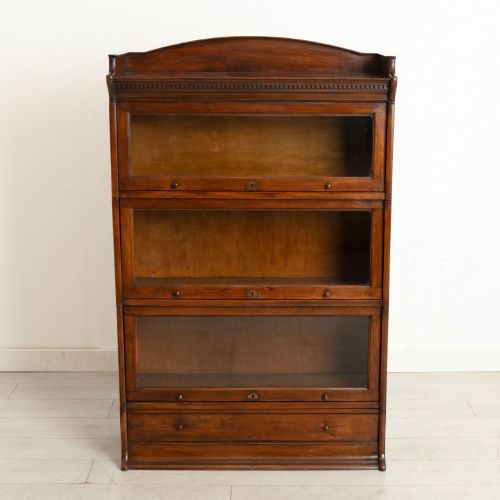
A barristers bookcase consists of stacked, self-contained shelf units with individual glazed doors. Each tier lifts upward on a pivot mechanism to access the books inside.
This modular design allowed the cases to be taken apart and moved easily, making them practical for professionals who travelled with their libraries.
How do I spot an Edwardian bookcase?
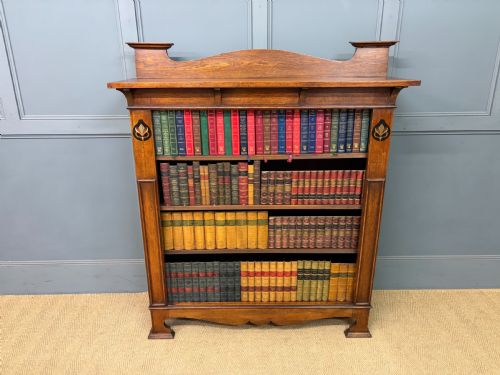
Edwardian bookcases often feature lighter timbers such as oak or mahogany with restrained decoration influenced by Arts and Crafts ideals. They frequently incorporate adjustable open shelving rather than heavy enclosed doors.
These pieces typically date from the early twentieth century and prioritise domestic utility over the elaborate carving seen in earlier Victorian furniture.
What distinguishes a library bookcase?
Library bookcases are grand pieces designed for substantial collections, usually combining glass-fronted display shelves above with solid wooden cupboards below. They are built from durable hardwoods like mahogany and oak.
These large cabinets dominated formal nineteenth-century rooms and required significant wall space to accommodate their height and depth.