



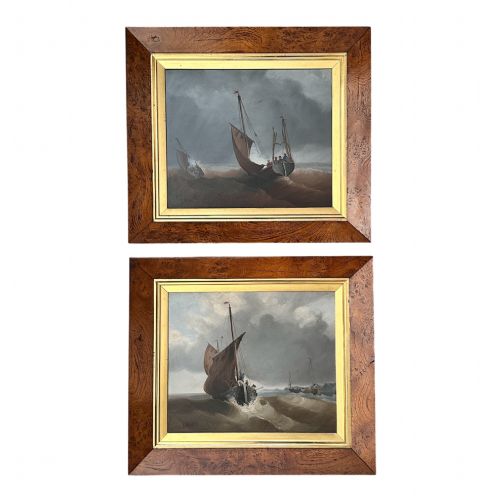
Antique Boat Oil Landscape
An antique boat oil landscape captures maritime life, coastal views, and river scenes across centuries of painterly skill.
Antique Boat Oil Landscape
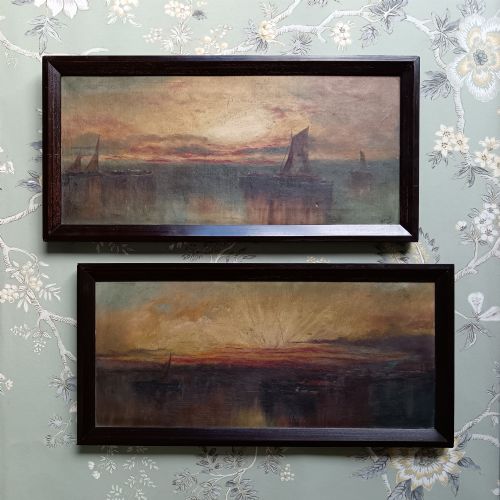
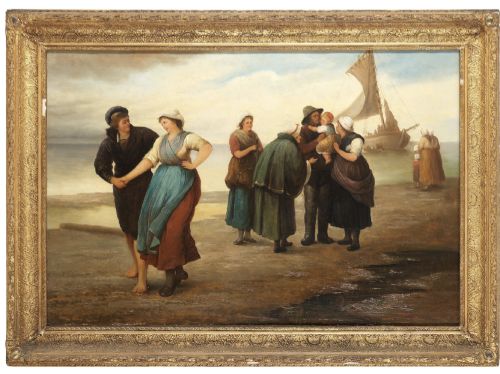
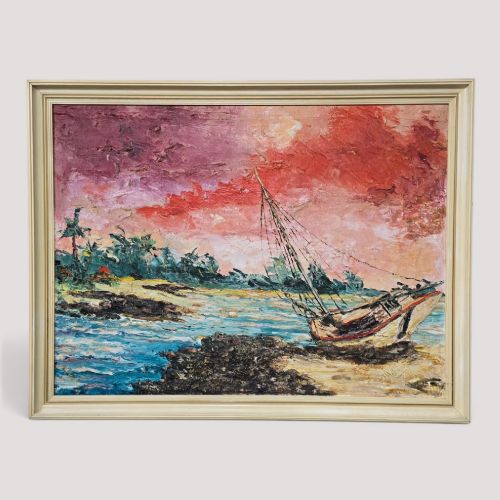
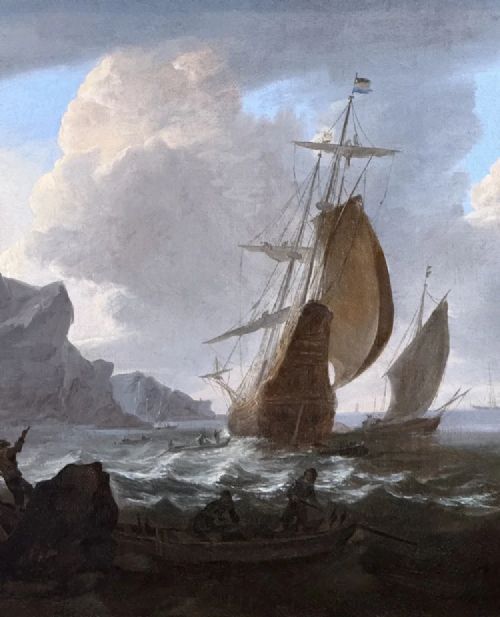
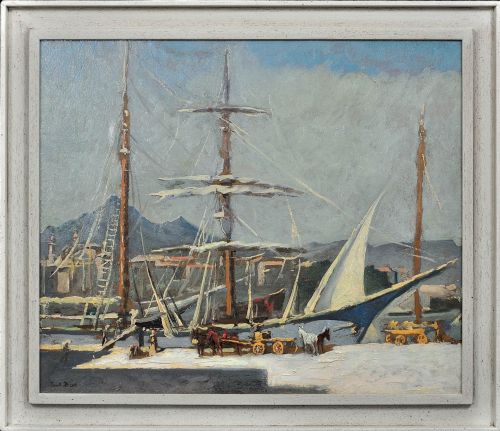
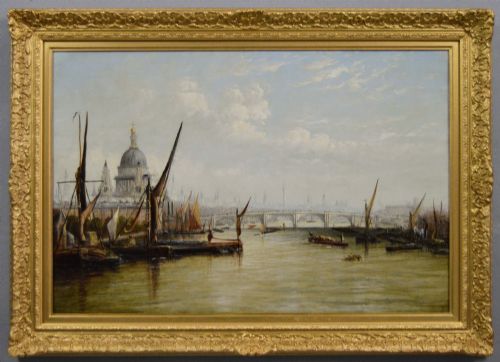
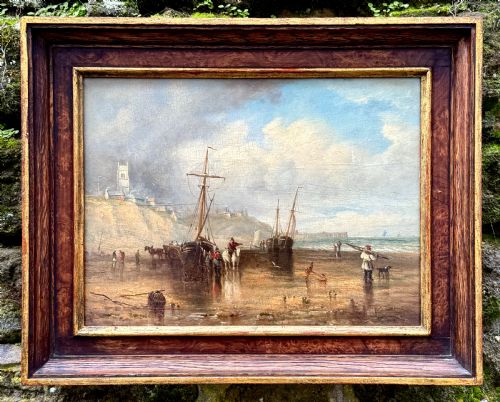
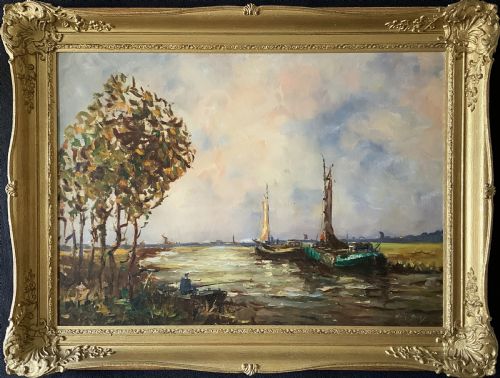
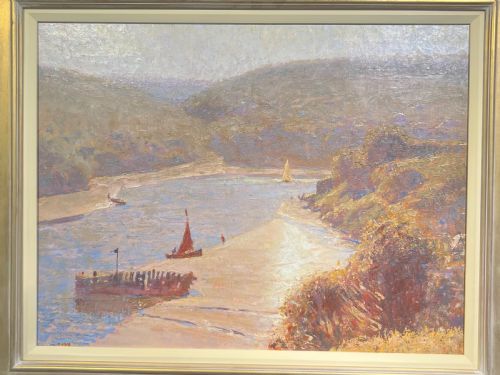
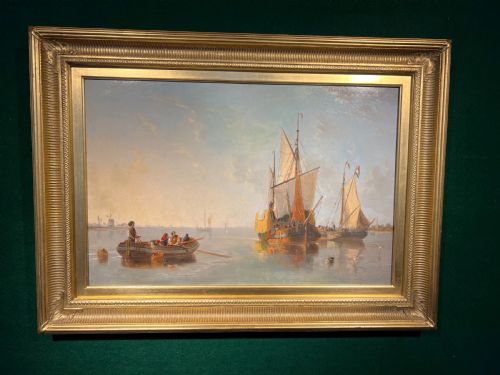
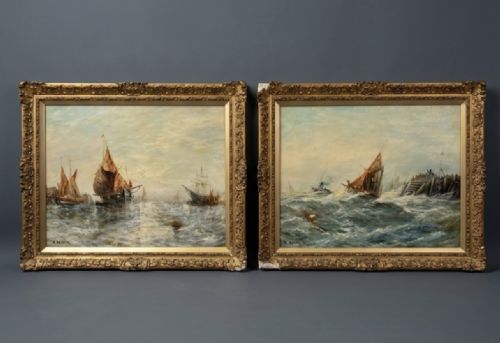
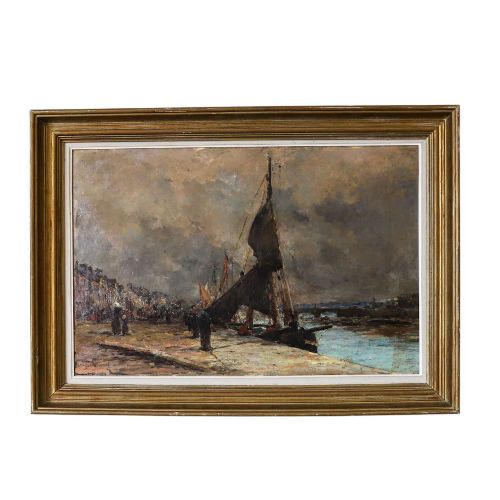
When you search for an antique boat oil landscape, you encounter works portraying vessels upon rivers, canals, harbours, and open seas. These paintings span the Victorian era, the Edwardian period, and into the twentieth century, reflecting varied maritime traditions across Britain, France, and the Netherlands.
The subjects range from tranquil river townscapes with moored barges to dramatic coastal scenes featuring fishing boats in choppy waters. Works often originate from named artists or regional schools working on canvas, board, or wood panels.
On this page, you are most likely to meet nineteenth-century and early twentieth-century canvases depicting sailing ships, coastal villages, and maritime commerce. These vary from intimate studies on board to massive framed oils designed for prominent country house display.
Materials and construction
Artists painted primarily using oil paint on woven canvas, wooden panels, or rigid board supports. Canvas required stretching over wooden frames, whilst panels provided a smooth, stable ground for detailed brushwork.
Listings feature oil paintings on canvas, wood, and board spanning the Victorian period through to the 1950s.
Assessing quality
Quality rests upon the artist's handling of light, water, and atmosphere, alongside the precision of the vessel rigging and architectural details. Superior examples display confident brushwork that conveys movement in water and weather conditions convincingly.
The relationship between the painting and its original frame matters significantly. Period giltwood frames that harmonise with the age and scale of the canvas elevate the presentation and complete the historical integrity of the piece.
Bonaventura Peeters·Thomas Creswick·Willem Bos·John Wilson Carmichael·John Moore of Ipswich·William Henry Williamson·William Edward Webb·Edward Matthew Elliott·Jean-Baptiste Olive·Gustave De Bréanski·Pieter Cornelis Dommersen·Adrian Van Porten·Edward Henry Eugene Fletcher·Abraham Hulk Snr·Edward Seago·George Gregory·George Morland·Benjamin Williams Leader·Frederick Waters Watts
The Antique Boat Oil Landscape Glossary
- Canvas
- A heavy woven fabric stretched across a wooden frame to serve as a support for oil paint. It provides a flexible and textured surface favoured by traditional marine painters.
- Giltwood
- Wood carved and covered with a thin layer of gold leaf or metallic gilt. This finish creates the ornate, reflective frames typical of nineteenth-century fine art.
- Seascape
- A painting depicting the sea, coastal views, and maritime vessels. These works often focus on the interplay between water, sky, and light.
- Panel
- A flat piece of wood used as a rigid support for painting. Artists frequently utilised panels for smaller, detailed works during the nineteenth century and earlier.
- Gesso
- A plaster-like mixture applied to wooden frames or panels to prepare the surface for gilding or painting. It allows craftsmen to carve intricate decorative details.
Antique Boat Oil Landscape: Frequently Asked Questions
How do I date a marine oil painting?
Dating relies on stylistic evidence, artist signatures, and framing methods. Details such as ship rigging, coastal fashion, and canvas stamps help narrow the period.
Many nineteenth-century works include dates within signatures or exhibition records. Comparing the handling of light and pigment to documented works by regional schools provides further chronological context.
What is the difference between a seascape and a landscape?
A seascape focuses primarily on the sea, coastal waters, and maritime activity. Landscaping centres on terrestrial views, rivers, and inland scenery.
Paintings featuring boats on rivers or canals often bridge both genres, capturing land and water in a single composition.
How should I hang an oil painting?
Hang oil paintings away from direct sunlight and fluctuating heat sources to protect the canvas and pigments. Secure wall fixings must match the substantial weight of framed Victorian canvases.
Ensure paintings hang at eye level using professional picture wire and wall hooks suited to the weight of the gilt frame.
Are these paintings signed by the artist?
Many pieces feature visible signatures, monograms, or attribution notes left by the creator. Some historical works remain unsigned or attributed to specific schools based on style.
Signatures often appear in the lower corners of the canvas or on the reverse wood panel alongside old exhibition labels.