

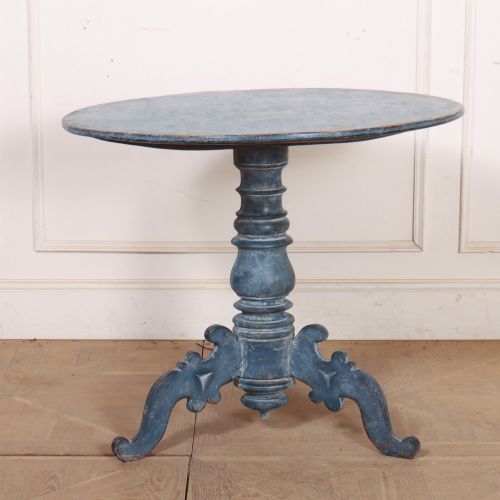
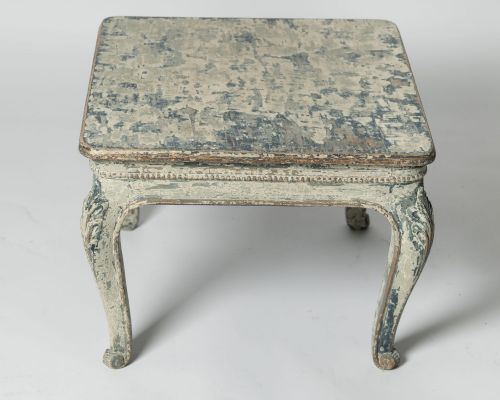
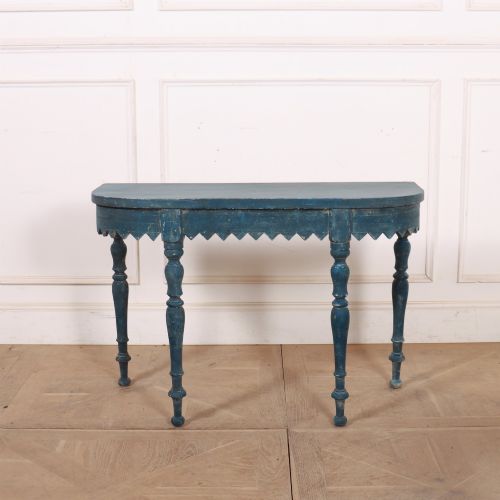
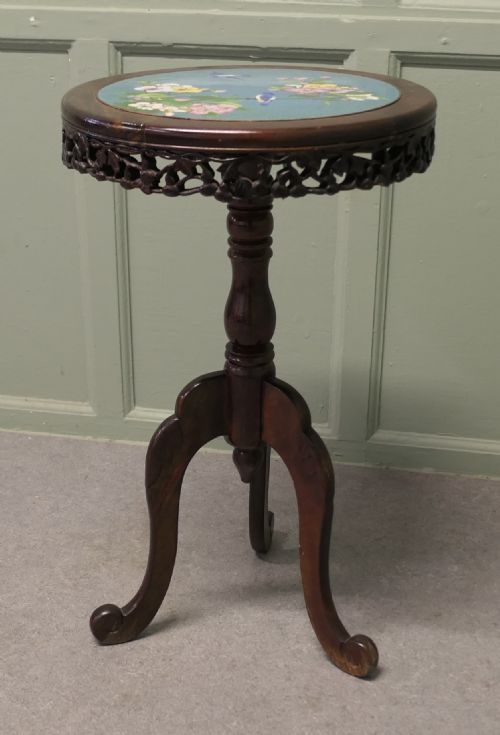


Antique Blue Wooden Table
An antique blue wooden table brings surface colour and honest timber grain into a room, spanning rustic pine sides to refined console forms.
Antique Blue Wooden Table
An antique blue wooden table encompasses smaller occasional pieces and larger utility surfaces, drawing heavily on Scandinavian, English and French country traditions. These pieces combine utilitarian wooden construction with historic blue painted finishes that reveal layers of age and wear beneath the topcoat.
Buyers encounter everything from rustic drop leaf tables and tray tables to formal bow end consoles and carved occasional furniture. Each item relies on the contrast between aged timber structures and time-faded blue surfaces to establish its presence.
What separates the fine examples
The integrity of the original painted surface dictates much of the distinction, separating untouched historic finishes from later or heavy-handed repainting. Surfaces that show natural patination, subtle crackle and honest wear carry greater visual depth than uniform modern coatings.
Construction methods and timber selection also divide the standard of pieces, distinguishing robust joinery built for daily service from lighter decorative items. Proportion, restrained carving and balanced regional forms elevate provincial pieces into superior examples of period craftsmanship.
Swedish country and English provincial styles form the majority of regional aesthetics represented in the blue table selection.
The Antique Blue Wooden Table Glossary
- Pine
- A soft timber widely utilised across European provincial workshops for furniture construction. It accepts paint readily and forms the base for many historic blue finishes.
- Console table
- A table designed to stand flat against a wall, frequently featuring an ornate or shaped front. These pieces often serve decorative functions in entrance halls or principal rooms.
- Drop leaf table
- A table featuring hinged flaps on either side that fold down to save space or lift up to extend the surface. This practical form appeared frequently in vernacular English and European homes.
- Patina
- The surface sheen and textural softening developed by wood and paint over centuries of handling and environmental exposure. It serves as a primary indicator of genuine age.
- Gustavian
- A Swedish neoclassical style popular during the late eighteenth and nineteenth centuries. It translates French royal aesthetics into lighter, simpler painted wooden furniture forms.
Antique Blue Wooden Table: Frequently Asked Questions
How do I clean a painted table?
Dust the surface regularly with a soft, dry cloth to prevent dirt accumulation without disturbing the historic paint layer.
Avoid harsh modern chemical sprays or excessive moisture, which can lift fragile historic pigments from the underlying wood.
Are these tables suitable for daily use?
Sturdier pine and hardwood frames handle normal daily placement for lamps or decorative objects quite well.
Delicate painted surfaces benefit from coasters or protective mats to prevent rings and scratches on the historic finish.
How can I tell the age of the paint?
Examine the surface for natural craquelure, fading and uneven wear patterns that indicate decades of environmental exposure.
Under magnification, older oil or milk paints show micro-fractures and integration with the timber grain that modern reproductions lack.
Where were these tables made?
Makers across Sweden, England, France and wider Europe produced these painted wooden items for domestic and provincial interiors.
Regional construction traits and specific paint palettes often point directly to the country of origin.