






Carved Round Entry Table
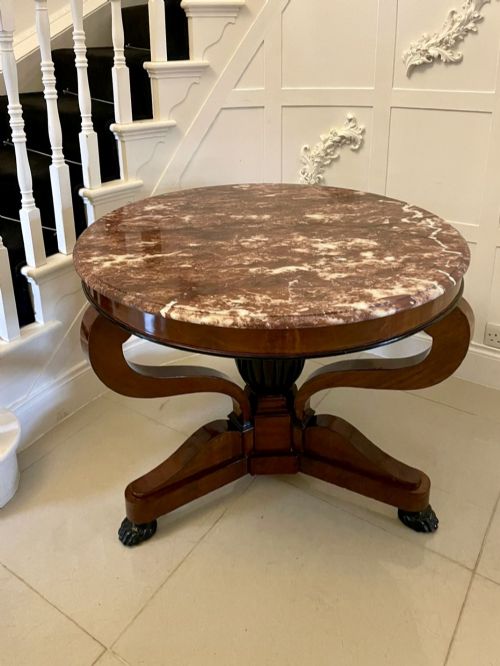
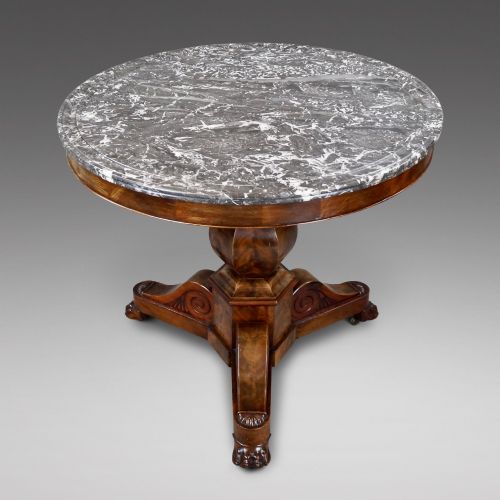
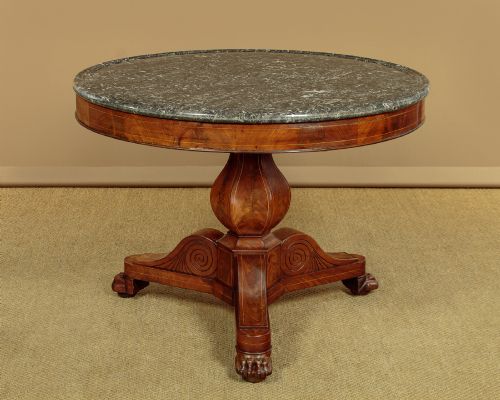
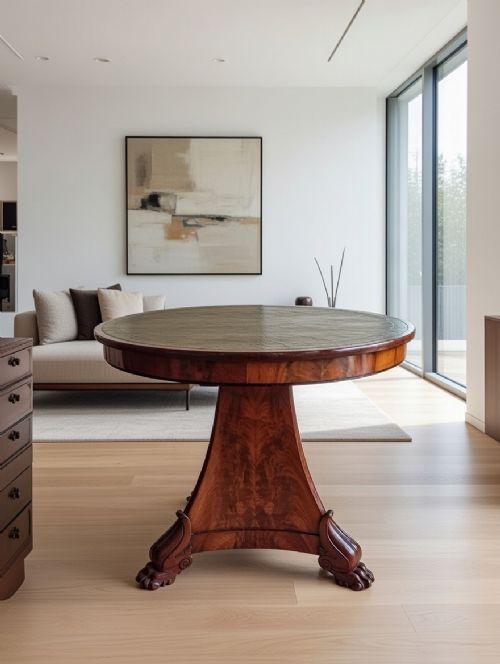
A carved round entry table brings scale and presence to a hallway, drawing the eye with rich timber and classical form.
Carved Round Entry Table
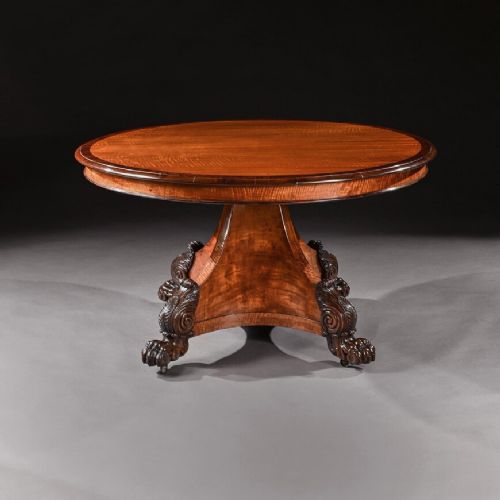
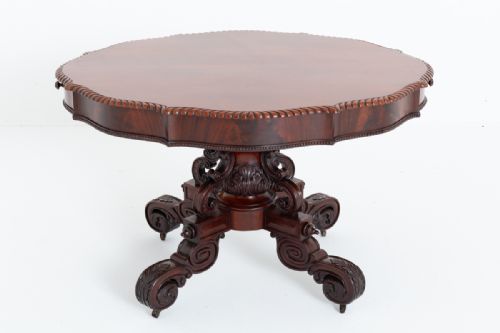
When you search for a carved round entry table, you are looking at substantial standalone tables designed to anchor a hallway or reception room. These pieces frequently take the form of centre tables and gueridons, offering a circular surface supported by a central column or three or four legs.
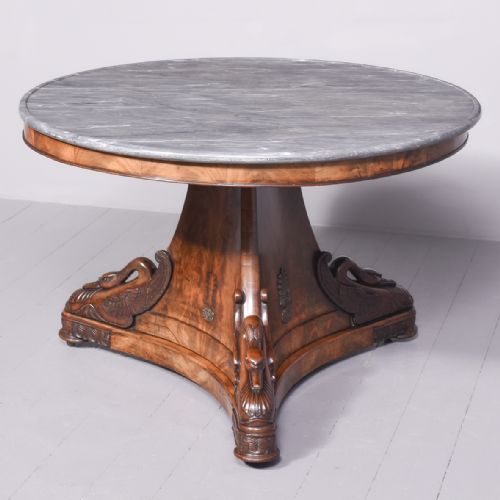
The versions you are most likely to meet on this page span the nineteenth century, including Victorian, Regency, and French Empire periods. They arrive in timber varieties such as mahogany, flame mahogany, walnut, and rosewood, often topped with contrasting marble or leather.
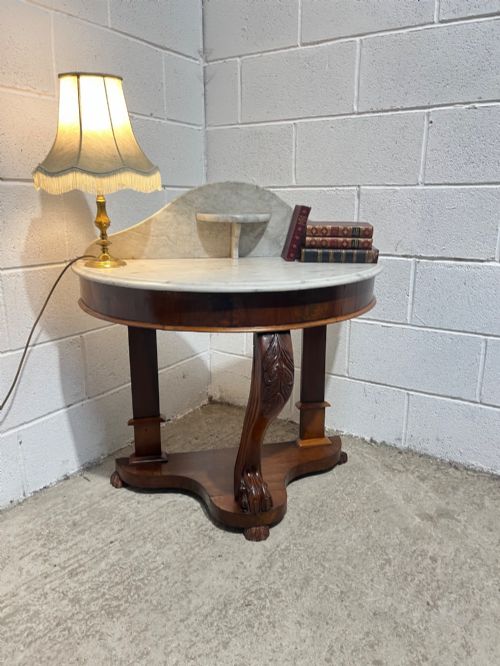
Makers from this selection worked in diverse regional styles, ranging from French workshops to German and Anglo Indian creators. You will also encounter demilune console tables alongside the circular formats, designed to sit flush against a wall.
How they were made
Joiners shaped these tables from dense hardwoods like mahogany and rosewood, frequently selecting flame veneers for richly figured tabletops. Timber frames were turned, carved, and polished by hand to accentuate the natural grain.
Heavy marble slabs were fitted directly into recessed wooden tops, supported by internal framing to bear the substantial weight of the stone. Craftsmen also incorporated bronze ornaments, brass mounts, and detailed inlay work into the primary structure.
Leather inserts were glued into channeled wooden borders on writing or lamp tables, while painted finishes appeared on later twentieth-century German examples.
A nineteenth-century table hides its age by wearing a heavy marble hat atop a spinning wooden pedestal.
What varies in quality
The distinction between tiers of work rests upon the selection of timber and the ambition of the carving. Superior examples employ deeply figured flame mahogany or satinwood veneer over sound secondary woods, paired with thick, unblemished marble slabs rather than thin replacements.
Execution of ornament defines the upper echelon, where cast bronze mounts, crisp hand-carving, and precise brass inlay demonstrate disciplined workshop practice. Simpler tables rely on plain turned pedestals and minimal decoration, reflecting utility rather than grand presentation.
Peters of Genoa
The Carved Round Entry Table Glossary
- Gueridon
- A small circular table on a central pillar, originating in seventeenth-century France and widely produced during the nineteenth century. These pieces function well as freestanding display surfaces in halls and drawing rooms.
- Centre table
- A freestanding table designed to be viewed from all sides rather than pushed against a wall. They usually sit in the middle of a room and often feature circular marble or timber tops.
- Demilune
- A half-moon shape used for console tables that sit flat against a wall. This format saves floor space while providing a functional surface in narrow entryways.
- Flame mahogany
- Mahogany timber cut at an angle to the branch junction, producing a distinctive flickering flame pattern. Cabinetmakers prized this veneer for high-status tabletops.
- Pollard oak
- Oak timber taken from trees that were pollarded, creating gnarled wood with clustered knot formations. It yields a highly decorative grain used for accent panels and tabletops during the Regency period.
Carved Round Entry Table: Frequently Asked Questions
What is a gueridon table?
A gueridon is a circular freestanding table supported by a single central column or tripod base. They were originally introduced in France for holding lights or decorative objects.
Over time, the form evolved into general-purpose centre tables found in hallways and reception rooms throughout the nineteenth century.
How do I use an entry table?
These round tables serve as a central focal point in a hallway, providing a surface for lamps, bronze ornaments, or floral displays. Their freestanding nature allows movement all around them.
Demilune console variants sit flat against walls in narrower corridors where a fully circular table would obstruct foot traffic.
How do I identify French Empire style?
French Empire furniture displays heavy classical proportions, dark mahogany surfaces, and cast bronze or brass mounts. The aesthetic draws inspiration from ancient Roman and Greek design.
Look for architectural pedestals, strong symmetry, and marble tabletops that emphasise formal dignity over delicate carving.
What is flame mahogany?
Flame mahogany is a highly figured wood veneer cut from the fork of the mahogany tree. The grain fans out in a pattern resembling flickering flames.
Cabinetmakers reserved this striking timber for the most visible surfaces of grand nineteenth-century tables.