


Painted Foyer Table
A painted foyer table greets visitors with character, offering surfaces fashioned from timber and marble across French, English, and Swedish traditions.
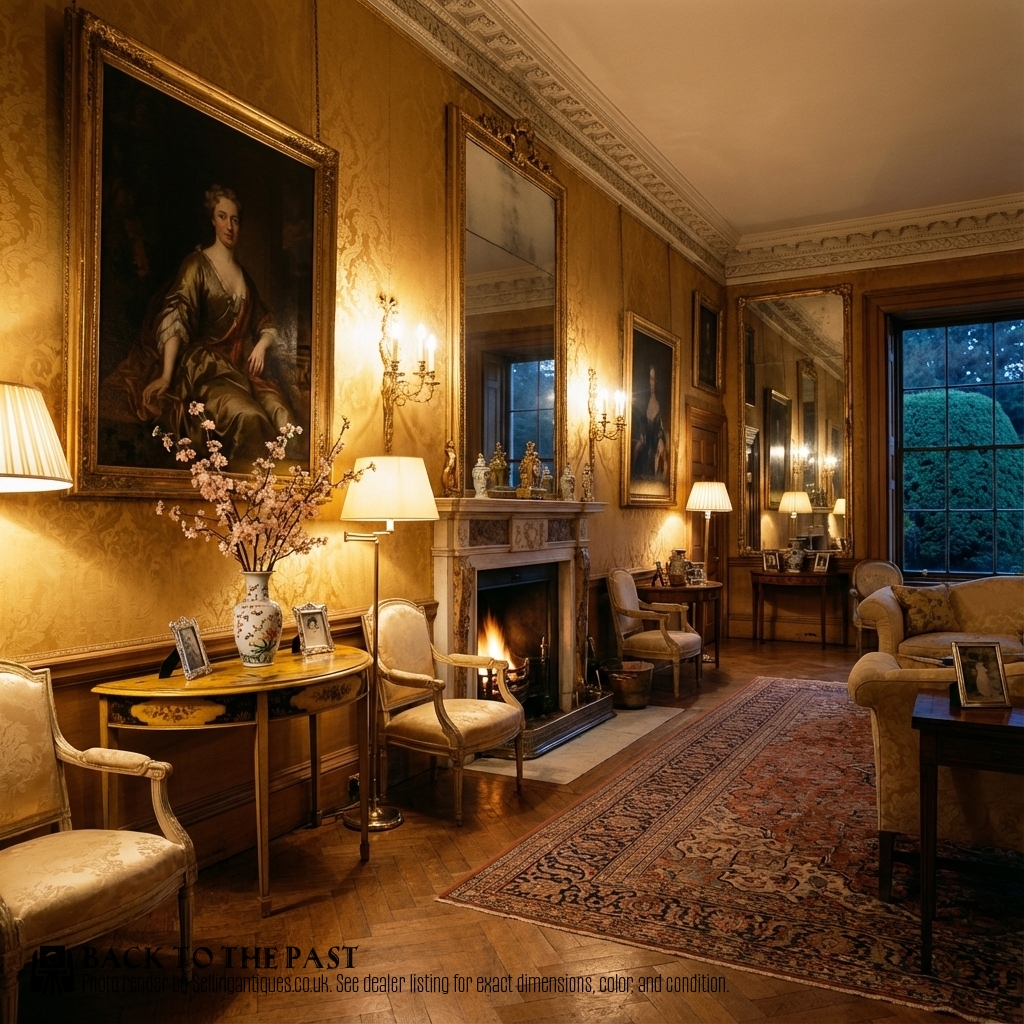
Painted Foyer Table
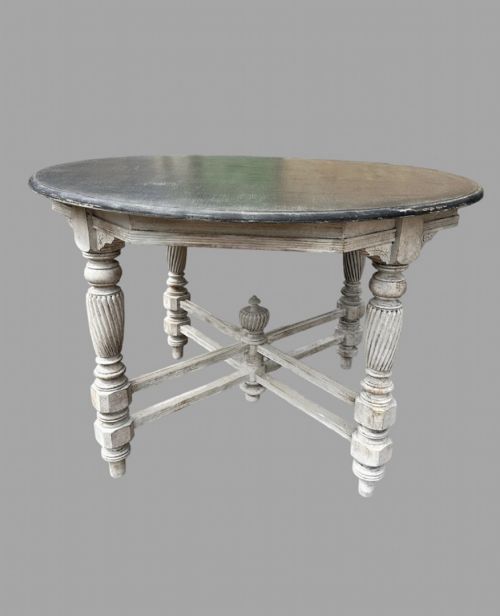
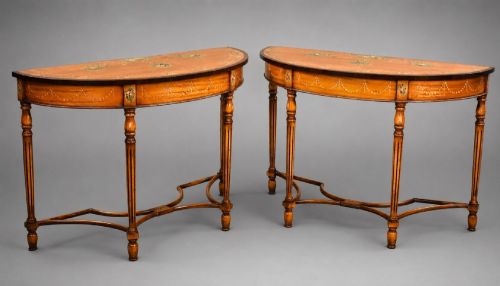
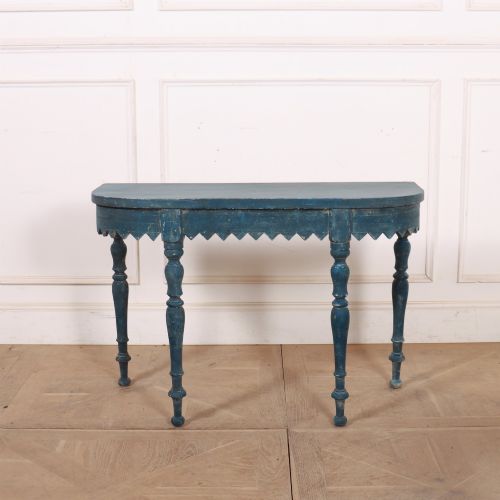
A painted foyer table serves as an initial statement in an entrance hall, drawing from a variety of forms that include centre tables and console tables. These pieces frequently emerge from nineteenth-century workshops, spanning French provincial styles, Regency elegance, and Sheraton Revival delicacy.
The most common versions met on this page are console tables designed to sit against a wall, alongside freestanding centre tables intended for prominent spaces. Examples range from bow-ended English pieces to French marble-topped gueridons and demi-lune shapes.
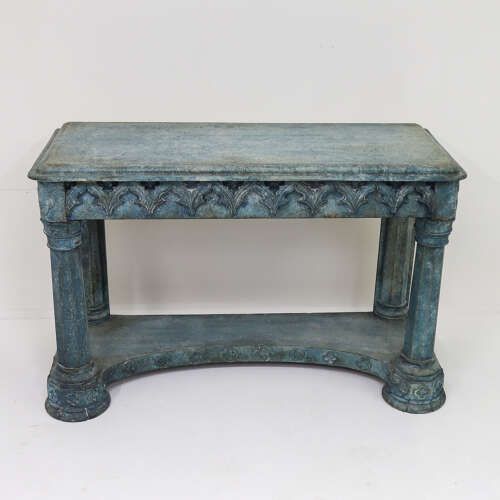
Origins stretch across Europe and beyond, taking in German, Swedish, Irish, and Japanese influences executed in painted wood and timber. The visual language encompasses Gothic Revival traits, neoclassical motifs, and French rococo curves.
Construction and materials
Construction relies heavily on traditional timber and pine carcases, often enhanced by carved wood details and finished with layered paint surfaces. Certain pieces incorporate applied gold leaf or parcel silvering to highlight carved mouldings and architectural motifs.
Selected surfaces feature inset marble tops, particularly on French and Japanese influenced centre tables, demanding precise joinery to support the heavy stone. Artisans utilised decorative techniques such as red lacquer and fine satinwood veneers beneath or alongside the painted finishes.
Half-moon tables answer to the French name demi-lune, proving that even eighteenth-century furniture appreciates a bit of geometry.
Judging quality in painted tables
Quality reveals itself in the harmony of the proportions and the precision of the carved wood elements, whether executed in a Gothic taste or a refined Regency manner. The integrity of the underlying timber structure and the stability of marble tops dictate the durability of the piece.
The sophistication of the painted finish separates standard examples from exceptional ones, particularly where parcel gilding or nuanced colour choices are applied. Surviving original surfaces retain a depth of tone that distinguishes skilled period craftsmanship from later interventions.
The Painted Foyer Table Glossary
- Centre table
- A freestanding table designed to be viewed from all sides, commonly placed in the middle of a room or a spacious hall.
- Console table
- A table fixed to a wall or designed to stand against one, frequently supported by ornate brackets or legs at the front.
- Demi-lune
- A half-moon shape characteristic of console tables designed to sit flush against a wall in narrow spaces.
- Gueridon
- A small French table, often round and supported by a single central column or tripod base, frequently topped with marble.
- Parcel gilt
- A surface decoration technique where specific carved details or mouldings are partially gilded with gold leaf.
Painted Foyer Table: Frequently Asked Questions
Where should I place a console table?
A console table fits naturally against an entrance wall or hallway, where its shallow depth preserves walking space while providing a surface for display.
Pairing the table with a mirror or lighting above creates a functional focal point for visitors entering the home.
Can centre tables be used in halls?
Freestanding centre tables suit larger entrance halls with central floor space, allowing circulation around the entire piece of furniture.
These tables work well for displaying decorative objects or floral arrangements when positioned away from walls.
How do I care for marble tops?
Marble surfaces require gentle cleaning with mild soap and water, avoiding acidic solutions that can etch the polished stone over time.
Using coasters and placemats protects the material from moisture and staining during daily use.
What defines the Sheraton Revival style?
Sheraton Revival pieces draw inspiration from eighteenth-century neoclassical designs, favouring delicate proportions, satinwood, and painted ornamentation.
These tables display restrained classical motifs and lighter constructions than earlier heavy Victorian furniture.