


Antique Blue Pitcher
These antique blue pitchers span earthenware, porcelain and ironstone, bringing cobalt decoration and useful volume to a table or dresser.
Antique Blue Pitcher
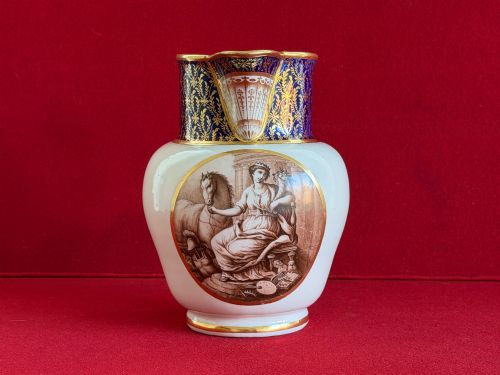
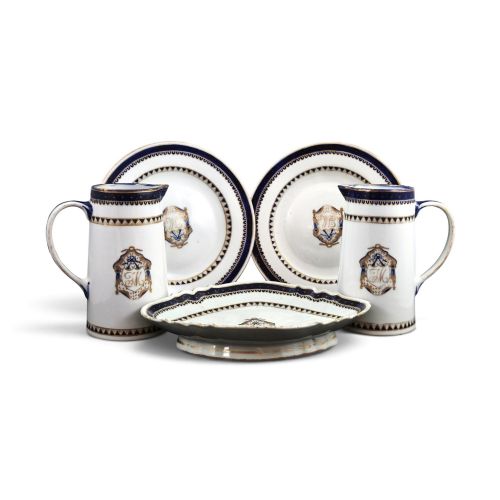
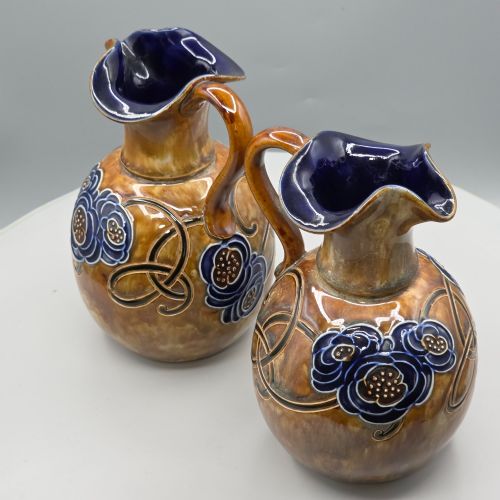
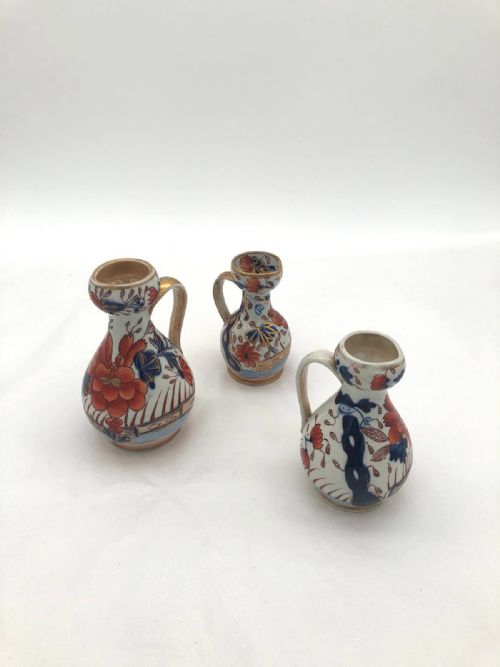
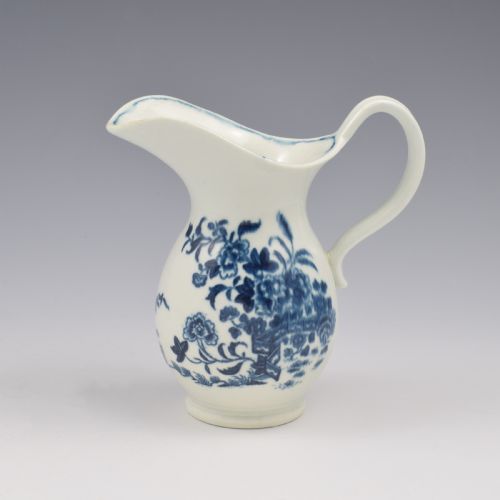
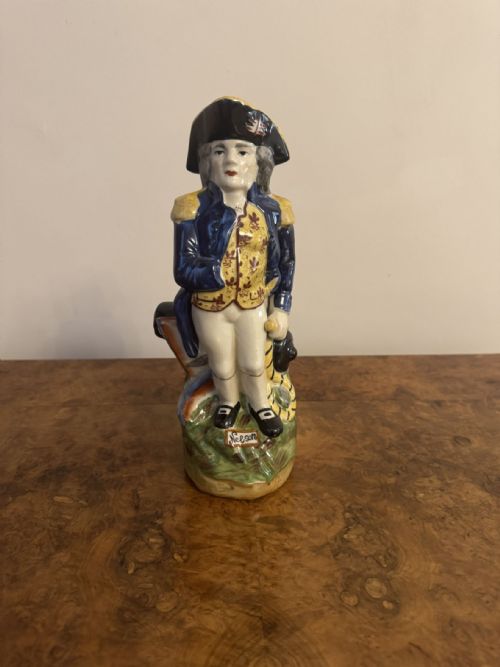
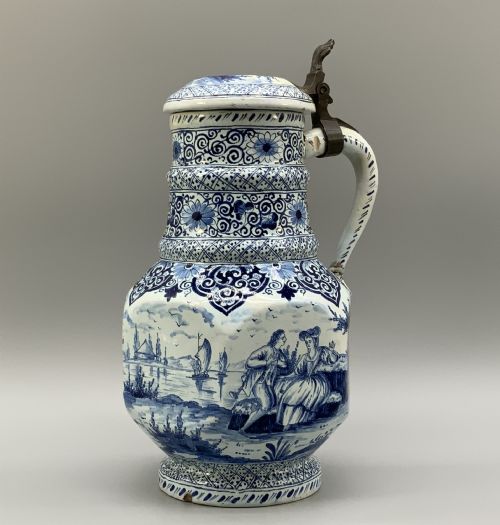
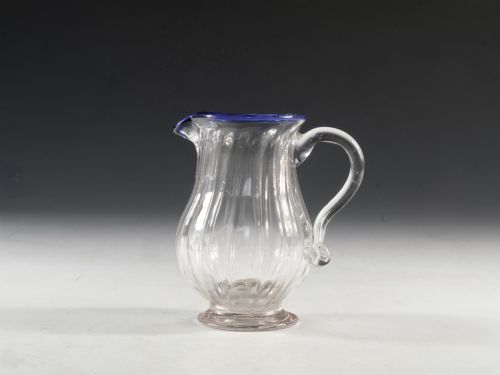
The term antique blue pitcher covers a wide variety of ceramic and glass vessels designed for pouring water, milk, wine or cream, alongside characterful figural forms. Buyers encounter pieces ranging from eighteenth-century Dutch delftware and Worcester porcelain to nineteenth-century Staffordshire pottery, Gaudy Welsh ironstone and heavy Doulton ewers.
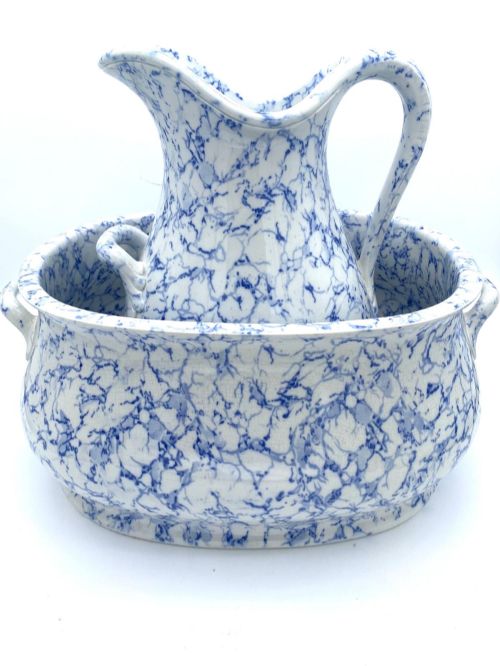
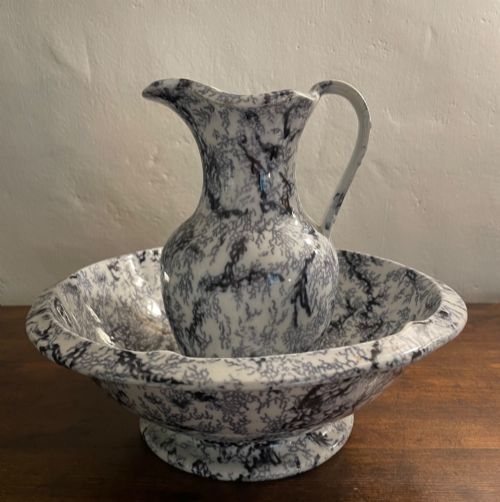
Many examples are part of larger wash sets, including matching basins and footbaths intended for bedroom use. Others function as individual table jugs, creamers or decorative ewers shaped with moulded spouts and applied handles.
Materials and production methods
Potters shaped these vessels using earthenware, ironstone, stoneware and soft-paste or hard-paste porcelain, sometimes decorated with cobalt blue glaze or enamel painting. Early pieces often feature tin glazes with hand-painted cobalt patterns or pewter lids, while later nineteenth-century examples utilise ironstone body pastes for durability.
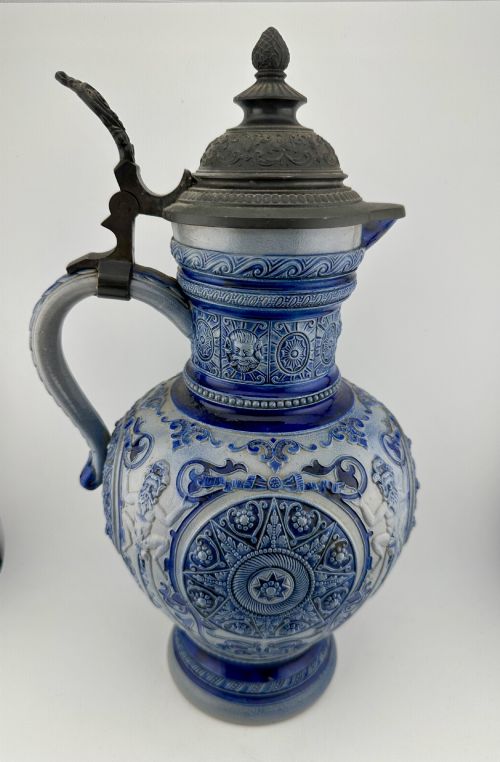
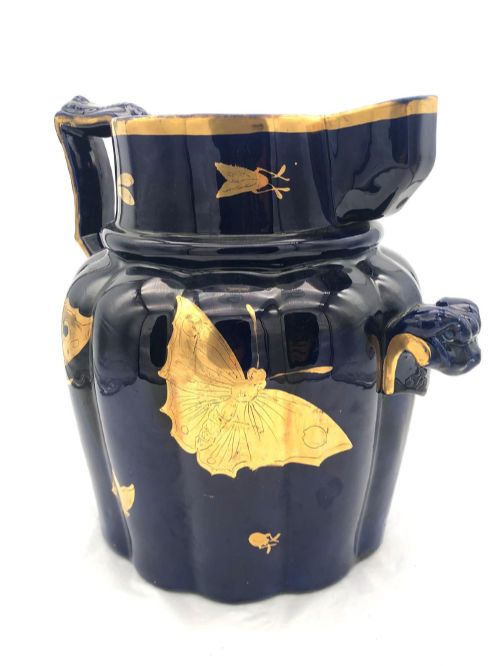
Techniques range from salt glazing on German stoneware to transfer printing in flow blue and hand-applied gold leaf or gilt bronze trim on fine porcelain wares.
Antique Blue Pitcher Retail Price Guide 2026
Typical asking prices for blue pitcher among the pieces listed under this phrase on Sellingantiques today, from the lower quarter to the upper quarter. They describe what is for sale here now, not the wider market.
Listings feature pieces from the eighteenth, nineteenth and early twentieth centuries, spanning Georgian, Victorian, Edwardian and Art Deco periods.
Assessing quality in historical pitchers
Quality shows in the crispness of the moulding, the depth and stability of the cobalt glaze, and the precision of hand-painted or transfer-printed details. Early porcelain and delftware pieces display refined throwing lines and delicate handle attachments, whereas sturdier ironstone and earthenware jugs rely on substantial weight and robust glaze coverage.
The sophistication of the pattern transfer or hand-painted scene, combined with the presence of maker marks or established pottery attributions, separates standard domestic kitchenware from collector-grade pieces.
Pieter Verburg·Flight & Barr·John Pennington·Dr Wall·Royal Doulton·Minton·Mason's·Doulton Lambeth·Keeling & Co·Simon Peter Gerz
The Antique Blue Pitcher Glossary
- Earthenware
- A porous pottery body fired at lower temperatures, typically requiring an impermeable glaze to hold liquids.
- Ironstone
- A dense, durable type of earthenware patented in the nineteenth century to imitate porcelain.
- Flow blue
- A nineteenth-century transfer-printing technique where cobalt pigment intentionally blurred during firing to create a hazy, atmospheric effect.
- Toby jug
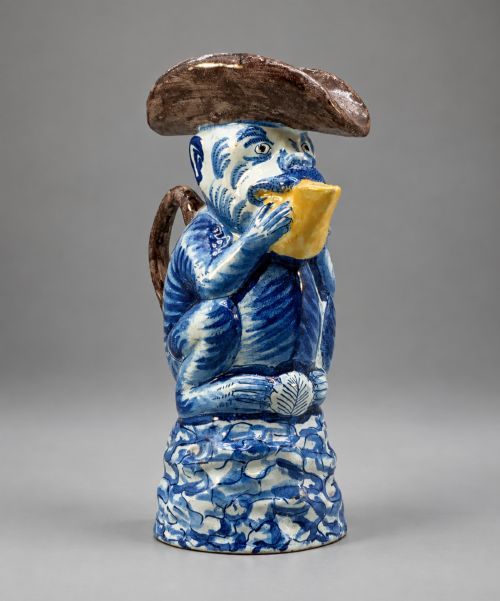
- A pottery jug shaped as a seated, stout eighteenth-century figure holding a mug of beer and a pipe.
- Ewer
- A large pitcher with a wide spout and elaborate handle, traditionally used for personal washing.
Antique Blue Pitcher: Frequently Asked Questions
How do I date an antique blue pitcher?
Dating relies on identifying the material body, such as soft-paste porcelain versus heavy ironstone, and examining the style of the cobalt decoration. Maker marks, registration numbers and base stamps provide further chronological clues.
Pottery shapes and glaze characteristics also shift between eighteenth-century delftware and Victorian earthenware, helping narrow down the decade of production.
Can I use an antique pitcher for serving drinks?
Many ceramic and glass pitchers remain structurally sound for holding liquids, particularly sturdier ironstone and stoneware vessels. However, fine porcelain and fragile earthenware with hairline cracks or old repairs are better kept for display.
Hand washing is essential for preserving historical glazes and any delicate enamel or gold leaf decoration.
What is the difference between a jug and a pitcher?
In British terminology, the two words often overlap, though pitcher traditionally implies a larger vessel with a handle and a pronounced pouring lip. Many historical listings use both terms interchangeably for table water vessels and creamers.
Regional preferences and period cataloguing often dictate whether a specific piece is called a jug, pitcher or ewer.
What caused the blurry blue pattern on some jugs?
That hazy appearance is known as flow blue, a deliberate nineteenth-century ceramic effect caused by introducing lime or ammonia chloride vapour into the kiln during firing. The cobalt transfer print bled into the surrounding white glaze, creating a soft, misty finish.
This technique was particularly popular on Staffordshire and ironstone wash sets and tableware.