



Antique Blue Jars
These antique blue jars range from apothecary vessels to Imari urns, offering rich cobalt tones and varied ceramic histories that elevate any interior space.
Antique Blue Jars
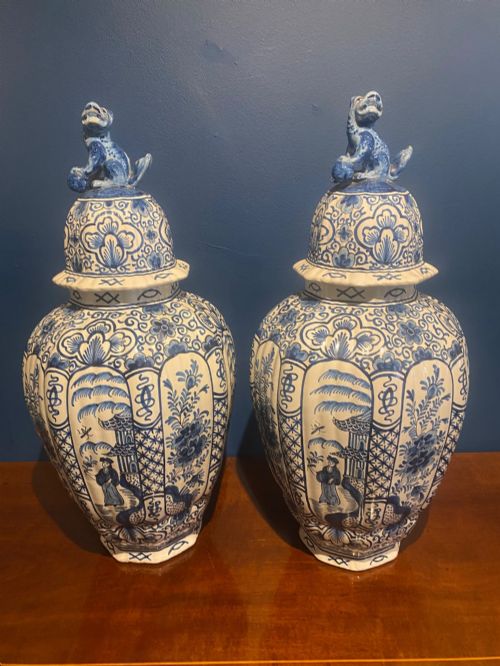
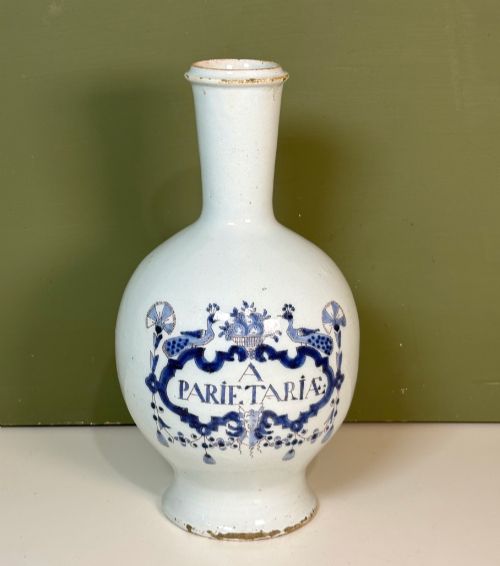
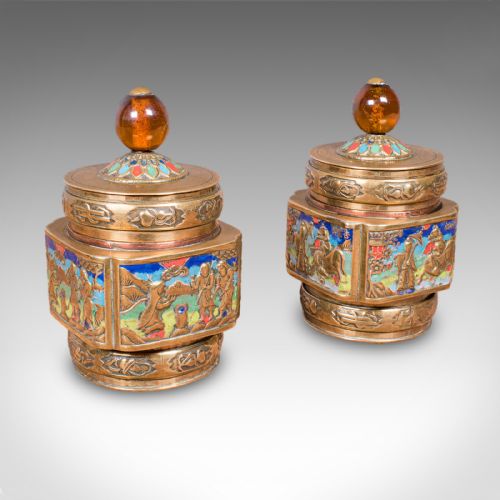
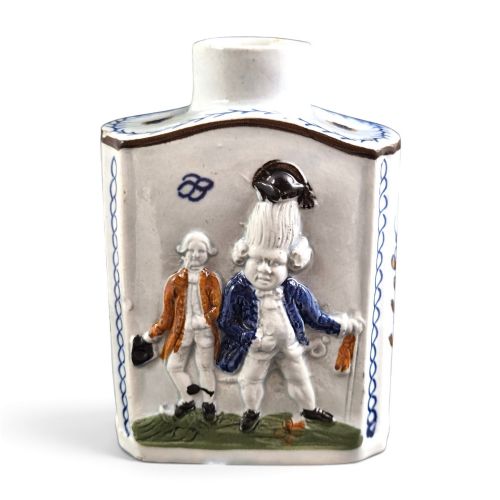
Antique blue jars encompass a wide assortment of ceramic, porcelain, and glass vessels, including apothecary jars, tea caddies, vanity jars, and lidded vases. When searching for antique blue jars, buyers encounter pieces originating from English, Dutch, French, and Asian kilns, spanning the seventeenth to the early twentieth centuries.
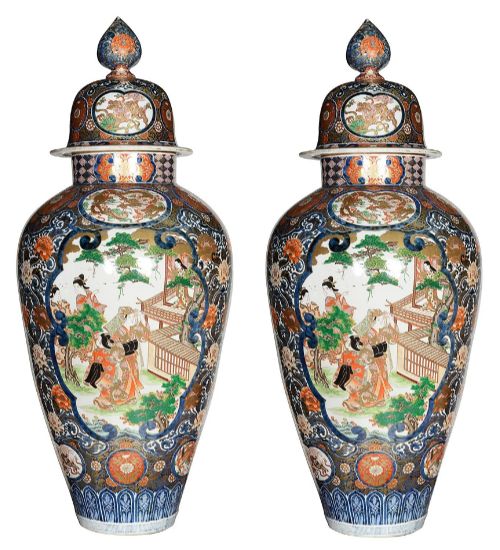
The material palette shifts from tin-glazed earthenware and earthenware to fine porcelain and turquoise glass, often embellished with cobalt pigment. Forms range from utilitarian pharmacy bottles to large floor-standing Imari vases and decorative covered urns.
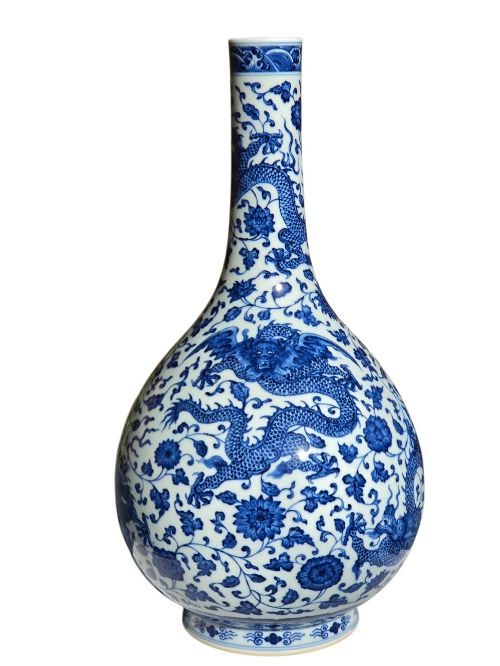
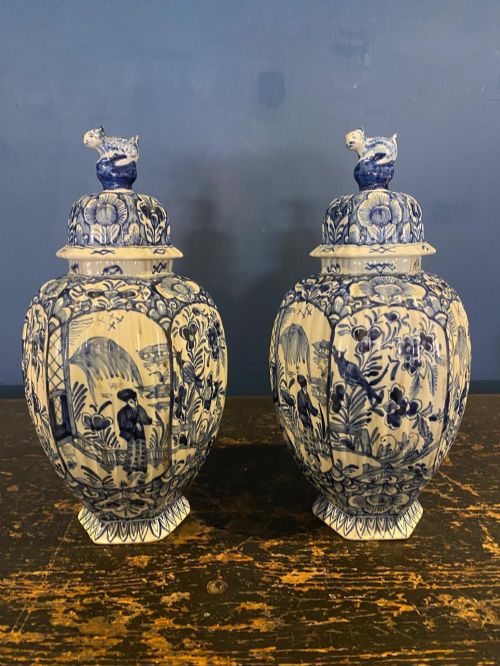
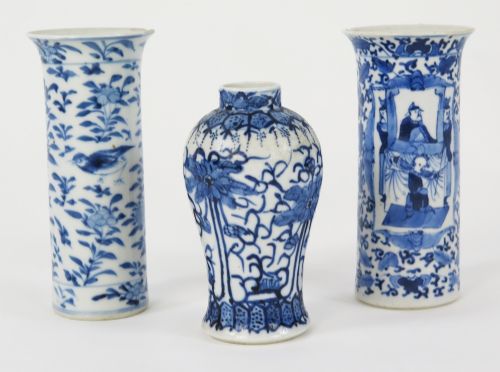
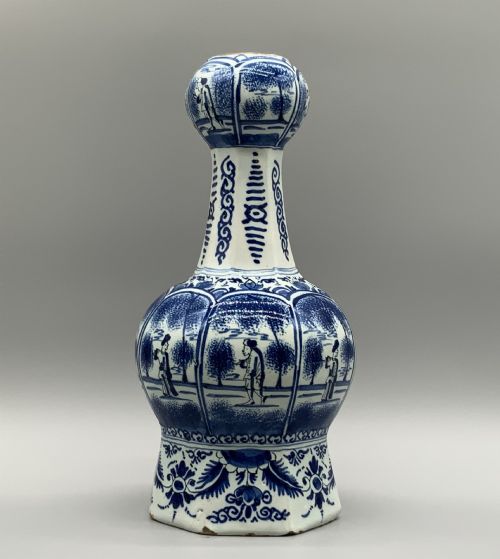
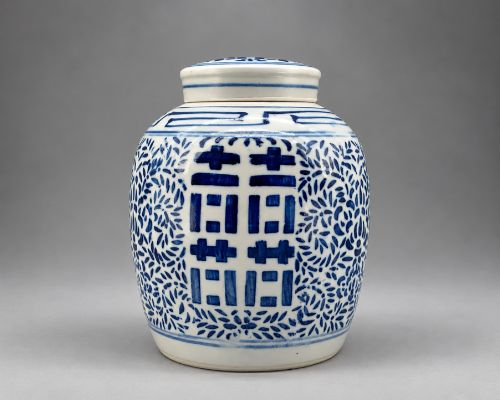
Dutch Delftware and Chinese export pieces feature prominently, displaying blue and white motifs inspired by Chinoiserie and traditional oriental landscapes. European factories such as Worcester, Derby, and Doulton Lambeth also contribute distinct local interpretations of the blue colour palette.
How they were made
Potters shaped ceramic and porcelain bodies on the wheel or in moulds before applying mineral glazes and cobalt oxides. Tin-glazed earthenware, characteristic of Dutch Delft and French faience, required an opaque white tin enamel layer painted with blue pigment prior to a final kiln firing.
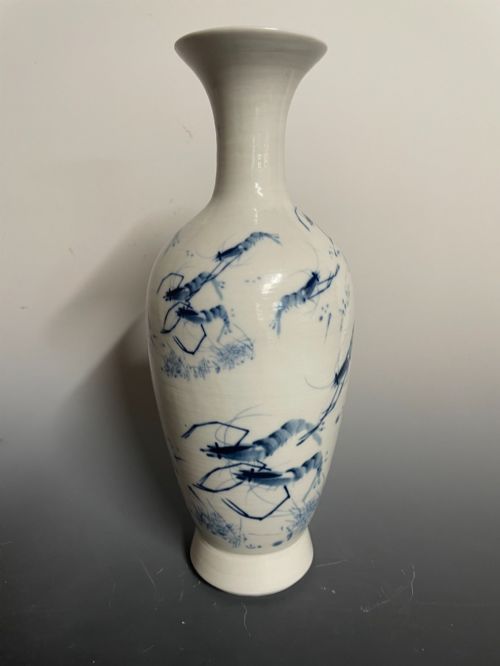
Porcelain pieces often utilised underglaze blue painting techniques, where cobalt was applied directly to the unfired clay body before transparent glaze sealing. Glass apothecary jars and dressing table containers were blown or moulded, sometimes incorporating cut glass facets or applied silver and enamel mounts.
Antique Blue Jars Retail Price Guide 2026
Typical asking prices for blue jars among the pieces listed under this phrase on Sellingantiques today, from the lower quarter to the upper quarter. They describe what is for sale here now, not the wider market.
A climbing figure scales the side of a Japanese Sumida Gawa jar, adding unexpected sculptural humour to the blue glaze.
What varies in quality
The clarity and depth of the cobalt pigment dictate visual success, distinguishing finely detailed brushwork from muddy or flat application. Crispness in moulded or thrown forms, alongside the precision of hand-painted motifs like Chinoiserie scenes or floral panels, marks superior execution.
The integrity of the glaze and the preservation of secondary materials, such as silver lids, gilt highlights, and enamel work, separate standard utilitarian containers from exceptional cabinet pieces.
Henry Clifford Davis·Alice Euphemia Thatcher·George Gordon Morison·Rene Lalique·Fourmaintraux-Courquin
The Antique Blue Jars Glossary
- Tin-glazed earthenware
- Pottery covered with a glaze containing tin oxide to produce an opaque white surface suitable for painted cobalt decoration. This technique underpins traditional Dutch Delft and French faience production.
- Imari
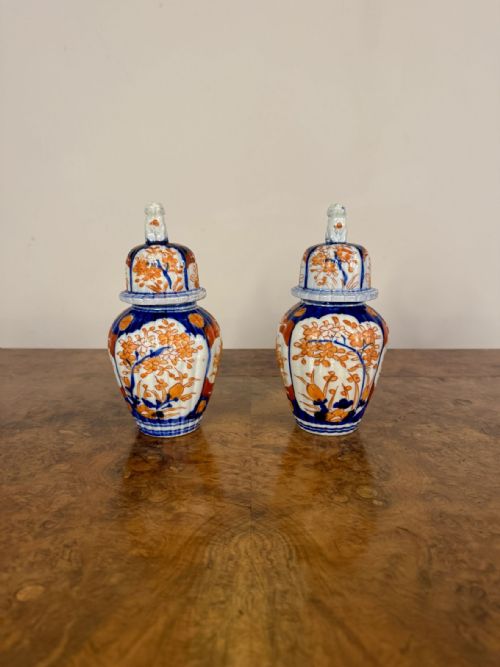
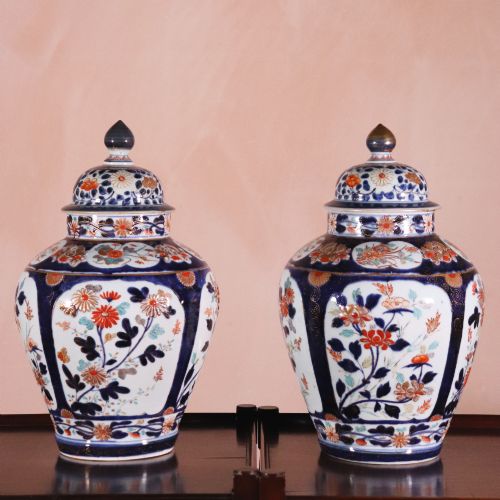
- A style of Japanese export porcelain featuring deep underglaze blue combined with iron red and gold details. It gained popularity across European decorative arts.
- Tea caddy
- A small storage vessel designed to hold dry tea leaves safely before brewing. Examples in this category often feature fine porcelain or silver mounts.
- Chinoiserie
- European artistic interpretations of Chinese and East Asian decorative styles, frequently rendered in blue and white on ceramics. This aesthetic influenced centuries of Delftware and porcelain design.
- Faience
- European tin-glazed earthenware produced across France, the Netherlands, and England. The medium allowed makers to imitate prized Chinese porcelain using local materials.
Antique Blue Jars: Frequently Asked Questions
What were apothecary jars used for?
Apothecaries and chemists utilised these vessels to store dry drugs, herbs, and liquid medicines safely on shop shelves. Their tight-fitting lids kept contents dry and free from contamination.
Over time, these utilitarian glass and ceramic containers transitioned into decorative objects prized for their hand-painted labels and rich cobalt hues.
How do I distinguish Delftware from Chinese export porcelain?
Dutch Delftware typically utilises a tin-glazed earthenware body which feels softer and thicker than true porcelain. The blue pigment often sits slightly blurred within the white enamel surface.
Chinese porcelain presents a harder, more resonant body with underglaze cobalt that appears crisp and deep beneath a clear, vitreous glaze.
Where should I display lidded vases?
Lidded vases suit prominent surfaces such as mantelpieces, entrance hall consoles, and dining room sideboards where their height and symmetry command attention. Pairing them together creates a balanced focal point in traditional or eclectic interiors.
Ensure they sit on stable, level furniture away from high-traffic edges to protect fragile ceramic covers and decorative mounts.
How do I clean antique blue glass and ceramics?
Dust surfaces gently using a soft, dry brush or a lint-free cloth to prevent abrasive particles from scratching the glaze or glass. Avoid submerging pieces with metal mounts, silver plating, or delicate enamel work in water.
Spot clean ceramics sparingly with a damp cloth and mild soap if necessary, ensuring complete drying afterwards to protect historical materials.