



Antique Blue Glass Flask
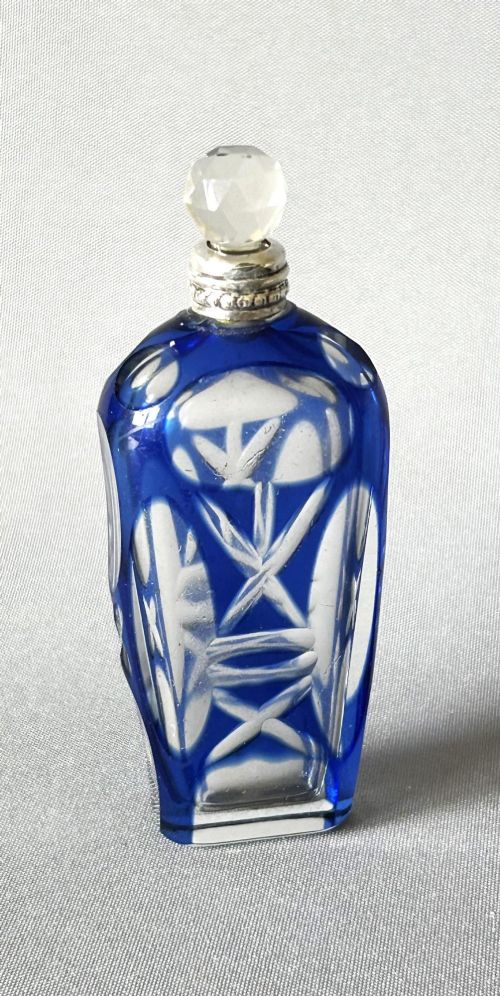
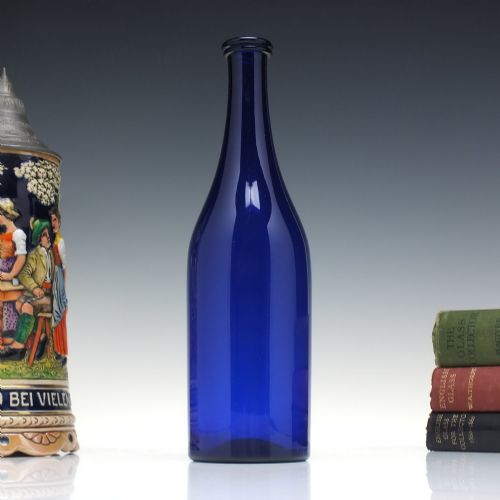
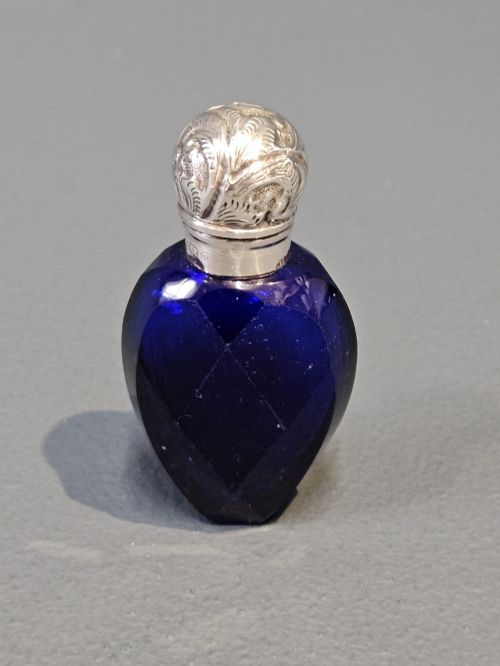
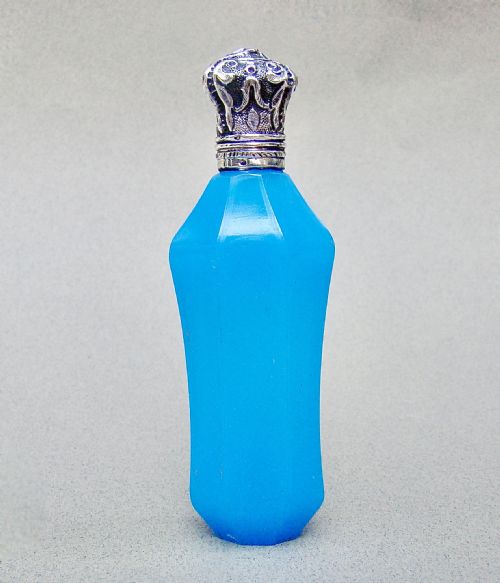
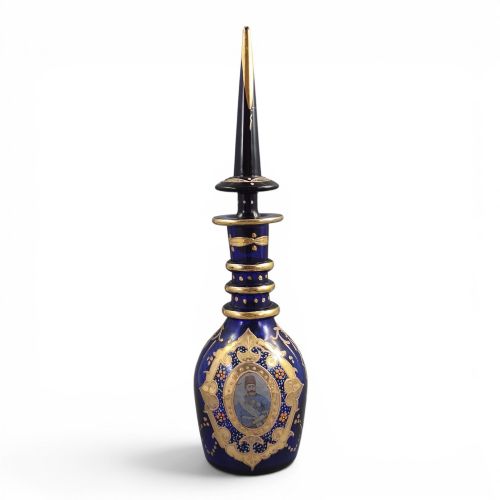
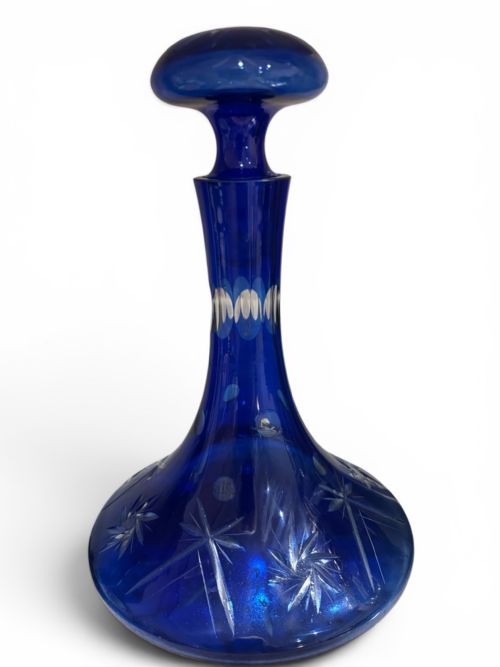
An antique blue glass flask brings rich cobalt, turquoise, and opalescent tones to a collection, serving as a practical vessel or a striking cabinet piece.
Antique Blue Glass Flask
An antique blue glass flask encompasses a variety of small vessels, perfume bottles, scent bottles, and decanters created across multiple centuries. Buyers searching for an antique blue glass flask will encounter Victorian silver-mounted designs, Art Deco perfume bottles, and earlier Bohemian or Venetian examples.
The selection ranges from pocket-sized scent bottles with sterling silver or enamel caps to larger cobalt crystal decanters and ancient Roman unguentaria. Victorian pieces frequently feature opaline glass mounted in silver, while 20th-century examples showcase geometric Art Deco lines.
Origins span from European workshops in France, Britain, and Bohemia to Chinese snuff bottles and ancient Mediterranean glass. This diversity means collectors can select everything from chatelaine scent bottles to minimalist decanters.
How they were made
Glassmakers utilised cobalt, opaline, and overlay techniques to achieve deep blue hues, often combining blown or moulded glass bodies with precious metals. Sterling silver, enamel, and guilloche mounts were then securely fitted to the necks and stoppers of the vessels.
Surface ornamentation involved slicing, cutting, enamelling, and internal painting, requiring skilled handwork by artisans in Murano, Bohemia, and France. Metal mounts were frequently hallmarked or stamped to denote silver content and workshop origin.
Antique Blue Glass Flask Retail Price Guide 2026
Typical asking prices for blue glass flask among the pieces listed under this phrase on Sellingantiques today, from the lower quarter to the upper quarter. They describe what is for sale here now, not the wider market.
Materials represented across the inventory include sterling silver, enamel, opaline glass, and cobalt crystal.
What varies in quality
Quality rests upon the depth of the glass colour, the precision of any cut or overlay work, and the integrity of the metal mounts. Pieces featuring intact silver closures, original stoppers, and crisp enamel detailing command greater attention from collectors.
The reputation of the maker and the complexity of the manufacturing technique, such as multi-layered overlay or intricate murrine work, distinguish standard production pieces from exceptional examples.
Rene Lalique·Sabino·Franchini & Bigaglia
The Antique Blue Glass Flask Glossary
- Opaline glass
- An opaque or translucent glass developed in soft pastel and bright shades, frequently utilised for Victorian scent bottles. It provides a smooth, porcelain-like surface that contrasts with metal mounts.
- Cobalt glass
- Glass coloured through the addition of cobalt oxide during melting, producing a deep, vibrant blue. This material appears across multiple periods in both decanters and perfume vessels.
- Guilloche enamel
- A decorative technique where a precise geometric pattern is engraved beneath a translucent layer of enamel. It is commonly found on the lids of early twentieth-century dressing table bottles.
- Chatelaine scent bottle
- A small flask designed to be suspended from a belt hook alongside other useful domestic implements. These pieces typically include secure screw or hinged caps to prevent spilling.
- Unguentarium
- A small ancient glass vessel used for holding oils, balms, or perfumes. These archaeological pieces are often associated with Roman burial sites and display distinctive iridescence from age.
Antique Blue Glass Flask: Frequently Asked Questions
How do I clean an antique scent bottle?
Clean the glass interior gently with warm water and a soft bottle brush, avoiding harsh chemical detergents that might harm historic glass or enamel. Take care to keep moisture away from any original cork stoppers or silver mounts during the process.
Allow the vessel to air dry completely before replacing the stopper. Polishing of silver mounts should be done sparingly with a dry microfiber cloth to preserve the metal's natural patina.
Are original stoppers important?
Original stoppers significantly enhance the desirability and completeness of any flask or perfume bottle. Matching glass or metal stoppers indicate that the piece remains intact and has not been altered over time.
Finding a replacement stopper that matches the exact tint and wear of antique glass remains exceptionally difficult. Collectors therefore prioritize pieces retaining their original components.
How can I date a blue glass flask?
Dating relies upon examining the manufacturing style, the type of metal mounts, and any visible hallmarks or signatures. Victorian examples often feature heavy silver repoussé work, while 1930s pieces display distinct Art Deco geometric styling.
Consulting period catalogues and comparing the base pontil marks helps narrow down the decade of production. Wear patterns on the base also offer clues regarding the age and handling history of the object.
Were these bottles meant for travel?
Many smaller scent flasks and chatelaine bottles were manufactured for personal use outside the home. Secure screw-cap mechanisms and robust silver mounts ensured that perfumes remained safely contained during daily carriage.
Larger decanters and display bottles served stationary roles on dressing tables or in cabinet collections. Their primary purpose was ornamental presentation rather than portability.