



Antique Blanket Rack
These antique blanket rack options offer practical wooden frames designed to air and display textiles with traditional craftsmanship.
Antique Blanket Rack
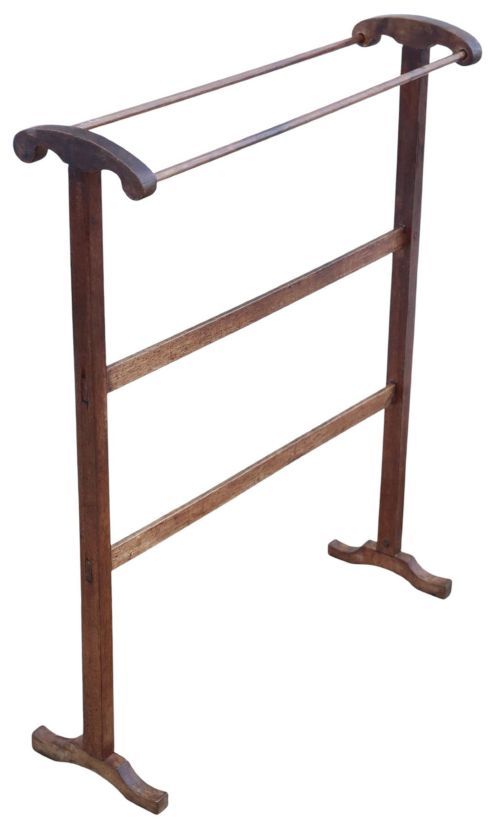
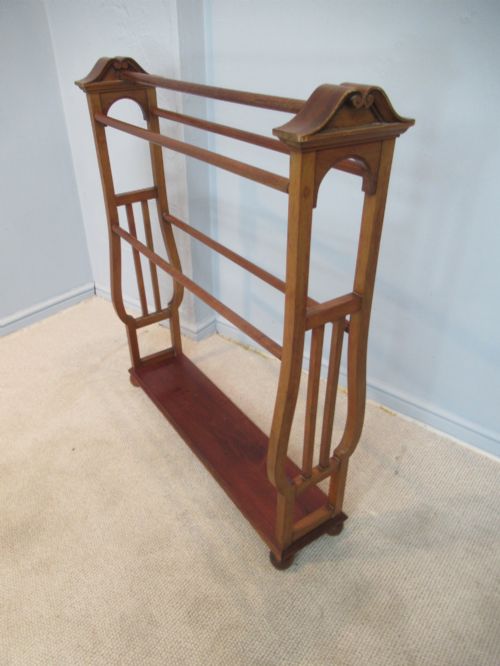
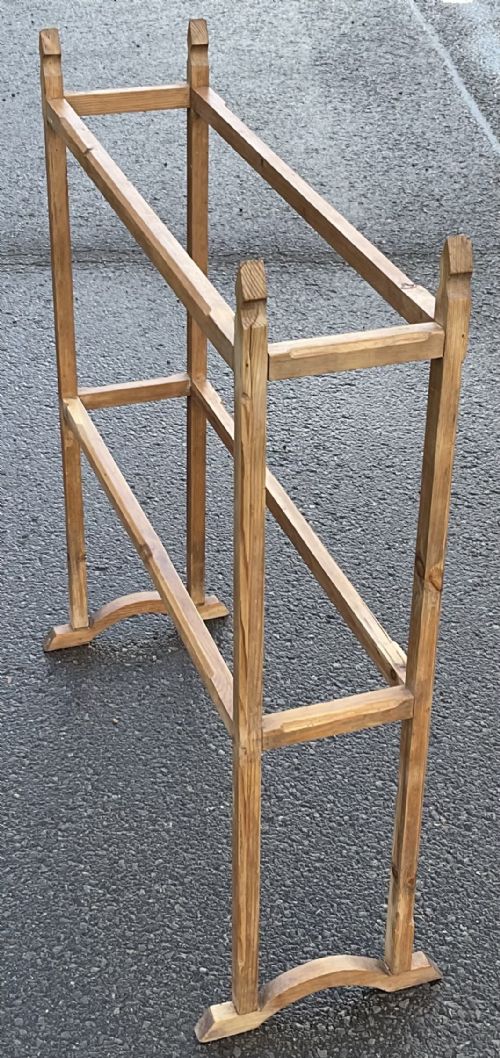
An antique blanket rack appears primarily in the form of towel rails, clothes racks, robe stands, and occasionally canterburys spanning the George III, Regency, Victorian, Edwardian, and Qing Dynasty periods. These functional furnishings provide sturdy horizontal bars for holding household linens or garments in bedrooms and bathrooms alike.
The selection encountered most frequently on this page comprises standing mahogany towel rails from the Edwardian and Victorian eras. Buyers often find variations featuring multiple rails, satinwood inlay, or black ebonised finishes.
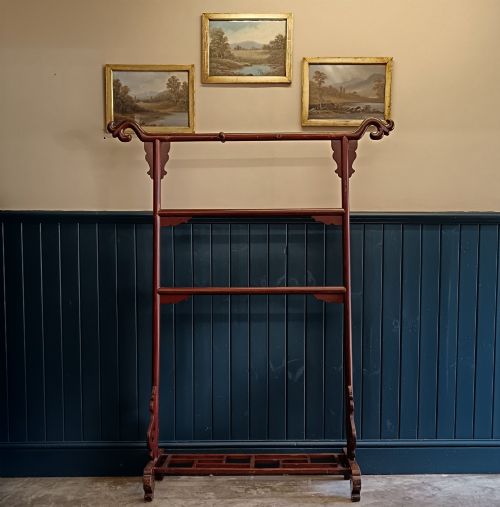
While traditional British designs dominate the listings with woods like oak, walnut, pine, and rosewood, occasional international pieces such as Chinese lacquered clothes stands also appear. Each object serves the dual purpose of everyday utility and period interior decoration.
How they were made
Cabinetmakers constructed these frames using solid hardwoods like mahogany, oak, and walnut, frequently incorporating pine for secondary structural elements. Joints were carefully pegged, mortised, and tenoned to withstand the daily weight and movement of damp textiles.
Surface decoration involved contrasting satinwood inlay, pigmented black ebonisation, and applied lacquering over carved wooden structures. Artisans shaped horizontal rails and upright supports using traditional hand woodworking techniques suited to each distinct stylistic period.
Antique Blanket Rack Retail Price Guide 2026
Typical asking prices for blanket rack among the pieces listed under this phrase on Sellingantiques today, from the lower quarter to the upper quarter. They describe what is for sale here now, not the wider market.
Materials recorded across the inventory include contrasting satinwood inlay, pigmented ebonised finishes, and traditional lacquered wood.
What varies in quality
Quality rests upon the selection of timber and the sophistication of decorative details such as satinwood stringing or precise turning on the upright supports. Heavier proportions and more generous dimensions distinguish substantial pieces from simpler utility items.
The integrity of the construction determines longevity, particularly at the joints where horizontal rails meet the vertical standards. Finer examples show careful attention to grain matching and proportion across every bar.
The Antique Blanket Rack Glossary
- Canterbury
- A low freestanding stand originally designed for holding sheet music or books, featuring slatted vertical divisions. These versatile pieces often share construction traits with blanket and towel racks.
- Ebonised
- Wood treated with pigment or chemical stain to imitate the dark, dense appearance of ebony. This finish became particularly popular during the Victorian period for striking visual contrast.
- Satinwood inlay
- Decorative woodwork where contrasting pieces of pale satinwood are fitted into recesses carved into a darker primary timber. This technique adds delicate linear patterns to the surface.
- Rosewood
- A heavy, durable tropical hardwood prized for its rich dark colour and pronounced grain figures. It appears in select high-status furnishings from the Georgian and Regency eras.
Antique Blanket Rack: Frequently Asked Questions
What is an antique blanket rack used for?
These pieces serve as practical stands for airing, drying, and displaying blankets, quilts, and towels in domestic spaces.
They offer an attractive alternative to modern storage, keeping textiles organised while showcasing traditional woodworking craftsmanship.
Where should I place a towel rail stand?
Bedrooms, dressing rooms, and bathrooms provide ideal settings for standing towel and clothes rails.
Their narrow profile allows them to sit comfortably against walls or in corners without dominating the floor space.
How do I identify an Edwardian blanket rack?
Edwardian examples often feature lighter mahogany frames, sometimes accented with delicate satinwood inlay or multiple slender rails.
They generally date from around nineteen hundred and reflect the clean, functional domestic tastes of that era.
Are these racks suitable for heavy blankets?
Many larger Victorian and Regency models boast generous proportions and solid hardwood construction designed to support substantial weight.
Checking the stability of the upright supports and rail fixings ensures the frame handles heavier household textiles safely.