

Antique Black Bookcase
An antique black bookcase offers dark timber presence and practical shelving, bringing Victorian ebonised surfaces and display utility into a room.
Antique Black Bookcase
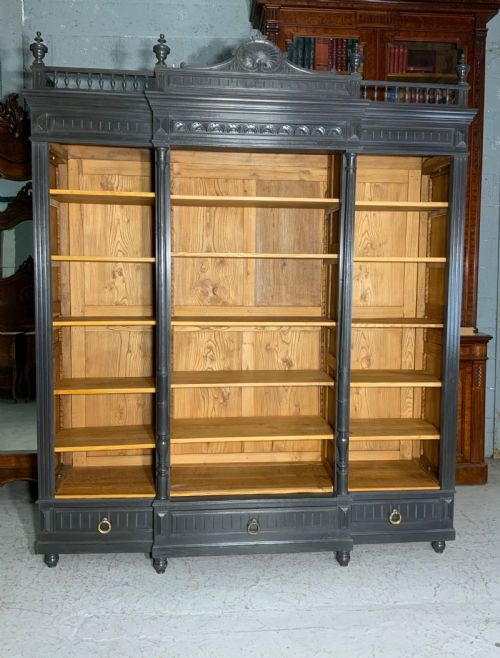
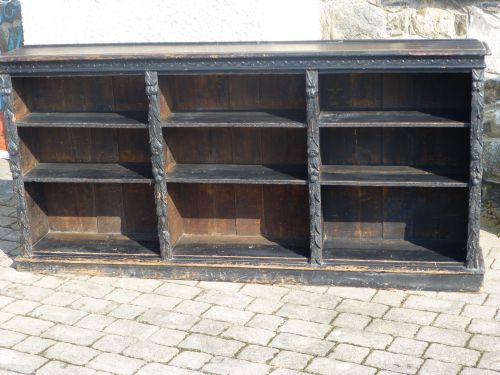
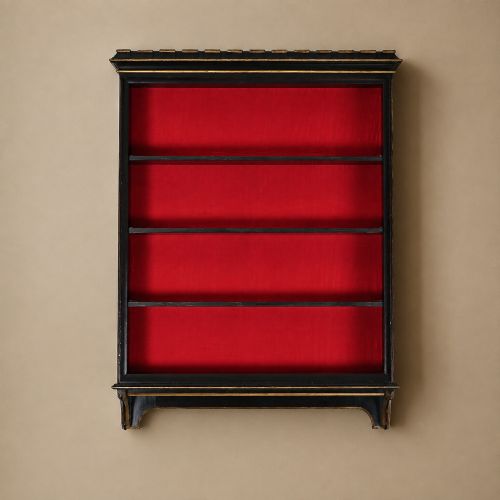
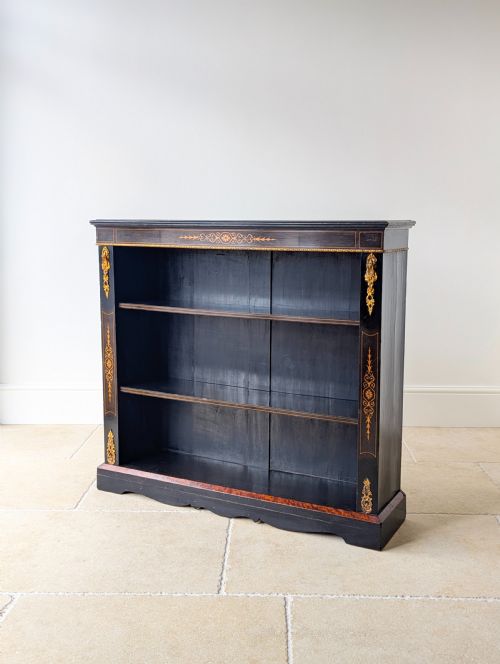
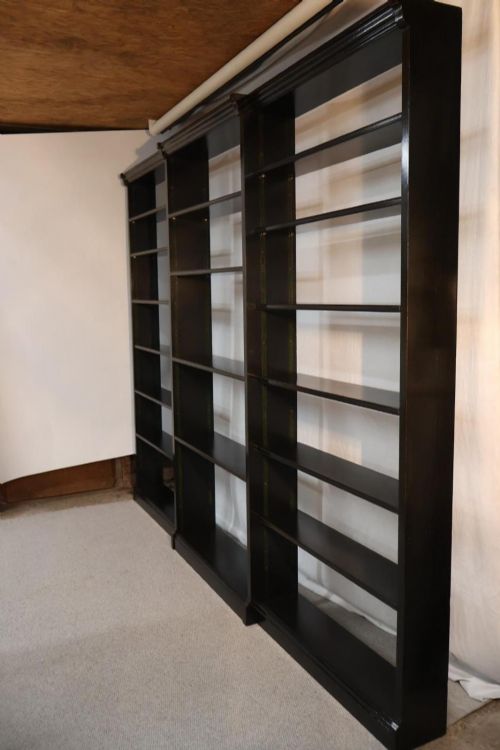
An antique black bookcase brings together various dark-finished storage pieces designed to house volumes and display objects. When searching for an antique black bookcase, buyers encounter open bookshelves, glazed vitrines, and enclosed cabinets dating from the eighteenth century through to the early twentieth century.
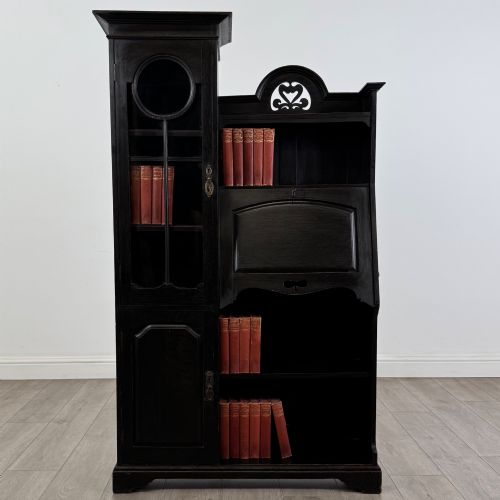
The pieces appearing in this category span several distinct historical periods, including the Victorian era, Napoleon III pieces, and Edwardian examples. Forms range from low dwarf bookcases and corner cupboards to large breakfront bookcases and bureau bookcases fitted with desks.
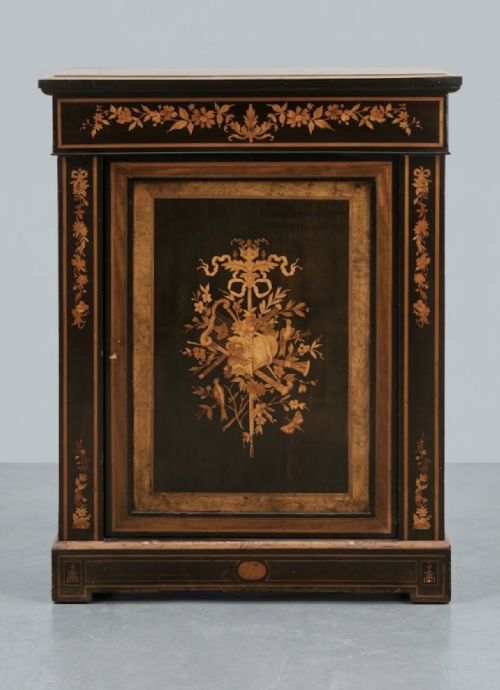
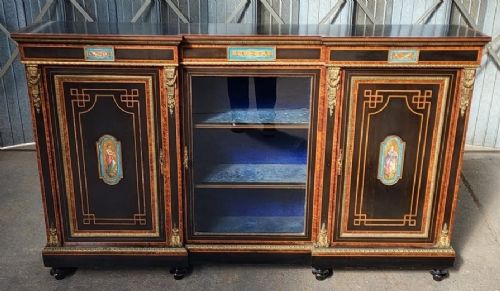
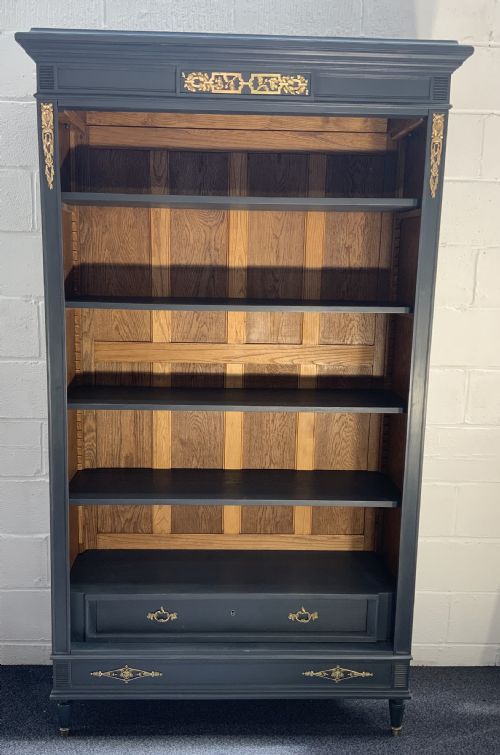
Many items utilise ebonised wood to achieve a dark, uniform finish, while others employ painted surfaces, lacquer, or dark hardwoods such as ebony and black walnut. These finishes often incorporate contrasting decorative elements like gilding, brass mounts, or marquetry inlay.
How they were made
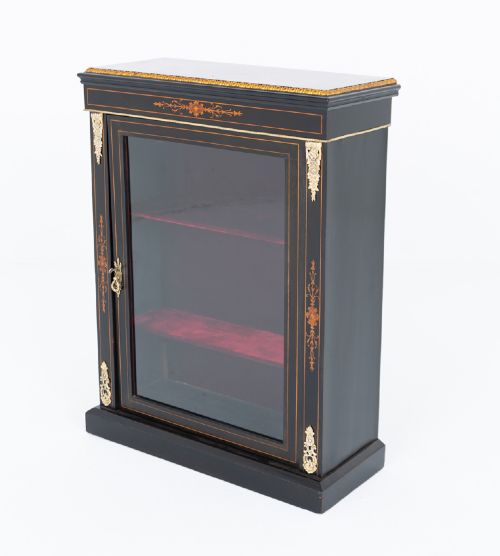
Cabinet makers utilised foundational timbers such as oak, walnut, and pine, applying ebonising techniques to stain lighter woods to a deep black finish that emulated expensive ebony. Surface decoration frequently involved hand-painted lacquer, gilt highlights, and intricate brass mounts, or ormolu, fastened to the timber frame.
Interiors often featured adjustable wooden shelving, glazed glass doors framed in timber, and brass hardware such as locks and hinges. Construction methods relied on traditional joinery techniques, including dovetail joints for drawers and mortise and tenon joints for the main case structures.
Listings feature ebonised wood, painted finishes, and lacquer across nineteenth and twentieth-century forms.
What varies in quality
The refinement of the surface finish and the intricacy of the decorative details distinguish the finest examples from standard utility furniture. Pieces featuring hand-applied lacquer work, parcel-gilding, Wedgwood plaques, or precise Boulle marquetry demonstrate superior workshop execution.
Structural integrity and the retention of original components, such as glass panes, brass mounts, and internal shelving, dictate the standard of preservation. Higher-quality furniture displays balanced proportions and deliberate stylistic cohesion, whether following Gothic Revival, Aesthetic Movement, or French Empire designs.
George Edmund Street
The Antique Black Bookcase Glossary
- Ebonised
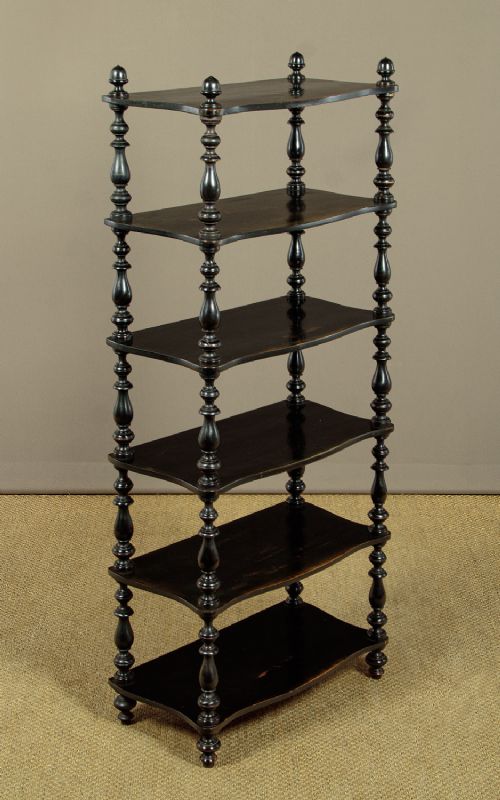
- Wood treated with stain or paint to achieve a deep black appearance resembling ebony. This technique was widely utilised during the Victorian and Napoleon III periods.
- Vitrine
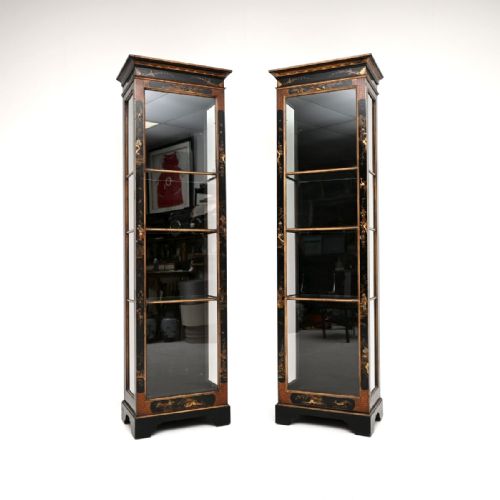
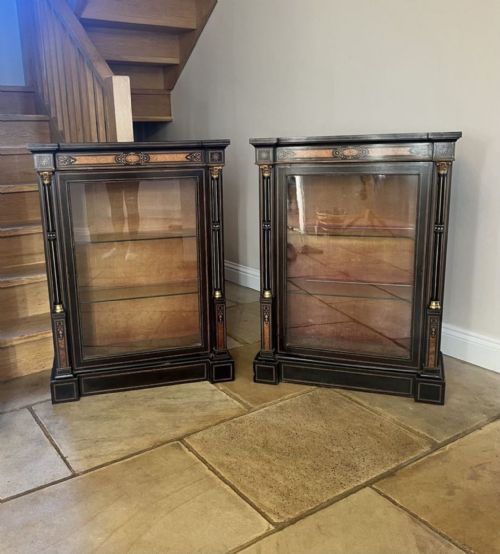
- A glass-fronted display cabinet intended for the exhibition of porcelain, curiosities, or fine books. These cabinets often feature glazed side panels to maximise light entry.
- Ormolu
- Gilded bronze mounts applied to furniture as decorative enrichment. This technique appears frequently on nineteenth-century French and English luxury cabinet work.
- Chinoiserie
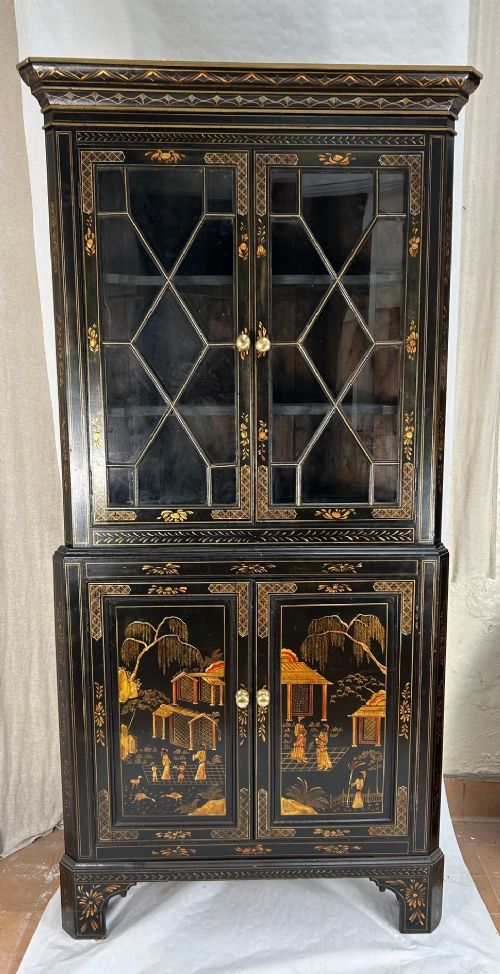
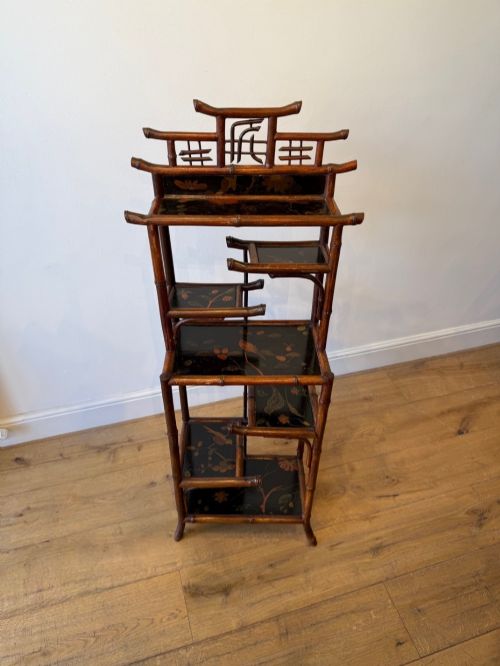
- European decorative style reflecting Chinese artistic motifs, typically executed in lacquered finishes with painted gold designs. It surfaces on Edwardian and nineteenth-century display furniture.
- Breakfront
- A piece of furniture having a central section that projects forward from the flanking wings. This architectural arrangement creates depth and visual rhythm on large bookcases and side cabinets.
Antique Black Bookcase: Frequently Asked Questions
What is an ebonised bookcase?
An ebonised bookcase is a piece of wooden furniture finished with a dark stain or black paint to imitate solid ebony. This dark surface treatment gained popularity during the Victorian era and the Aesthetic Movement.
Cabinet makers used this finish on oak, walnut, and fruitwoods to create a dramatic backdrop for gilded details, brass mounts, and colourful porcelain plaques.
How do I style a black bookcase?
A dark wooden bookcase works well against lighter wall colours to create contrast, or within a darker room for a cohesive tonal scheme. The dark finish highlights the spines of books and any displayed ceramics or glassware.
Consider the scale of the room and the height of the bookcase, whether choosing a low dwarf version or a tall breakfront library piece.
How do I date a black bookcase?
Dating relies on observing stylistic markers, construction methods, and materials used in the piece. Victorian and Napoleon III examples often feature ebonised wood with brass mounts, while Edwardian pieces frequently display Chinoiserie lacquer.
Examining the interior timber, joinery techniques, and hardware helps narrow down the period of manufacture between the eighteenth and early twentieth centuries.