
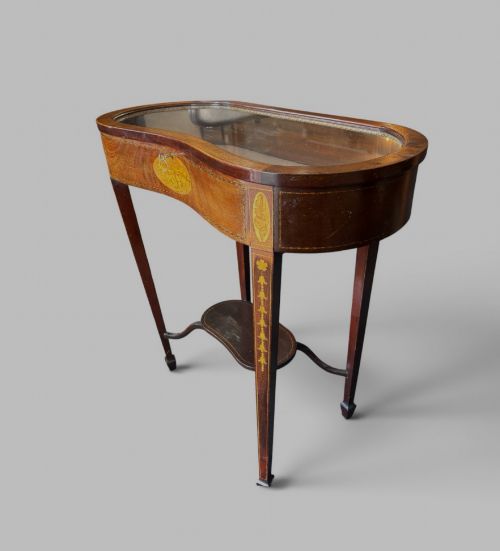


Antique Bijouterie Box
An antique bijouterie box is a glazed tabletop display case designed to hold small trinkets, and these pieces bring elegance to any drawing room.
Antique Bijouterie Box
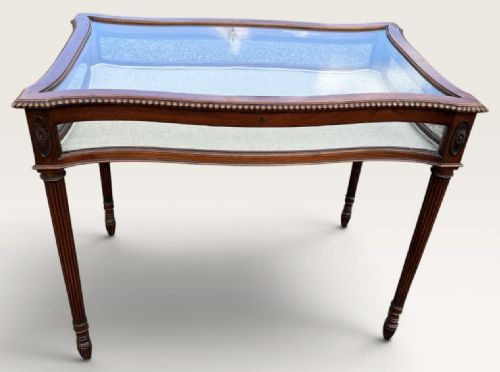
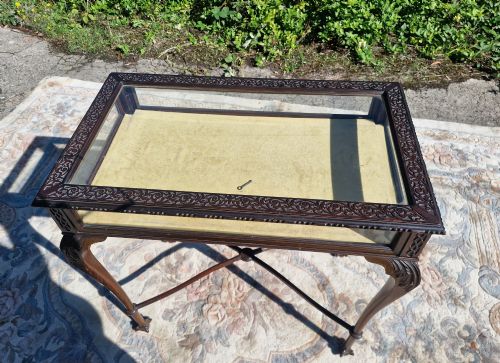
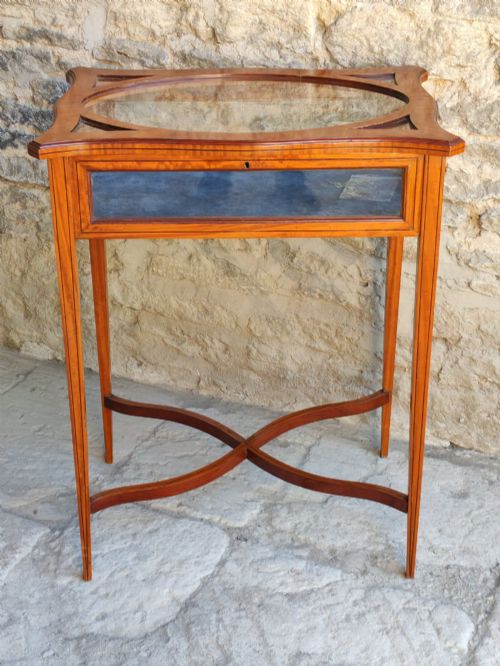
An antique bijouterie box encompasses glazed display tables, cabinets and smaller tabletop jewellery boxes created to showcase precious items. The pieces seen here span the Victorian and Edwardian eras, alongside various nineteenth century examples.
Most items you meet on this page take the form of freestanding display tables with glazed lids and velvet lined interiors. Cabinet and table variations both serve to protect personal treasures while keeping them visible from above.
How they were made
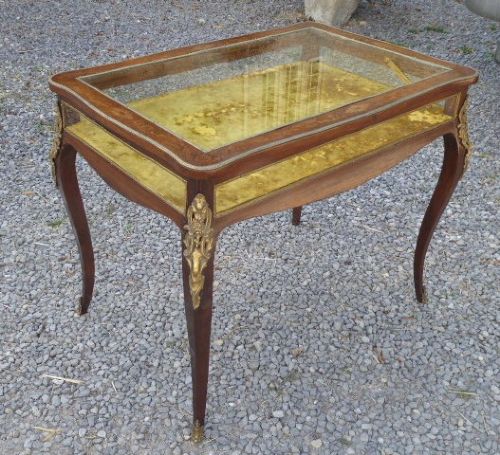
Cabinetmakers utilised timber frameworks of mahogany, satinwood, kingwood and rosewood, frequently incorporating intricate marquetry and inlaid brass lines. Ormolu mounts in gilded bronze provide decorative enrichment to French Louis XV and Louis XVI revival pieces.
Glazing forms the principal viewing surface for the contents within, while interior trays and wells rely upon fitted velvet and fabric linings. Structural shapes range from rectangular and serpentine outlines to kidney and octagonal forms.
Many Edwardian display tables spent their early lives keeping delicate lace fans safe from curious fingers.
What varies in quality
The refinement of the timber choice and the precision of the marquetry inlay dictate the upper tiers of craftsmanship. Finer examples display carefully selected veneers such as satinwood or kingwood paired with substantial cast ormolu mounts rather than simpler brass banding.
Overall structural proportion and the fluidity of curved forms, such as serpentine or kidney shapes, separate standard production from superior cabinetmaking. The quality of the interior velvet lining and the smooth operation of glazed hinged lids also mark out better pieces.
The Antique Bijouterie Box Glossary
- Bijouterie table
- A glazed display table specifically built for showing small ornaments, medals and jewellery under glass.
- Ormolu
- Gilded bronze used for decorative mounts and feet, frequently seen on French nineteenth century examples.
- Marquetry
- Decorative woodwork where different coloured veneers form floral or geometric patterns across the surface.
- Satinwood
- A pale, lustrous timber utilised extensively during the Edwardian period for fine inlay and cabinet construction.
- Serpentine
- A curved shape curving inward then outward, creating a sinuous outline on tabletops and cabinet fronts.
Antique Bijouterie Box: Frequently Asked Questions
What is an antique bijouterie box used for?
These glazed containers were originally manufactured to exhibit delicate personal accessories, portrait miniatures, fans and valuable trinkets within a drawing room setting. The transparent lid allowed owners and guests to inspect items without handling them directly.
Today, collectors use them to display pocket watches, medals, antique jewellery or small curiosities while keeping them protected from dust and damage.
How do I tell Victorian from Edwardian pieces?
Victorian examples frequently employ heavy rosewood or mahogany timbers, sometimes enhanced with robust ormolu mounts or elaborate brass inlay. The styling often draws upon French Rococo revival influences with darker, richer finishes.
Edwardian pieces generally favour lighter woods such as satinwood and feature delicate inlaid marquetry motifs with simpler, refined proportions. The overall aesthetic tends toward lighter neoclassical revival styles like Louis XVI.
Are all antique bijouterie boxes tables?
Not all pieces take the form of freestanding display tables with slender legs. Some items are designed as tabletop jewellery boxes or compact cabinets meant to sit upon other furniture.
Regardless of whether the piece is a cabinet or a table, the defining feature remains the glazed viewing panel that reveals the lined interior compartment.
What materials should I expect to find?
The structural frames are constructed from hardwoods including mahogany, rosewood, kingwood and satinwood. Glass panels form the viewing lids, and interiors are typically lined with velvet or fabric.
Decorative embellishments include brass stringing, marquetry patterns and cast ormolu mounts in gilded bronze.