

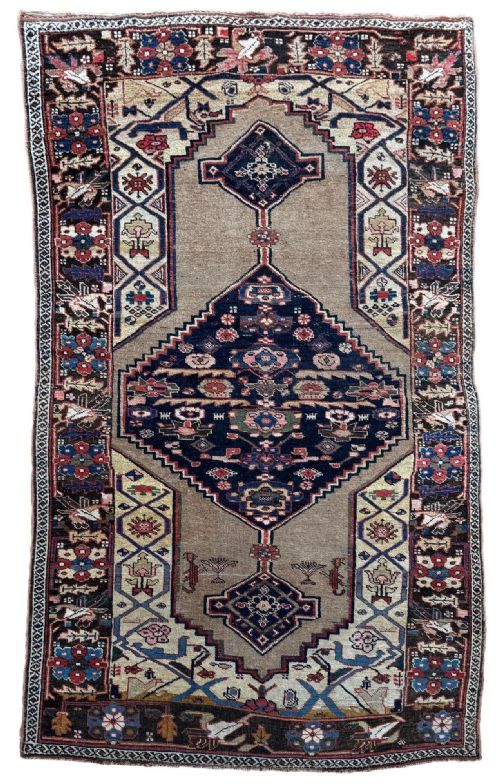


Antique Bidjar Rug
An antique bidjar rug is a dense, durable floor covering woven by Kurdish weavers in Persia, prized for exceptional resilience and heavy wool foundations.
Antique Bidjar Rug
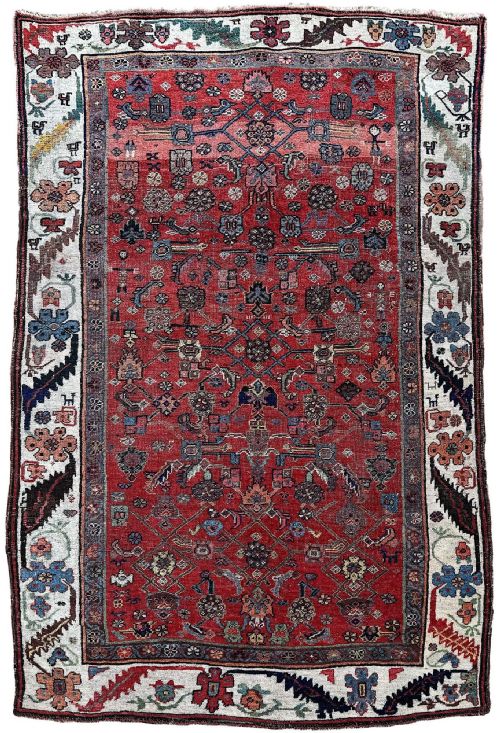
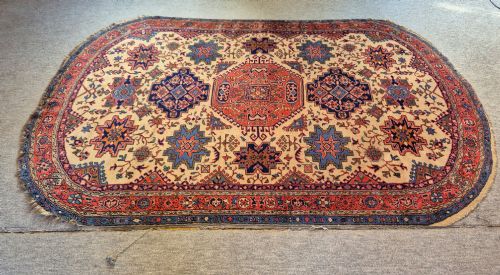
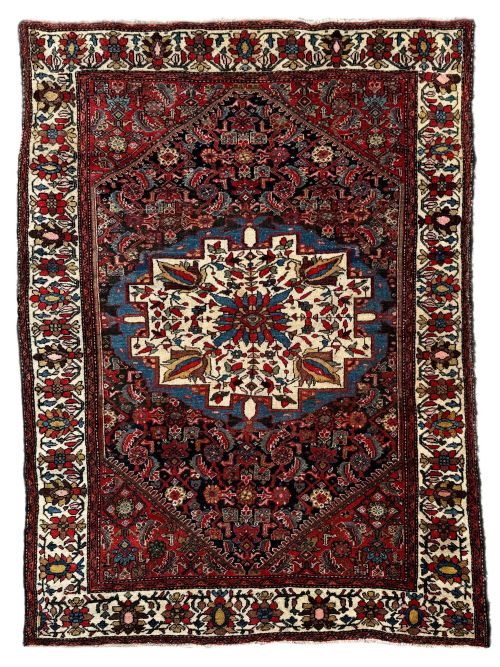
When you search for an antique bidjar rug, you are looking at heavyweight Persian carpets and smaller floor coverings originating from Kurdish weaving traditions. The examples seen here range from compact bag faces and runners to large kelleh carpets and oversized room carpets.
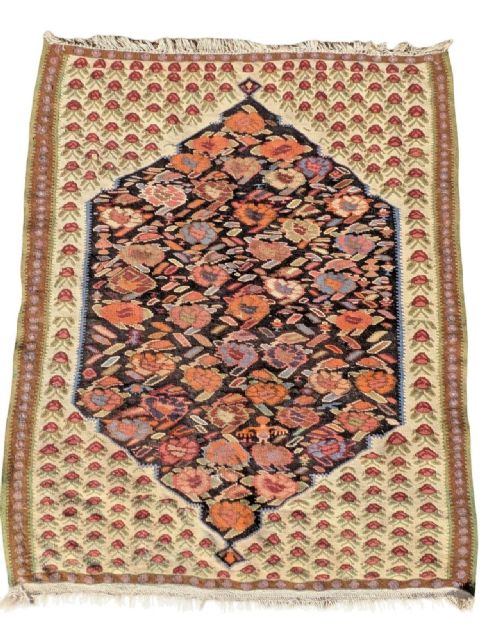
Most pieces on this page date from the late nineteenth century up to the early decades of the twentieth century. They encompass tribal village work as well as distinctive formats like the curve ended rug or the kilim carpet.
Materials and construction
These pieces are built on sturdy cotton foundations combined with dense wool pile, beaten down tightly during weaving to create a famously rigid textile. This method yields a heavy, resilient structure designed to withstand generations of daily foot traffic.
The wool used provides a dense, durable surface that holds rich dye colours securely across traditional Persian and Kurdish patterns.
Antique Bidjar Rug Retail Price Guide 2026
Typical asking prices for bidjar rug among the pieces listed under this phrase on Sellingantiques today, from the lower quarter to the upper quarter. They describe what is for sale here now, not the wider market.
An unusual lemon ground colour occasionally breaks the traditional palette of these rugs, adding an unexpected brightness to the heavy Kurdish weave.
Assessing quality
The standard of a piece is determined by the tightness of the weave and the precision of the traditional motifs executed on the heavy wool foundation. Finer examples display greater intricacy in pattern work and superior structural density.
Format also influences the character of the piece, with large oversized carpets and long runners requiring exceptional skill from the Kurdish weavers to maintain structural integrity across extended dimensions.
The Antique Bidjar Rug Glossary
- Kelleh
- A long, narrow rectangular carpet format traditionally used in Persian rooms. It typically measures significantly longer than it is wide.
- Kilim
- A flatwoven rug or carpet produced without a pile. These pieces rely on interlocking warp and weft threads to form geometric patterns.
- Bag face
- The front panel of a storage sack made by tribal weavers. These survive as small, decorative collector rugs.
- Gul-i-ferengi
- A distinct floral pattern translating to foreign flower, often appearing as naturalistic rose bouquets in Persian carpets.
Antique Bidjar Rug: Frequently Asked Questions
What is an antique bidjar rug?
An antique bidjar rug is a durable wool carpet woven by Kurdish tribes and villagers in the Persian region of Bidjar. They are known for heavy construction and resilience.
These textiles include small mats, runners, bag faces, and large carpets dating from the nineteenth and early twentieth centuries.
How do I care for a heavy carpet?
Regular gentle vacuuming without a rotating brush helps remove surface dirt from the dense wool pile. Professional cleaning suited for antique textiles preserves the structure.
Placing a suitable underlay beneath the rug prevents slipping and reduces friction against hard flooring.
Where were these pieces made?
These rugs were produced in Persian Kurdistan, specifically in and around the town of Bidjar and surrounding tribal villages. The local Kurdish weavers developed distinct techniques.
Their methods produced unusually heavy, tightly packed foundations that set these carpets apart from other Persian regional styles.
How are different sizes described?
Listings distinguish between smaller mats, area rugs, long runners, kelleh carpets, and massive oversized room carpets. Dimensions are provided in metres.
Format names like runner or kelleh help identify the original intended placement within a traditional interior space.