
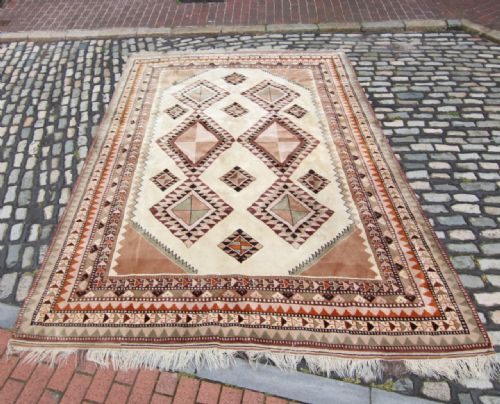
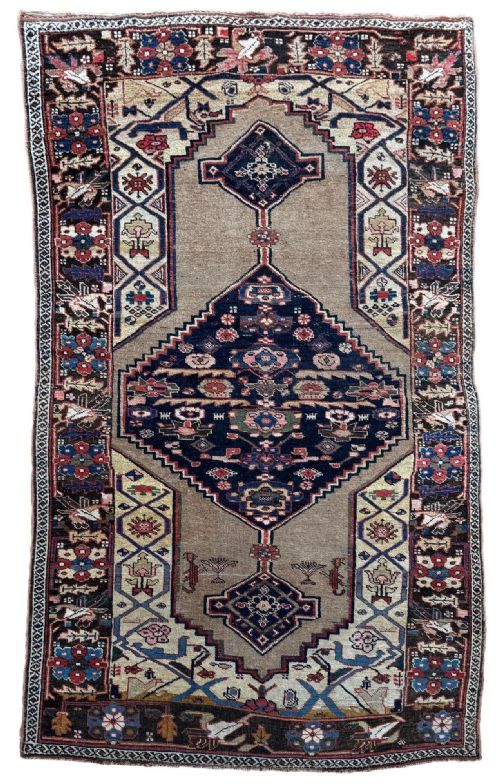
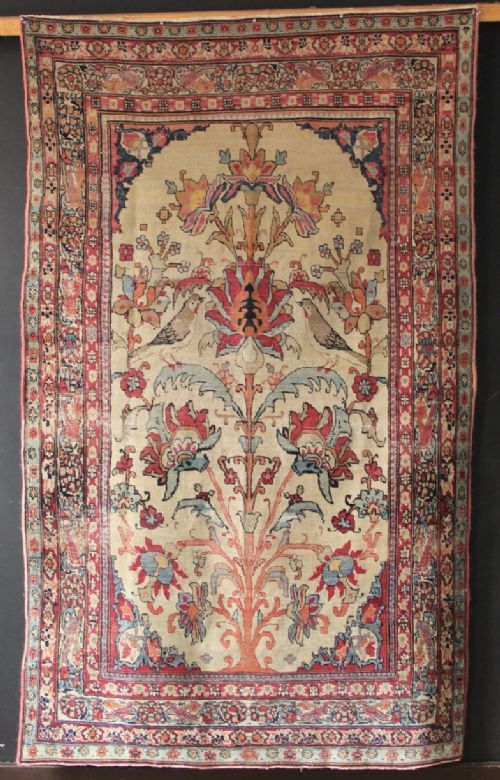
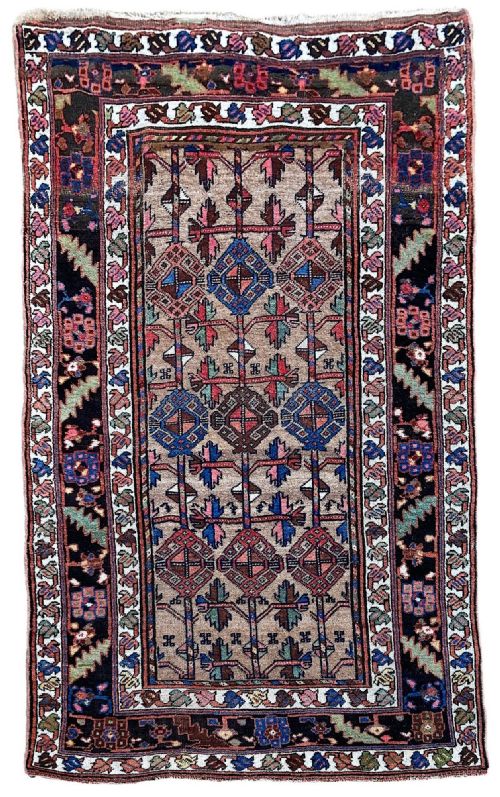


Antique Beige Area Rug
An antique beige area rug brings muted earth tones and deep history into a room through hand-knotted wool and silk.
Antique Beige Area Rug
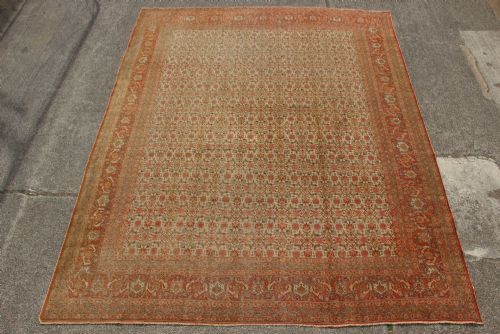
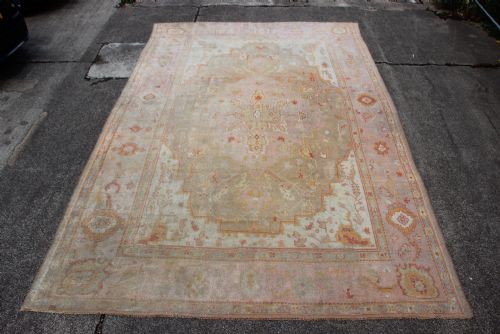
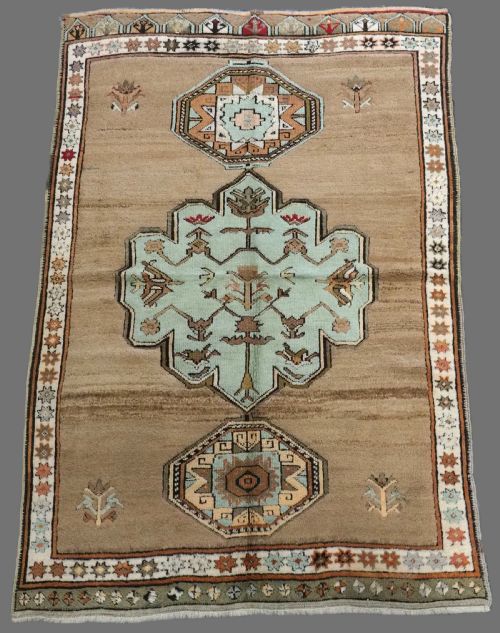
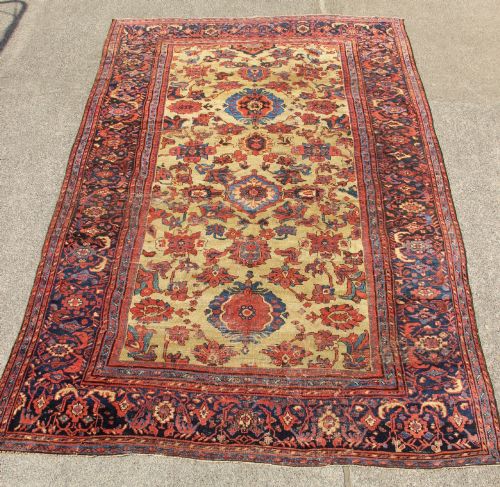
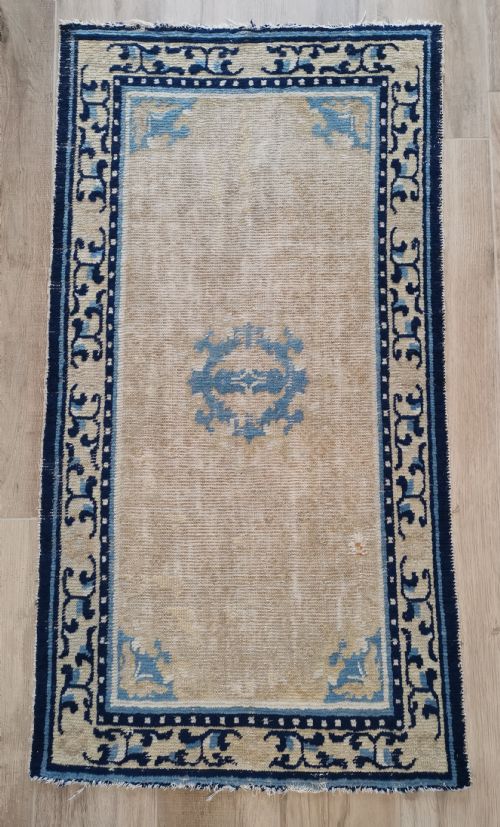
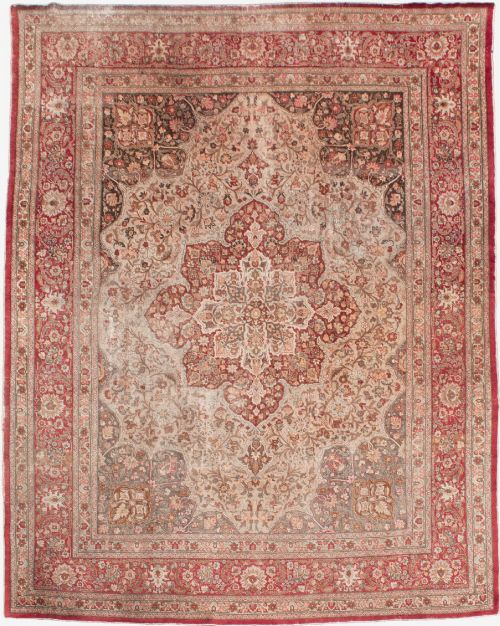
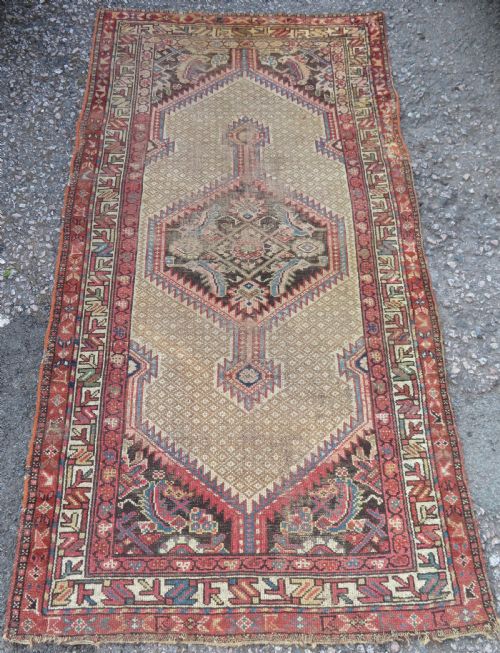
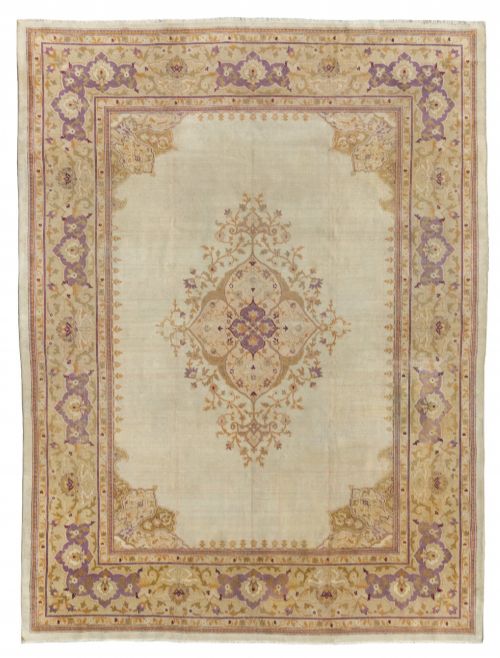
An antique beige area rug covers large spans of floor with muted, neutral foundations woven across Persia, Turkey, China, and Europe during the nineteenth and early twentieth centuries. These floor coverings range from expansive country house carpets to smaller village and tribal formats designed for specific domestic spaces.
The pieces appearing most frequently on this page originate from traditional weaving centres such as Tabriz, Oushak, Kirman, and Ushak, alongside various nomadic Baluch and Afghan workshops. Buyers encounter muted palettes where camel hair, soft wool, and pale dyes create calm, neutral tones suitable for diverse interior schemes.
Materials and construction methods
Weavers constructed these carpets predominantly using hand-spun wool and cotton foundations, occasionally incorporating finer materials like floss silk or natural camel hair for specific fields and details. The knotting process relied on traditional hand-knotted techniques executed on upright looms.
Natural dye sources provided the subtle range of beige, ivory, and soft ground colours seen across these rugs, allowing the materials to age with a characteristic faded patina. Pile thickness and density varied according to whether the piece originated from a city workshop or a village loom.
Some nineteenth century nomadic weavers hid tiny stray animal hairs directly inside the dense wool pile as a quiet nod to their flocks.
Distinctions in quality
Quality in these floor coverings rests upon the fineness of the knotting and the stability of the foundation materials used by the weavers. Tighter knots and finer wool or silk allow for sharper medallion and floral definitions, particularly in city workshop productions from Tabriz or Kirman.
The integrity of the pile and the evenness of wear across the field separate standard village productions from finer country house carpets. Surviving structural uniformity and the preservation of original selvedges and ends indicate higher grade execution during the nineteenth and early twentieth centuries.
Benlian
The Antique Beige Area Rug Glossary
- Pile
- The vertical or diagonal loops of wool, cotton, or silk that form the usable surface of the rug. This soft upper layer absorbs daily wear and displays the woven design.
- Warp
- The stationary longitudinal threads stretched tightly on the loom before knotting begins. These parallel strands form the structural backbone of the carpet.
- Weft
- The horizontal threads passed across the warp strands between rows of knots to bind the structure firmly together. They determine the firmness and flexibility of the rug body.
- Selvedge
- The reinforced side edges of a rug finished by wrapping lateral threads over the outermost warps. This edging prevents the sides from fraying.
- Patina
- The surface sheen and softening of colour developed through age, light exposure, and gentle wear. Collectors prize this gradual mellowing of wool and dye.
- Prayer Rug
- A smaller format rug featuring a mihrab or arch design traditionally oriented toward Mecca during daily devotions. These pieces often utilise finer silk or wool materials.
Antique Beige Area Rug: Frequently Asked Questions
How do I clean an antique beige rug?
Professional specialist cleaning remains essential for fragile nineteenth and early twentieth century wool and silk floor coverings. Gentle surface dusting helps maintain the pile without damaging the natural dyes.
Water saturation and harsh chemical detergents risk weakening the cotton foundations and altering the soft beige tones. Consult a conservator experienced in antique textiles before attempting any wet treatment.
Can I place these rugs in high traffic areas?
Thicker wool pile pieces handle moderate footfall well when protected with a suitable underlay that prevents slipping and fibre friction. Placing them away from direct, harsh sunlight preserves the delicate natural dyes.
Fine silk or heavily distressed tribal examples suit low traffic spaces where the structural integrity experiences less mechanical strain. Regular rotation ensures even wear patterns across the field over time.
How do I identify the regional origin of a rug?
Regional attribution relies on examining specific design motifs, border arrangements, and knotting structures characteristic of historic weaving towns. Persian pieces often display intricate floral medallions, while Anatolian or Ushak examples favour bolder geometric or large-scale floral elements.
Materials also offer clues, such as the use of un-dyed camel hair in specific tribal fields or floss silk in city workshops. Comparing the palette and weave density against documented examples confirms the likely provenance.
What causes the distressed appearance on some rugs?
Natural ageing, historical domestic use, and light exposure gradually soften the wool pile and mute the original dye colours. This fading creates the characteristic faded patina valued by collectors.
Some pieces exhibit low pile due to generational wear rather than intentional altering. Evaluating the remaining foundation helps determine whether the condition results from authentic age or heavy service.