


Antique Bedroom Dressing Stool
An antique bedroom dressing stool brings low-profile seating to a vanity space, combining traditional cabinet timbers with period upholstery.
Antique Bedroom Dressing Stool
An antique bedroom dressing stool is a compact, low seat designed specifically for use at a vanity table. The search phrase covers pieces intended for personal grooming, often pairing a wooden frame with a padded top.
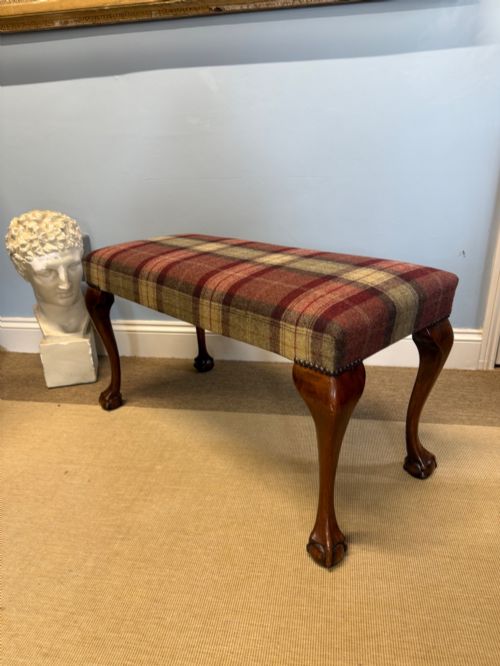
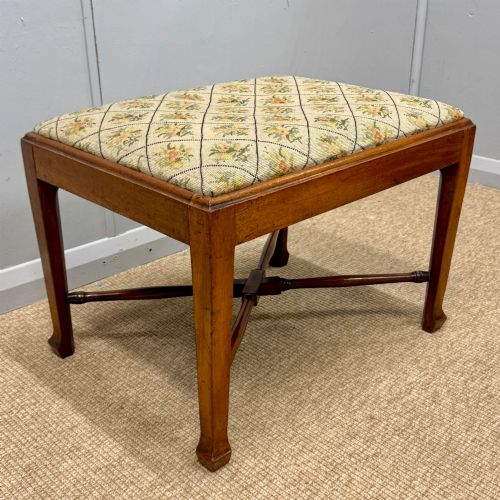
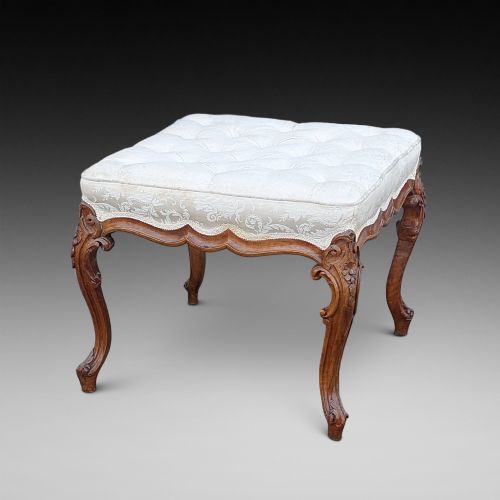
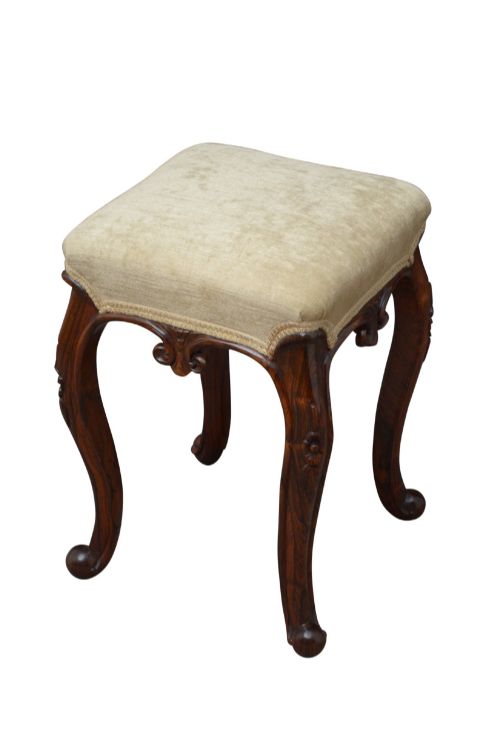
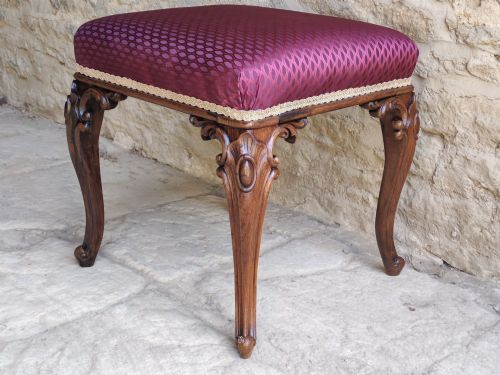
Victorian examples dominate the selection, frequently appearing in rich timbers like walnut and rosewood alongside Edwardian and later twentieth-century iterations. Buyers encounter forms ranging from simple rectangular benches to elaborate X-frame and cabriole-legged designs.
Origins stretch from English workshops to French and Swedish makers, encompassing styles from Regency through to Art Deco. Many pieces double as window seats or footstools due to their modest proportions.
Materials and construction methods
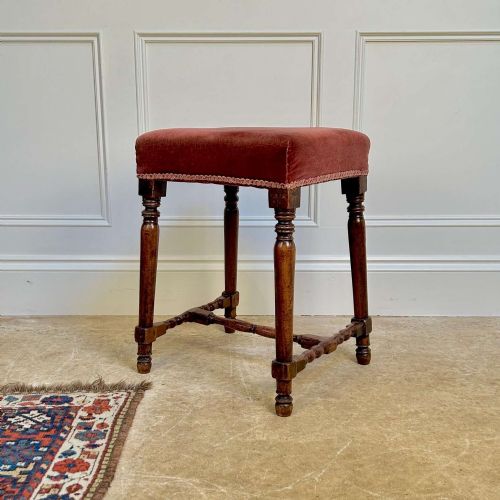
Cabinetmakers constructed these frames using dense hardwoods such as mahogany, walnut, rosewood, and satinwood, occasionally utilising exotic woods like goncalo alves or huali. Joinery relies on traditional methods, with legs frequently secured via corner blocks or integrated cross stretchers for added stability.
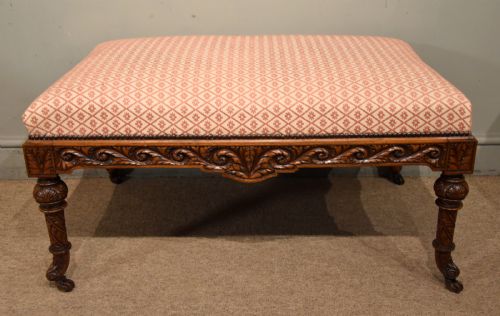
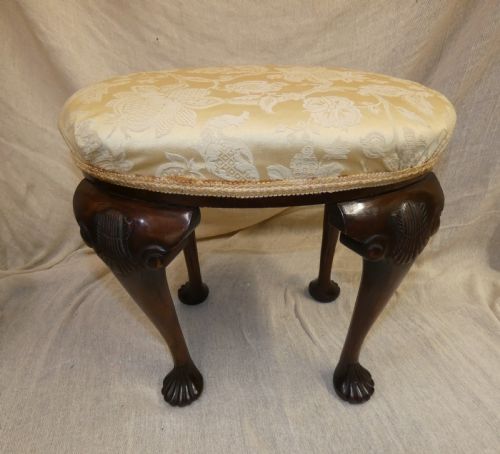
Upholstery forms an integral part of the construction, employing traditional fillings covered in textiles such as velvet, tapestry, chenille, and needlepoint. Frames often showcase hand-carved details, turning, or inlay work, uniting structural joinery with decorative surface finishes.
Form variations include drum-shaped storage compartments, X-frames, and cabriole-legged benches originating from English, French, and Swedish makers.
Distinctions in execution and preservation
Quality rests in the crispness of the timber carving and the integrity of the frame's joinery. Pieces featuring well-proportioned cabriole legs, robust cross frames, or intricate turning demonstrate superior cabinetmaking over plain, utilitarian alternatives.
The degree of original preservation distinguishes superior examples, particularly where timber patination remains undisturbed and secondary woods match the primary aesthetic. Recovered upholstery matters less than the underlying structural health of the wooden carcass.
The Antique Bedroom Dressing Stool Glossary
- Cabriole leg
- A furniture leg that curves outward and then tapers inward, mimicking an animal's leg. This design appears frequently on Victorian and Queen Anne style frames.
- Cross stretcher
- Wooden members connecting the legs near the base to provide structural rigidity. They often intersect in an X shape beneath the seat.
- X-frame
- A structural design where two members cross in the middle to form an X shape supporting the seat. This form provides notable strength to low seating.
- Goncalo Alves
- A dense, highly figured tropical hardwood also known as zebrawood. It is utilised in select mid-nineteenth-century English seating.
- Chenille
- A fuzzy, tufted fabric frequently used for period upholstery. It offers a tactile surface texture on traditional bedroom seats.
Antique Bedroom Dressing Stool: Frequently Asked Questions
What distinguishes a dressing stool from a footstool?
A dressing stool stands at a taller height, matched to the clearance required beneath a vanity table for comfortable seating. Footstools are lower in profile and built primarily for resting feet rather than supporting a seated person.
While both share similar timber frames and upholstery, the proportions differ to accommodate their distinct domestic functions within the bedroom.
How do I date a Victorian dressing stool?
Dating relies on observing the timber choice, leg style, and construction markers present in the frame. Mid-nineteenth-century pieces often utilise rosewood or walnut with heavy carving, while later Victorian items incorporate lighter mahogany or satinwood.
Stylistic shifts from Rococo Revival curves toward simpler rectilinear forms also indicate the progression through the decades.
Were these stools always upholstered?
Almost all surviving examples were manufactured with a padded seat designed for comfort during grooming routines. The textiles seen today range from period needlepoint and tapestry to later replacement fabrics.
The underlying webbing and stuffing methods changed over time, reflecting the upholstery standards of each specific decade.
Can I use a dressing stool as a window seat?
The compact dimensions and finished all-round appearance of many dressing stools make them suitable for placing beneath low windows. Their narrow footprints allow them to fit into tight alcoves without obstructing natural light or movement.
Many period examples were explicitly designed to serve multiple functions, including placement by windows or as auxiliary bedroom seating.