



Antique Barograph Drum
These antique barograph drum instruments record atmospheric pressure on paper charts, combining scientific utility with fine cabinetmaking.
Antique Barograph Drum
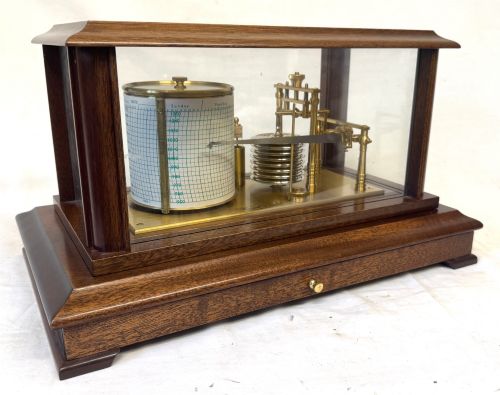
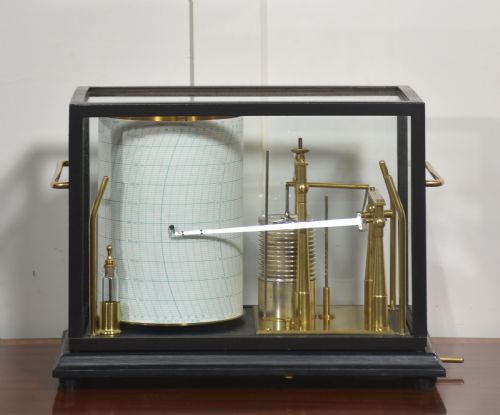
An antique barograph drum is a self-recording meteorological instrument housed in a glazed wooden case designed to sit upon a desk or table. These devices trace barometric pressure fluctuations onto a revolving paper chart mounted upon a cylindrical drum.
The pieces listed span from the Victorian period through the Edwardian era into the mid-twentieth century. Buyers encounter examples executed in mahogany, oak, and walnut, frequently fitted with bevelled glass panels and subsidiary barometer dials.
Makers such as Short & Mason, Jules Richard, and Depree and Young Ltd Exeter represent the standard of production found in these records. Formats range from standard desk models to miniature versions and combined weather stations.
How they were made
Cabinetmakers constructed the protective enclosures using dense hardwoods including mahogany, oak, and walnut, often shaping them with glazed five-glass tops to display the mechanical movement. Brass hardware, steel components, and paper charts complete the construction of each weather instrument.
Makers integrated aneroid barometric chambers linked to recording arms that held ink nibs against paper charts wrapped around the rotating drum. Clockwork mechanisms within the drum powered the continuous rotation over daily or weekly cycles.
Antique Barograph Drum Retail Price Guide 2026
Typical asking prices for barograph drum among the pieces listed under this phrase on Sellingantiques today, from the lower quarter to the upper quarter. They describe what is for sale here now, not the wider market.
Listings feature mahogany, oak, walnut, brass, glass, and paper across Victorian, Edwardian, and mid-twentieth-century periods.
What varies in quality
Quality rests in the precision of the mechanical linkages and the quality of the timber housing rather than mere age. Finer pieces display crisp cabinet joinery, substantial brass fittings, and movements signed by notable makers.
The refinement of the wooden case, whether figured walnut or inlaid mahogany, distinguishes standard production from superior examples. Surviving paperwork and original chart supplies further elevate the standing of a piece.
Short and Mason London·Jules Richard·Depree and Young Ltd Exeter·Richard Freres·Russell Norwich·Baines Harrogate
The Antique Barograph Drum Glossary
- Barograph
- A self-recording barometer that graphs pressure changes onto a paper chart. This instrument relies upon an aneroid mechanism rather than liquid mercury.
- Aneroid
- Operating without liquid. Aneroid barometers use sealed metal bellows that expand and contract with atmospheric pressure changes.
- Drum
- The rotating cylindrical component that holds the recording graph paper. Clockwork mechanisms inside this cylinder drive its steady rotation.
- Beveled glass
- Glass panes with angled edges set into the wooden case. This detail adds a decorative finish to the viewing windows.
- Weather station
- A combined meteorological instrument grouping a barograph with additional dials such as a thermometer or standard barometer. These multi-function objects housed multiple instruments within a single timber case.
Antique Barograph Drum: Frequently Asked Questions
How do I operate an antique barograph?
Operation involves winding the clockwork drum and securing a fresh paper chart around the cylinder. The ink nib must rest lightly upon the paper to trace the atmospheric pressure.
Regular winding ensures the drum continues to rotate and record data. Charts require replacement at regular intervals depending on the duration set by the clockwork mechanism.
What wood types were used for barograph cases?
Cabinetmakers selected dense hardwoods suited to table display. Mahogany, oak, and walnut appear frequently across Victorian and Edwardian examples.
Some pieces feature inlaid decoration or light oak finishes. The choice of timber generally reflects the prevailing style of the period in which the instrument was manufactured.
How can I date an antique barograph?
Dating relies upon stylistic markers of the wooden case, maker signatures, and mechanical details. Edwardian and Victorian pieces exhibit distinct cabinet designs and proportions.
Makers often inscribed their names and sometimes production dates onto the brass bedplate or paper charts. Surviving paperwork can also confirm the exact year of manufacture.
Where should I place a barograph at home?
These instruments require a stable surface away from direct heat sources and vibrations. Desks, sideboards, or tables in living rooms provide suitable locations for display.
Placement should allow easy viewing of the chart through the glass panels. Stable ambient conditions help maintain the accuracy of the aneroid mechanism.