


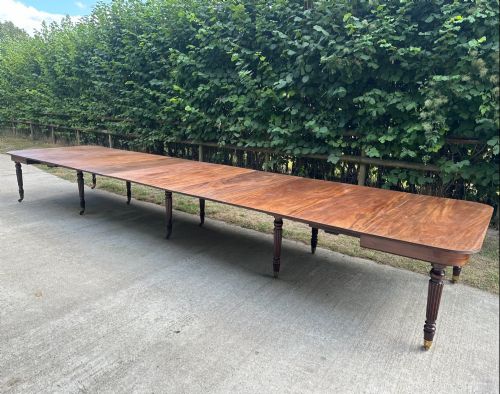
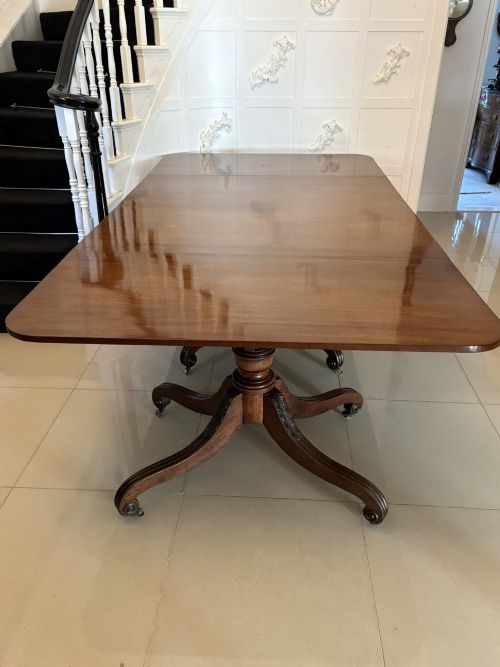
Antique Banquet Dining Table
An antique banquet dining table provides the grand central stage for large gatherings, built from rich timbers to seat extended families and guests comfortably.
Antique Banquet Dining Table
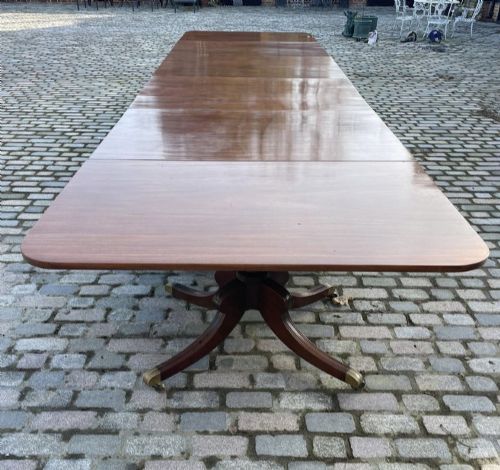
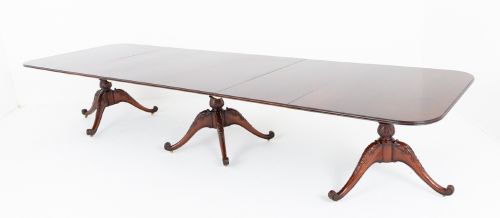
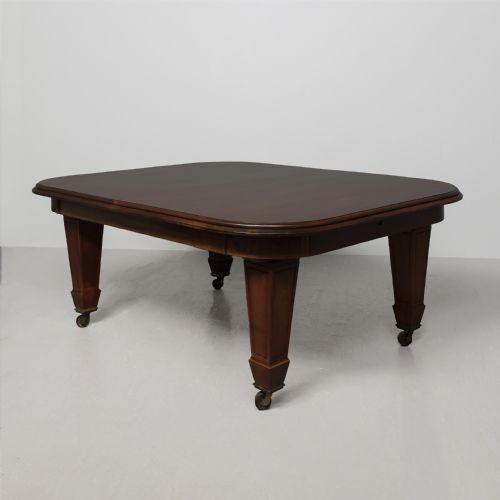
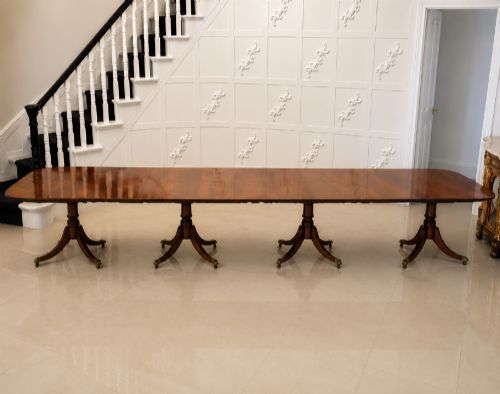
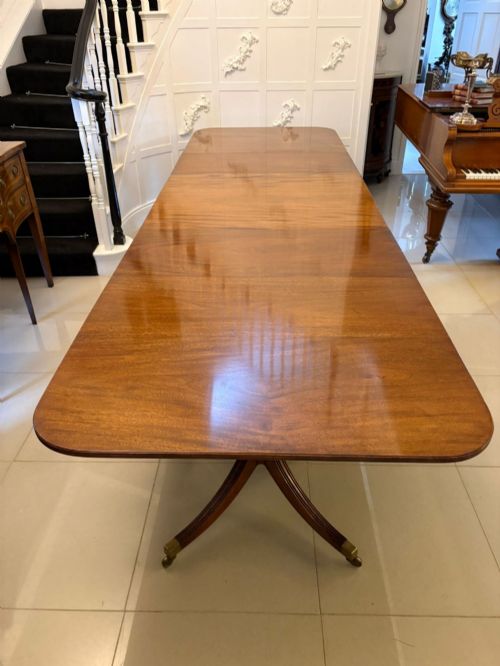
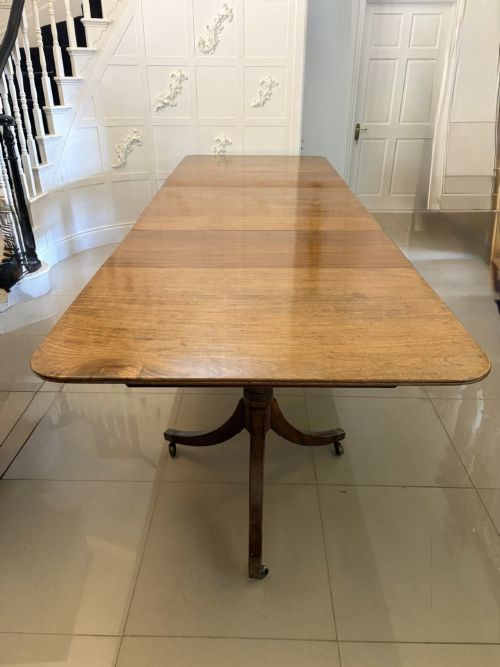
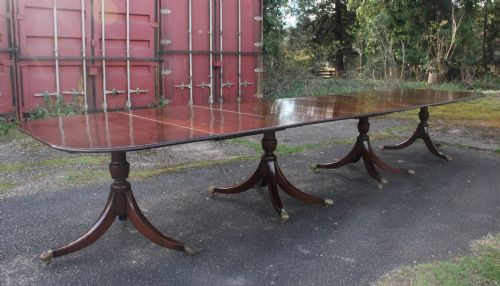
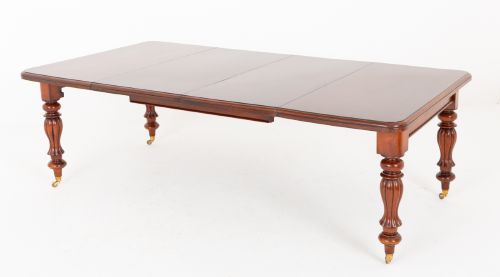
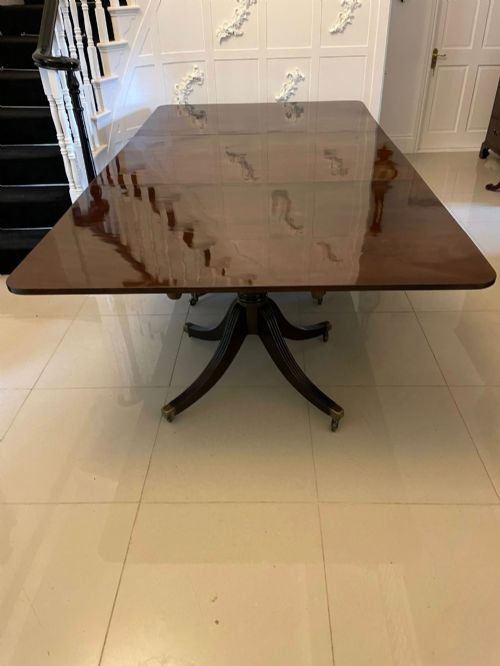
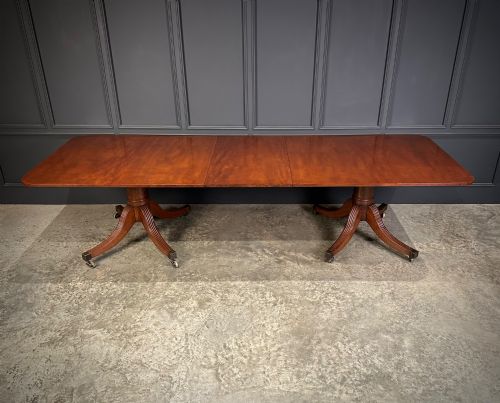
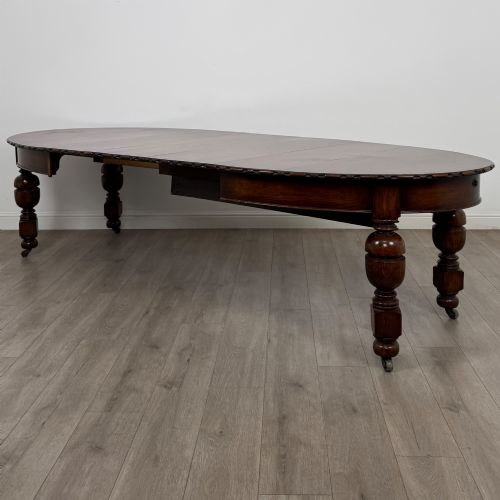
When you search for an antique banquet dining table, you encounter substantial extending tables designed to host numerous guests across multiple pedestals or leaves. The examples seen here span the Georgian, Regency, William IV, and Victorian periods, alongside later revivals from the twentieth century.
Most pieces on this page are constructed from mahogany with multi-pillar configurations and removable leaves to accommodate seating capacities ranging from ten up to twenty-eight people. Oak and walnut also appear in refectory, draw-leaf, and revival formats, reflecting formal dining traditions from the nineteenth and early twentieth centuries.
Materials and Technique
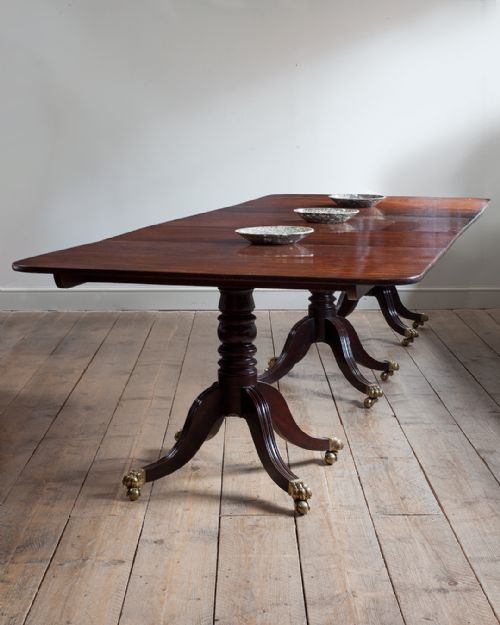
Cabinet makers utilised solid and figured mahogany, oak, and walnut, frequently incorporating brass castors and brass connecting clips to stabilise multi-pillar extending formats. Leaves were engineered to drop in smoothly, supported by telescopic actions or sturdy central pedestals with reeded legs.
Surface finishes relied on hand-applied polish that highlighted the natural grain patterns of figured timber, while specific periods integrated gold leaf accents, ceramic components, or intricate edge inlay.
Seating capacities range widely from compact ten-seater configurations up to massive twenty-eight-seat banquet tables.
Distinctions in Quality
The distinction between standard dining furniture and top-tier pieces rests on the selection of figured mahogany veneers, the weight and stability of the pedestal bases, and the precision of the extension mechanism. Original matching leaves that retain uniform colour and grain continuity across the entire length elevate a table significantly.
Superior construction involves heavier timber scantlings, finely carved reeding on the legs, and robust brass hardware that ensures the table remains level and firm when fully extended to capacity.
Gillows·William and Gibton·Wylie and Lochead·Maple and Co·Whytock and Reid·Robert Adam
The Antique Banquet Dining Table Glossary
- Pedestal
- A central support pillar, usually resting on tripod or quadrapod brass-castor legs, used to hold up large extending table tops.
- D-End
- A table section terminating in a semi-circle resembling the letter D, often joined to central sections to form a long banquet table.
- Draw-Leaf
- An extension system where auxiliary leaves slide out from beneath the main top to lengthen the surface quickly.
- Refectory
- A long, narrow dining table style traditionally used in communal dining halls and constructed predominantly in solid oak.
- Reeded
- A decorative moulding consisting of parallel convex rows carved into table legs or borders.
Antique Banquet Dining Table: Frequently Asked Questions
How do I extend an antique banquet dining table?
Most multi-pillar tables utilise a winding mechanism or pull apart manually on hidden runners to allow extra leaves to drop securely into the centre space.
Brass clips underneath lock the sections tightly together to keep the surface flat and steady during use.
How many people can sit at a four pedestal table?
Larger formats with four pedestals and multiple leaves routinely accommodate twenty to twenty-eight guests depending on the overall length.
Individual chair widths and table proportions determine the exact seating arrangement along the sides and ends.
What is the difference between Regency and Victorian tables?
Regency tables typically feature restrained design, brass-castor pedestals, and figured mahogany tops influenced by classic architectural proportions.
Victorian versions frequently scale up in mass and proportion, occasionally offering deeper skirting and massive single-piece leaves.
Are oak banquet tables suitable for daily use?
Solid oak and refectory styles provide exceptionally sturdy surfaces that withstand frequent everyday gatherings and family meals.
Using heat-resistant mats and gentle cleaning methods protects the polished timber finish from moisture and marking.