



Antique Asian Wall Plaques
These antique asian wall plaques combine intricate metalwork, carved timber and rich enamel from nineteenth and early twentieth century workshops.
Antique Asian Wall Plaques
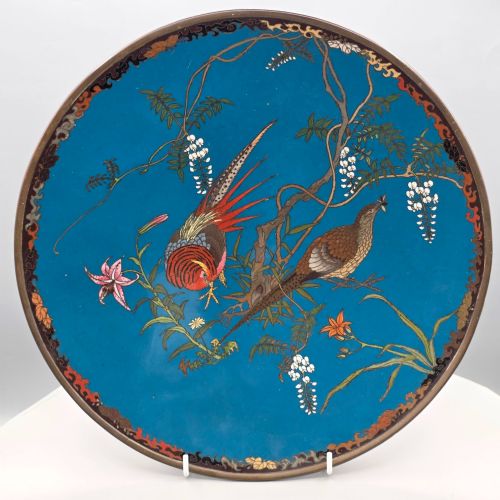
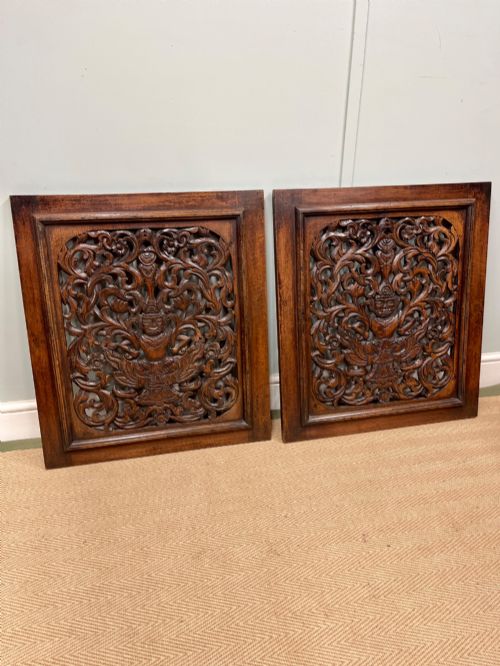
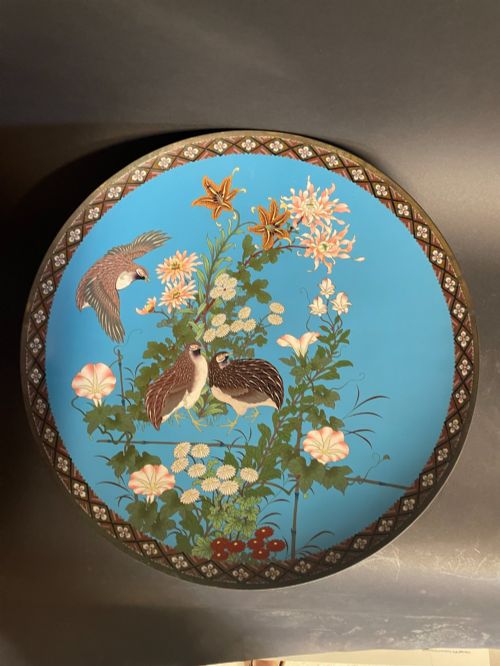
These antique asian wall plaques comprise decorative chargers, wall panels, roundels and carved wooden temple fragments originating from Japan, China and Burma. You will most frequently encounter Japanese cloisonne enamel chargers and Chinese carved wooden panels upon this page.
The objects span from the eighteenth century through to the Taisho period, with the majority centred in the nineteenth century and the Meiji era. Forms range from large circular copper dishes to rectangular carved architectural timbers and lacquered platters.
Subjects depicted across the metalwork and carved wood include birds, koi fish, dragons, samurai figures and floral motifs. Pieces function primarily as wall display items or architectural ornamentation.
Materials and Manufacture
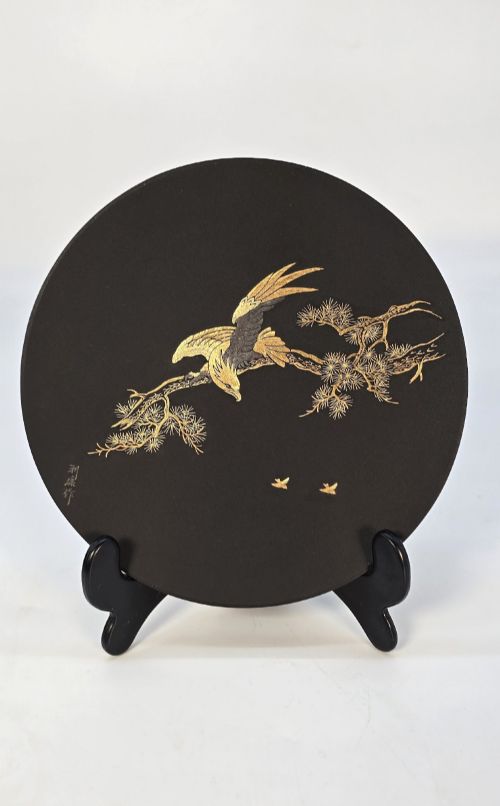
Cloisonne enamel pieces are formed by soldering thin metal wires onto a brass or copper base to create cells, which are then filled with coloured glass paste and fired. Iron plaques employ patination techniques alongside gold and silver inlay.
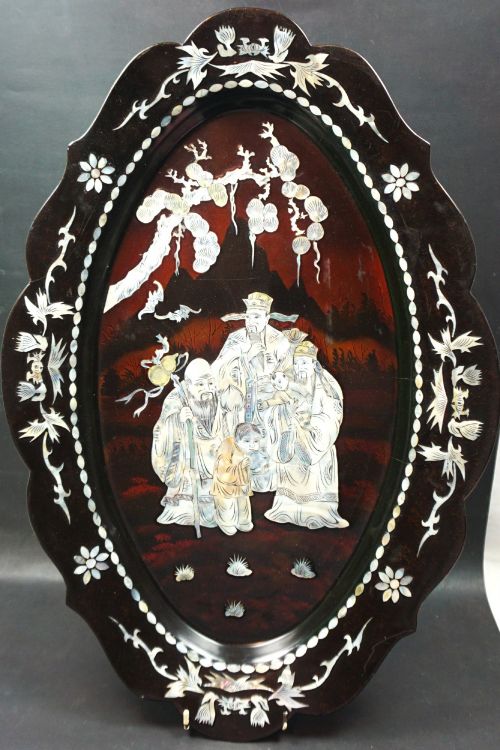
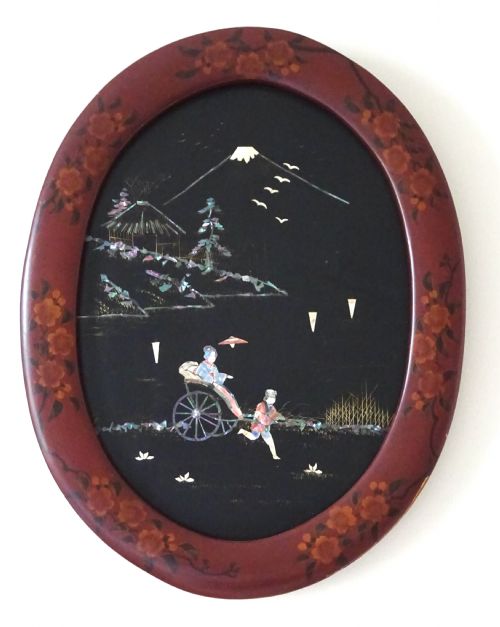
Wooden panels and temple carvings utilise timber carved in relief, frequently enhanced with gilt accents or inlaid with mother of pearl. Lacquered items apply multiple layers of sap to a wooden foundation before finishing.
Porcelain chargers are hand painted with underglaze and overglaze pigments, notably seen in Japanese Imari examples. Bronze components are cast to form decorative hardware and relief plates.
Chinese and Japanese workshops are represented through architectural door panels, temple carvings, Imari plates and elaborate bird and dragon chargers.
Evaluating the Pieces
Quality rests upon the precision of the hand execution, seen in the tightness of cloisonne wirework and the depth of carving in wooden panels. Finer examples display meticulous control over enamel firing and intricate metal inlay.
Artistic ambition dictates the standing of a piece, separating standard decorative wares from masterwork chargers featuring complex narrative scenes such as leaping koi or samurai. The scale of the object and the preservation of the original surface patination also determine distinction.
The Antique Asian Wall Plaques Glossary
- Cloisonne
- Enamelling technique using metal wires to form compartments for coloured glass paste. The piece is fired and polished to a smooth finish.
- Charger
- A large decorative plate or dish intended for display rather than dining. These form a major portion of the metalwork and porcelain listings.
- Imari
- Japanese export porcelain decorated in underglaze blue and iron red, frequently augmented with gold. These colourful plates date primarily to the nineteenth century.
- Meiji Period
- Japanese historical era spanning from 1868 to 1912, noted for exceptional craftsmanship in metalwork and cloisonne enamel. Many pieces on this page originate from these decades.
- Qing Dynasty
- The final imperial dynasty of China, ruling from 1644 until 1912. Items from this era include bronze hardware and early display plates.
- Roundel
- A circular decorative panel or plaque. These are encountered in lacquered wood and metal formats.
Antique Asian Wall Plaques: Frequently Asked Questions
How do I hang a heavy charger?
Large chargers and metal plaques require specialist wall fixings that distribute the weight securely across the wall structure. Wire hangers must be properly sized to the diameter of the dish.
Ensure the hanging bracket engages firmly with the foot ring or rim without putting undue pressure on enamel or lacquer surfaces.
Were these always meant for walls?
Many circular chargers and platters were originally produced for tabletop display on stands or for presentation purposes. Others, particularly carved wooden panels and architectural elements, were integrated into buildings as temple or door fixtures before entering the decorative market.
Owners adapted them for wall hanging over successive periods as interior tastes shifted toward displaying Asian craftsmanship.
How do I clean cloisonne enamel?
Dust enamel surfaces gently with a soft, dry brush to prevent accumulation in the wire compartments. Avoid harsh chemical cleaners or abrasive cloths that can scratch the glass paste or damage the metal wire.
Keep pieces away from direct sunlight and excessive moisture to preserve the stability of the metal and enamel bond.
What is the difference between Edo and Meiji pieces?
Edo period works date prior to 1868, representing earlier traditional aesthetics and manufacturing methods. Meiji period items reflect the rapid opening of Japan to Western trade, sparking extraordinary technical ambition in cloisonne and metal inlay.
Meiji chargers often exhibit greater scale and more complex pictorial subjects than their earlier counterparts.