


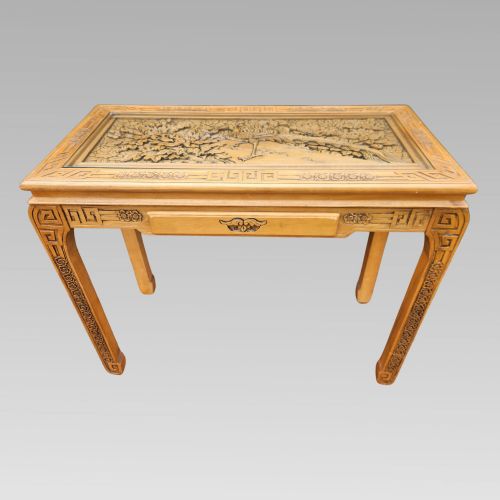


Antique Asian Console
An antique asian console brings centuries of carved wood, formal altar geometry and regional vernacular presence straight into a modern hallway.
Antique Asian Console
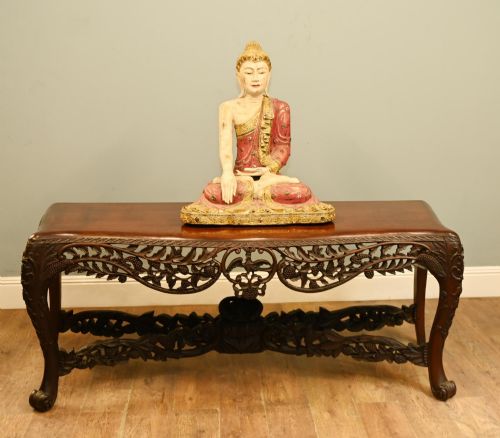
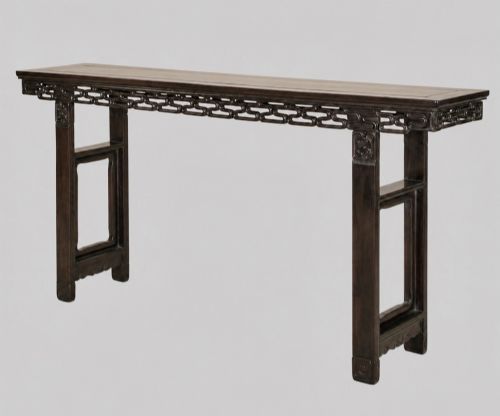
When you search for an antique asian console, you encounter a varied group of tables and low cabinets shaped by Chinese provincial traditions, Qing Dynasty aesthetics and Burmese village carpentry. These pieces range from narrow rectangular altar tables and plank-top trestle forms to sideboards, dressers and small side tables.
What varies in quality
The distinction between standard utility furniture and superior examples rests upon the crispness of the joinery and the selection of timber. Dense hardwoods display a tight, heavy grain that ages with a smooth, deep patina, whereas softer elm relies on a fine natural surface texture developed through decades of domestic use.
Design restraint and proportion dictate the standing of a piece, separating straightforward utilitarian side tables from formally balanced Qing Dynasty altar tables. Carved relief work adds to the complexity, where sharp, deep chiselling distinguishes master workshops from simpler provincial production.
Antique Asian Console Retail Price Guide 2026
Typical asking prices for asian console among the pieces listed under this phrase on Sellingantiques today, from the lower quarter to the upper quarter. They describe what is for sale here now, not the wider market.
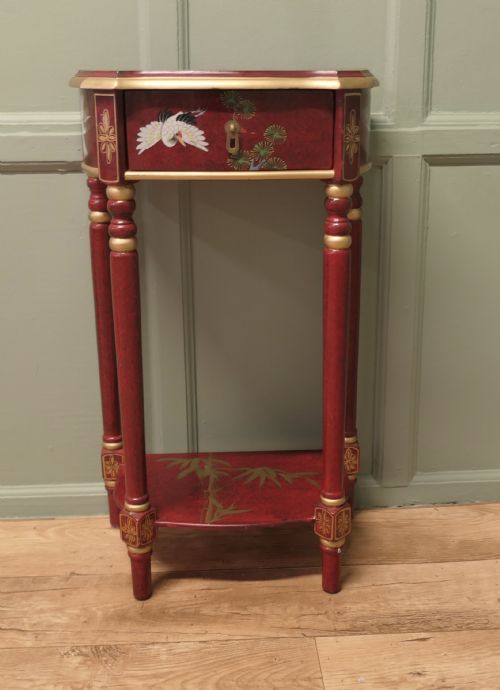
Current listings feature eighteenth and nineteenth century elm and hardwood forms, spanning altar tables, side cabinets and red lacquered pieces.
The Antique Asian Console Glossary
- Altar table
- A rectangular ritual table featuring upturned flange ends on the top surface. These long, narrow forms traditionally stood against interior walls before being adapted for western domestic living as consoles.
- Elm
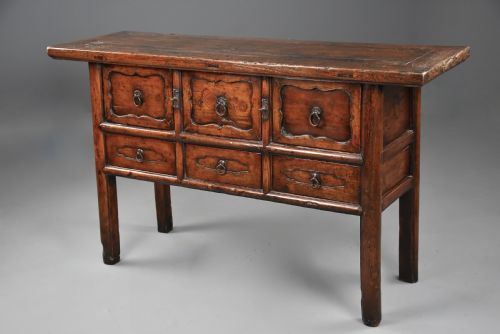
- A resilient domestic timber native to China, utilised extensively for provincial side tables and cabinets. It yields a prominent grain pattern that accepts wax finishes well.
- Hongmu
- A translation meaning red wood, covering a category of dense tropical hardwoods including various species of rosewood and padauk. Furniture made from this material possesses significant weight and rich colour.
- Lacquer
- A durable natural resin applied in numerous thin coats to wooden surfaces, frequently pigmented in red or black. It creates a smooth, protective shell that withstands daily wear.
- Qing Dynasty
- The final imperial dynasty of China, spanning from sixteen forty-four to nineteen twelve. Pieces attributed to this period encompass both elaborate court furniture and restrained scholar items.
Antique Asian Console: Frequently Asked Questions
What is an antique asian console used for?
These narrow tables function effectively as hallway furniture, serving as narrow display surfaces for lamps, ceramics and everyday items while occupying minimal floor space.
In living areas or dining rooms, low sideboards and altar forms operate as serving surfaces or storage units behind sofas and along plain walls.
How do I identify a Qing Dynasty table?
Qing Dynasty furniture typically exhibits dense hardwood construction, restrained geometric proportions and occasional carved dragon motifs or linear border detailing.
Many incorporate upturned flange ends on the top planks and employ traditional joinery methods without metal fasteners.
What is the difference between elm and hardwood?
Elm is a domestic timber with an expressive, open grain structure that was favoured for provincial cabinets, dressers and everyday tables across Chinese villages.
Hardwoods such as hongmu and rosewood are substantially heavier, denser materials imported for formal scholar furniture and high-status altar tables.
How should I care for a lacquered console?
Lacquered surfaces require gentle cleaning with a soft, dry cloth and protection from direct sunlight to prevent fading and surface cracking.
Avoid placing damp items or extreme heat directly onto the finish to preserve the integrity of the natural resin layers.