
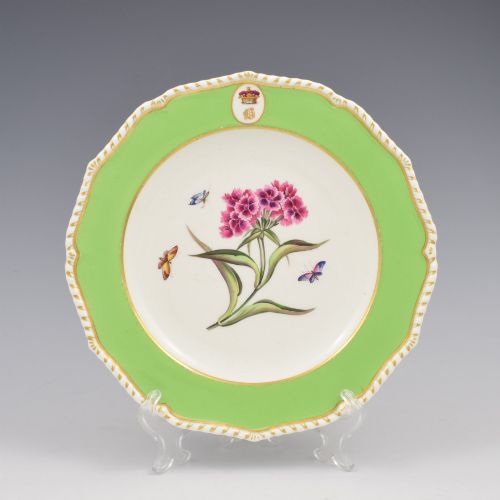


Antique Armorial Ceramic Dish
An antique armorial ceramic dish carries painted family coats of arms and crests, offering a direct link to historic lineages for your cabinet or table.
Antique Armorial Ceramic Dish
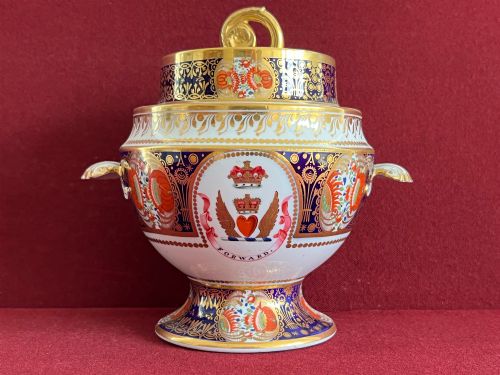
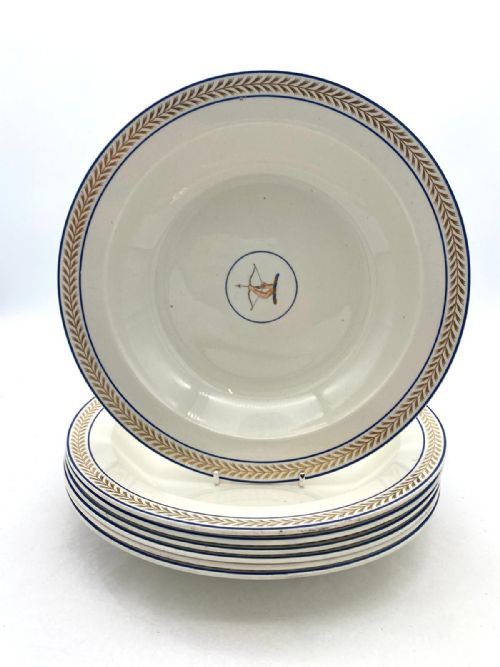
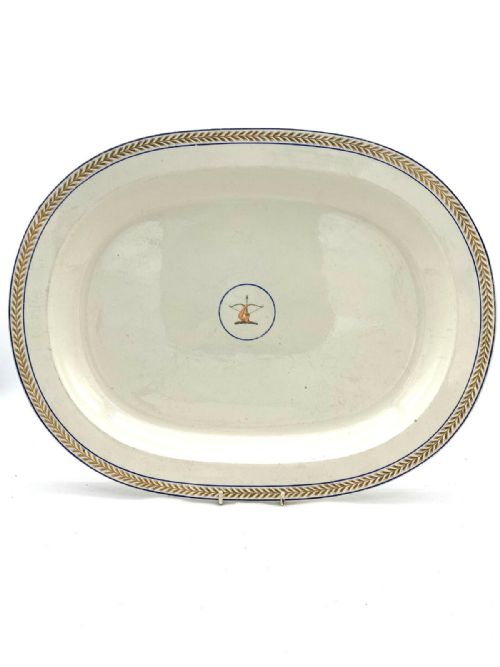
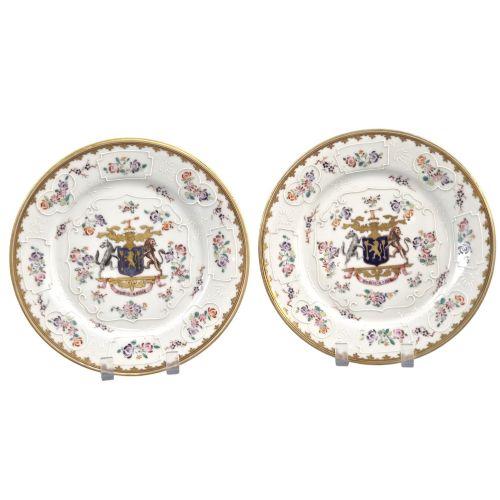
An antique armorial ceramic dish displays heraldic achievements, crests, and coats of arms commissioned by aristocratic and wealthy families across centuries. When you search for this phrase, you encounter plates, platters, tureens, and compotes produced for dining and display. The pieces on this page span the eighteenth and nineteenth centuries, taking forms from utilitarian creamware soup bowls to delicate porcelain dessert plates.
English factories such as Worcester, Derby, Minton, and Wedgwood frequently produced these armorial services alongside pieces imported from Chinese export workshops. You will regularly find Georgian and Regency examples featuring hand-painted heraldry set within botanical or geometric borders. These ceramics served as functional tableware that simultaneously signalled the social status and lineage of the original owner.
Materials and manufacture
Potters utilised creamware, earthenware, and fine porcelain as the foundational bodies for these armorial vessels, shaping them on wheels or pressing them into moulds. Artisans applied tin glazes or clear lead glazes over the clay before decorating the surface.
Painters applied enamels and gold leaf by hand to render intricate heraldic crests, often firing the pieces multiple times to fix the colours. Chinese export workshops and European factories alike relied on skilled brushwork to ensure the detailed coats of arms remained crisp and permanent.
Assessing quality and execution
The precision and detail of the hand-painted heraldry separate standard production from superior examples, as master painters achieved sharper lines and more accurate tinctures. The complexity of the surrounding borders, whether gilded motifs or botanical studies, also indicates the tier of the original commission.
The refinement of the ceramic body itself, from heavy earthenware to translucent porcelain, dictates the elegance of the finished form. Superior pieces retain crisp moulding, smooth glazing, and well-preserved gilding that show minimal wear from historic use.
Edmé Samson & Cie·Bloor Derby·Chamberlain Worcester·Copeland·Flight Barr and Barr·Minton·Wedgwood
The Antique Armorial Ceramic Dish Glossary
- Armorial
- Bearing a coat of arms or heraldic device. These designs were painted or transferred to identify specific families and lineages.
- Creamware
- A refined earthenware developed in England during the eighteenth century, noted for its pale yellowish cream hue and smooth lead glaze.
- Famille rose
- A palette of Chinese porcelain enamels dominated by opaque pink or rose colours, introduced during the eighteenth century.
- Crest
- The specific heraldic device placed on top of the helmet in a full coat of arms, frequently painted alone on smaller plates and dishes.
- Compote
- A raised serving dish with a foot or pedestal, utilised for presenting fruit or sweetmeats at formal dining tables.
Antique Armorial Ceramic Dish: Frequently Asked Questions
How do I identify the family arms on a dish?
You can research the specific charges, tinctures, and mottoes depicted in the painted heraldry using established armorial dictionaries and historical records. Many pieces record the exact lineage or title of the original patron within the painted design.
Comparing the style of the crest and the surrounding ceramic body helps narrow down the period and potential geographic origin of the commission.
Were these dishes used for everyday dining?
Most armorial services formed part of large, expensive dining sets reserved for formal banquets and entertaining distinguished guests. Families utilised them to impress visitors and reinforce their social standing during important meals.
Platters, tureens, and soup bowls saw active service at high-status tables before surviving as cabinet pieces.
Can I display these plates on walls?
Many collectors choose to exhibit plates and platters using specialist, non-damaging hangers designed for antique ceramics. This allows you to view the detailed heraldry and border decoration at eye level.
Ensure that any wall fixings are secure and that the hangers do not exert excessive pressure on the edges of the porcelain or earthenware.