



Antique Andirons Set
An antique andirons set anchors the hearth, combining supporting dogs with baskets or grates to burn fuel safely.
Antique Andirons Set
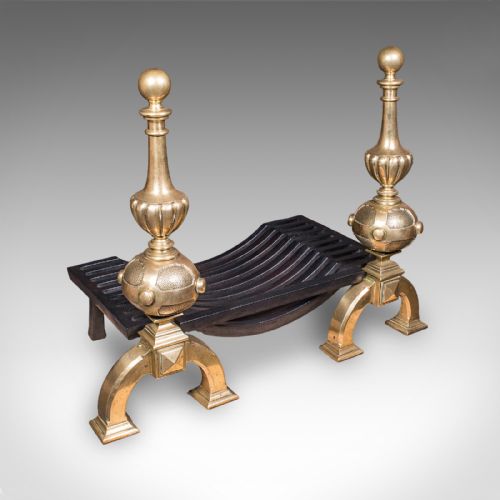
An antique andirons set brings together fire dogs and related hearth equipment to hold logs securely above the hearth floor. These combinations frequently include fire baskets, companion tools, and fire backs designed to warm rooms efficiently.
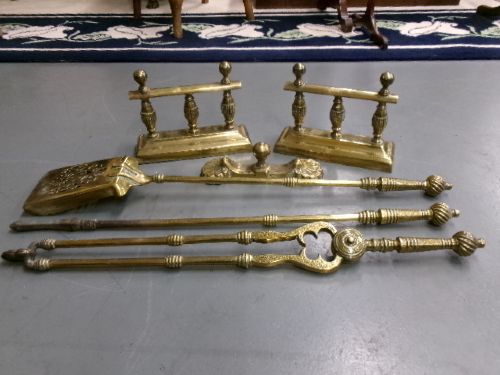
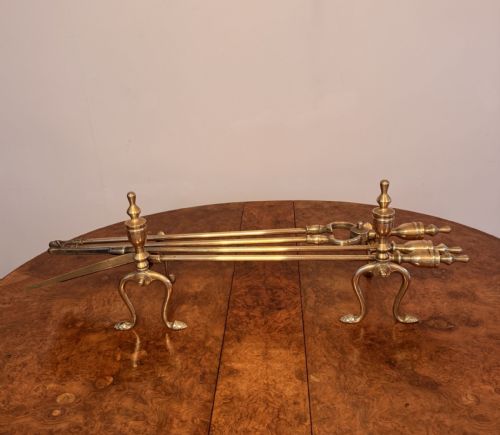
Victorian and Edwardian examples dominate the selection, often appearing in polished brass or cast iron alongside matching pokers, shovels, and tongs. Buyers regularly encounter complete suites intended for open hearths and inglenook fireplaces.
Earlier Georgian pieces also surface, showing simpler wrought iron and steel construction paired with heavy fire grates. Each configuration reflects the practical demands of nineteenth-century domestic heating.
How they were made
Foundry workers cast iron and brass into robust shapes, forming decorative motifs such as dragons, claws, and balls. Molten metal filled sand moulds to create the heavy uprights and fire dogs necessary for supporting substantial weight.
Blacksmiths hammered wrought iron and steel into shape for utilitarian grates and fire baskets. These forged elements provided the structural strength required to withstand intense, repeated heat without warping.
Finishers polished brass components to a bright shine or left iron surfaces darkened and textured. Firebrick occasionally lined the interior of grates to protect the surrounding metalwork from direct flame.
Antique Andirons Set Retail Price Guide 2026
Typical asking prices for andirons set among the pieces listed under this phrase on Sellingantiques today, from the lower quarter to the upper quarter. They describe what is for sale here now, not the wider market.
Watch for fierce dragon motifs standing guard beside nineteenth-century hearths, ready to stare down any stray coal.
What varies in quality
Weight and metal thickness distinguish substantial utilitarian sets from lighter decorative alternatives. Heavier brass and cast iron indicate robust construction designed for active daily use rather than purely ornamental display.
The refinement of surface casting and hand-finishing marks the difference between standard production and superior craftsmanship. Crisp detailing on motifs like claw and ball designs reveals greater skill in the original manufacture.
Completeness alters the character of a set, as matched groups retaining their original fire tools and corresponding fire dogs maintain greater historical integrity than assembled groupings.
The Antique Andirons Set Glossary
- Andirons
- Metal supports used to raise logs off the hearth floor to improve airflow. They consist of horizontal bars and vertical front pillars.
- Fire Basket
- A metal container holding fuel within the fireplace. These frequently accompany andirons in nineteenth-century hearth arrangements.
- Fire Dogs
- The vertical front pieces of an andiron set. They often feature decorative brass finials or cast iron ornamentation.
- Companion Set
- A collection of fireplace tools including shovels, pokers, and tongs. They typically share matching handles or stands with the associated andirons.
Antique Andirons Set: Frequently Asked Questions
How do I clean brass andirons?
Wipe the metal with a soft cloth to remove soot and surface dust. Avoid harsh chemical cleaners that strip the historic patina from nineteenth-century brass.
Buff the surface gently if a brighter shine is desired, taking care around cast or engraved details.
Are these sets suitable for burning wood?
Many cast iron and wrought iron components were built for active fires. Check that fire baskets and grates show sufficient thickness to handle high temperatures safely.
Some highly polished brass sets serve primarily decorative purposes in modern non-working fireplaces.
How do I date a set?
Examine the manufacturing techniques and stylistic clues such as Victorian Gothic Revival motifs or Edwardian proportions. Heavier cast iron and specific brass handle styles often point toward particular decades in the nineteenth century.
Compare the construction methods with documented pieces from similar periods.
Can I mix tools with different andirons?
Assembled hearth groups appear frequently in the historical record. Matching metals or stylistic themes help create a cohesive appearance even when components originate from different makers.
Prioritise matching finishes such as polished brass or dark cast iron to unify the display.