

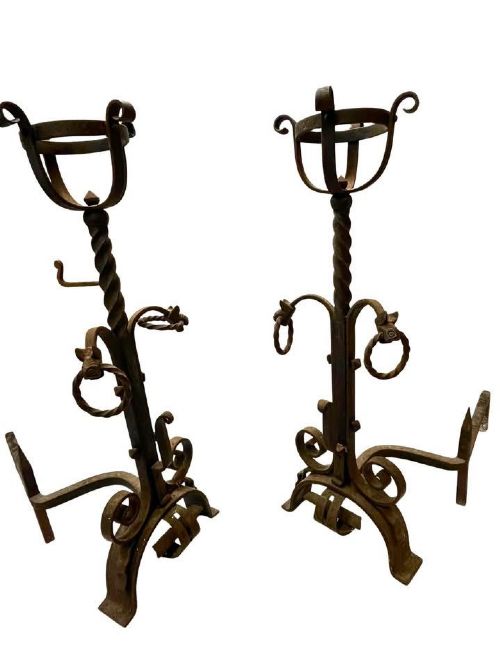


Antique Gothic Fire Dogs
These antique gothic fire dogs are substantial hearth supports built to hold logs, often paired with grates or baskets for coal.
Antique Gothic Fire Dogs
When searching for antique gothic fire dogs, you are looking at functional hearth furniture designed to elevate wood off the hearth floor for better burning. The selection here spans multiple periods, including the Victorian era, the Edwardian period, and the early twentieth century.
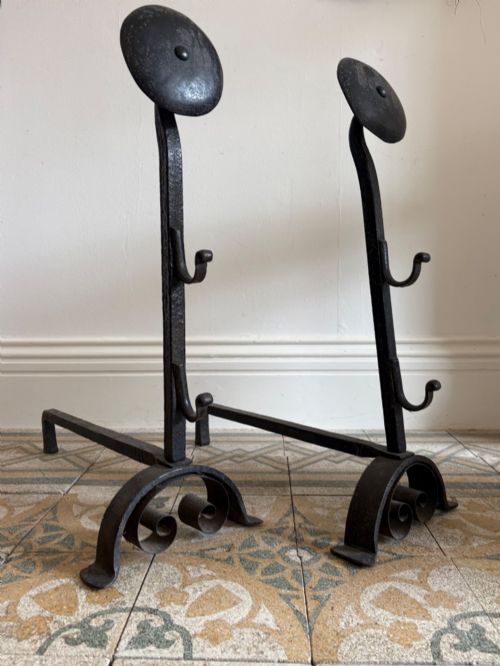
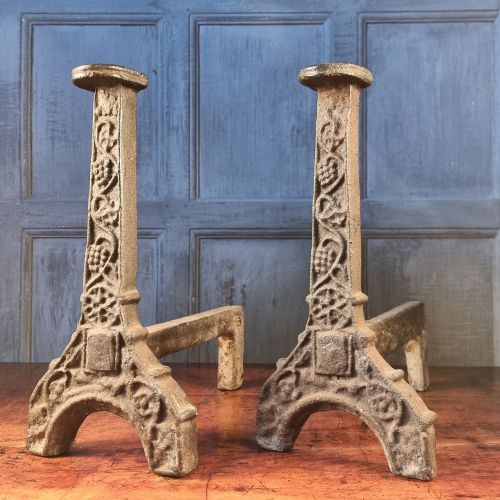
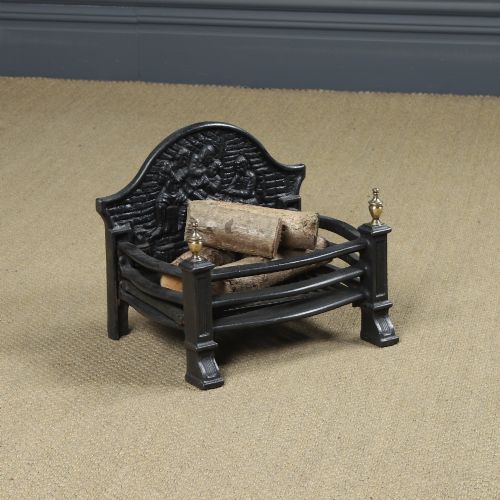
You will most commonly encounter pairs of andirons or firedogs fashioned in iron, alongside associated fire baskets and grates. These items bring strong vertical lines and pointed architectural motifs directly into the fireplace.
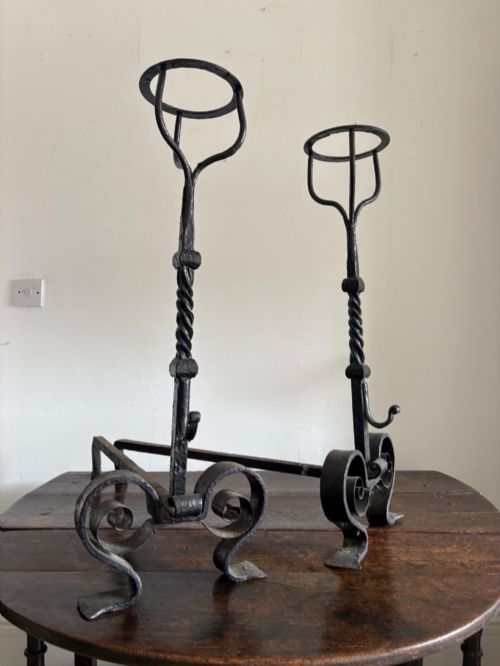
The styles range from severe Victorian Gothic Revival to simpler Arts and Crafts interpretations. Many examples combine the heavy presence of medieval ironwork with the domestic requirements of nineteenth and twentieth century fireplaces.
Materials and construction methods
Blacksmiths and founders relied heavily on wrought iron, cast iron, and steel to construct these heavy hearth pieces. Wrought iron was hammered and shaped while hot to create sturdy shafts and scrolled feet, while cast iron allowed for intricate moulded details and heavier basket frames.
Brass elements appear on certain pieces to provide contrast against the darker iron surfaces. Firebrick and forged iron components further reinforced grates and baskets against intense daily heat.
Markers of quality and execution
Quality in these pieces rests upon the crispness of the casting, the symmetry of the hand-forged scrollwork, and the weight of the metal. Heavier gauge iron and substantial brass fittings indicate a higher grade of production intended for major reception rooms.
Finishing details also separate standard utilitarian hearth furniture from finer examples, such as carefully riveted joints, integrated tool rests, and well-proportioned architectural details that reflect genuine period design.
The Antique Gothic Fire Dogs Glossary
- Andirons
- Supports used in pairs in an open fireplace to hold burning logs above the hearth floor. They usually feature an upright decorative front pillar.
- Firedogs
- An alternative term for andirons, often used interchangeably in historical listings. They serve the same primary function of supporting wood.
- Fire Basket
- An iron container or grate designed to hold coal or logs within an open fireplace. These often incorporate andirons or stand independently.
- Gothic Revival
- An architectural and decorative style popular in the nineteenth century that revived medieval pointed arches and structural motifs. It heavily influences the design of these fire dogs.
- Wrought Iron
- Iron that has been heated and hammered by hand into shape, showing subtle surface textures from the forge. It forms the basis of many Arts and Crafts pieces.
Antique Gothic Fire Dogs: Frequently Asked Questions
How do I use antique fire dogs?
These pieces sit inside an open hearth to support logs, keeping the wood elevated so air can circulate underneath for a cleaner burn.
They can be used on their own with split logs or paired with a matching fire basket for burning coal.
What is the difference between andirons and fire dogs?
There is no functional difference between the two terms, as both describe the heavy metal supports placed on either side of the hearth.
Historical listings often use both words to describe the same category of upright log supports.
Will these fit a modern fireplace?
You need to measure the depth and width of your hearth before choosing a pair, as many nineteenth century pieces are quite tall and deep.
Checking the height against your fireplace opening ensures the decorative finials clear the lintel.
How do I date an iron fire dog?
Dating relies on observing the manufacturing marks, the combination of materials like cast versus wrought iron, and the specific decorative style.
Victorian pieces often display heavier Gothic ornamentation, while later Arts and Crafts examples lean towards simpler forged forms.