

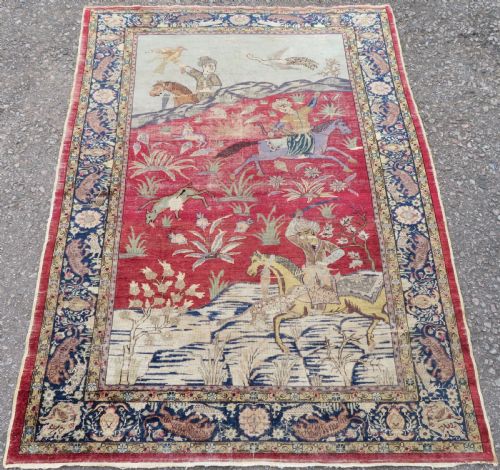


Antique Anatolia Rug
An antique anatolia rug brings the rich floor-weaving traditions of Turkish villages and towns directly into a modern interior.
Antique Anatolia Rug
When searching for an antique anatolia rug, buyers encounter floor coverings and smaller textiles originating from central, western, and eastern regions of Turkey. These pieces span periods from the mid-nineteenth century through to the early twentieth century, reflecting diverse weaving traditions from rural villages and urban workshops alike.
Village and nomadic pieces dominate the selection, including prayer rugs with characteristic architectural mihrab designs and village formats from centres such as Bergama, Konya, and Kirsehir. Larger decorative formats, notably Ushak carpets, appear alongside utilitarian forms like nomadic saddlebags.
Regional variations dictate the visual vocabulary, separating the geometric tribal patterns of eastern Kurdish weavers from the refined medallions and soft colours of western Ushak and Panderma production.
Materials and construction methods
Weavers relied primarily on wool foundation threads and pile, often utilising hand-spun wool that accepted natural dyes with subtle variations in tone. Silk appears in specific pictorial or fine urban pieces, while cotton is used for foundations in select regional types.
Natural dyes provide the characteristic palette seen across these textiles, developing a soft patina over decades of use. Skilled artisans tied wool pile by hand onto warp and weft structures, creating durable floor coverings designed for daily domestic life.
Antique Anatolia Rug Retail Price Guide 2026
Typical asking prices for anatolia rug among the pieces listed under this phrase on Sellingantiques today, from the lower quarter to the upper quarter. They describe what is for sale here now, not the wider market.
Listings span from the mid-nineteenth century to the 1930s, featuring wool, cotton, silk, and natural dyes across diverse regional forms.
Determinants of quality
Quality rests in the integrity of the natural dyes, the fineness of the knotting, and the clarity of the design execution. Pieces at the upper end display harmonious colour palettes and balanced proportions that demonstrate exceptional craftsmanship.
The handle and suppleness of the wool, combined with the precision of regional geometric or floral motifs, distinguish standard village utilitarian pieces from master-woven workshop carpets.
Ushak·Bergama·Konya·Kirsehir·Ghiordes
The Antique Anatolia Rug Glossary
- Mihrab
- The arched niche design found on prayer rugs, which symbolises a prayer place and points toward Mecca. Weavers from Konya, Ghiordes, and Ladik frequently incorporated this architectural motif.
- Medallion
- A central ornamental design motif placed in the field of a carpet. Large Ushak carpets often feature prominent central medallions surrounded by detailed border systems.
- Kilim
- A flat-woven textile produced without a pile. These pieces rely on interlocking Weft techniques to create crisp geometric patterns.
- Yatak
- A heavy, long-piled rug traditionally used for sleeping or bedding in Turkish households. Konya examples demonstrate this thick, utilitarian texture.
- Heybe
- The Turkish term for saddlebags, usually woven as a pair by nomadic groups such as the Yuruk. These items combine practical storage with tribal artistry.
Antique Anatolia Rug: Frequently Asked Questions
How do I identify a prayer rug?
Prayer rugs feature a distinctive arched mihrab shape at one end that resembles a doorway or architectural niche. This design directed the user toward Mecca during daily prayers.
Smaller formats such as village pieces from Bergama or Ghiordes commonly display this layout, distinguishing them from large decorative carpets.
Where were these textiles made?
Production took place across various regions of Turkey, encompassing central, western, and eastern Anatolian provinces. Specific towns and districts developed distinct stylistic signatures.
Central areas like Konya and Kirsehir produced unique prayer and village formats, while western towns like Ushak specialised in larger decorative carpets.
What are nomadic saddlebags used for?
Nomadic groups utilised saddlebags for transporting personal possessions during seasonal migrations across eastern Anatolia. The strong weave and durable wool protected contents from dust and weather.
Today, collectors appreciate complete sets of these bags as textiles that display authentic tribal weaving techniques and folk designs.
How do natural dyes age?
Natural dyes mellow gracefully over time, producing gentle tonal shifts known as abraash across the wool surface. This organic ageing process creates depth and character unique to older textiles.
Colours derived from plants and minerals interact with light and wear differently than synthetic dyes, resulting in a harmonious patina.