


Antique Agricultural Artwork
These pieces of antique agricultural artwork capture rural labour and livestock through the honest brush of nineteenth and early twentieth-century painters.
Antique Agricultural Artwork
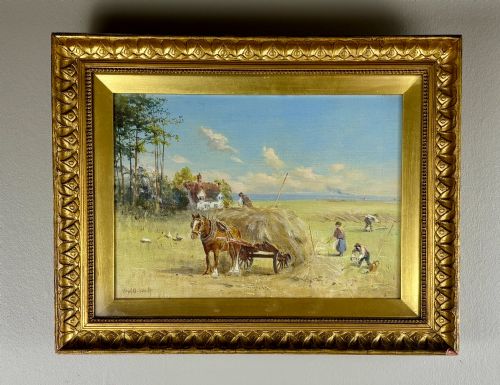
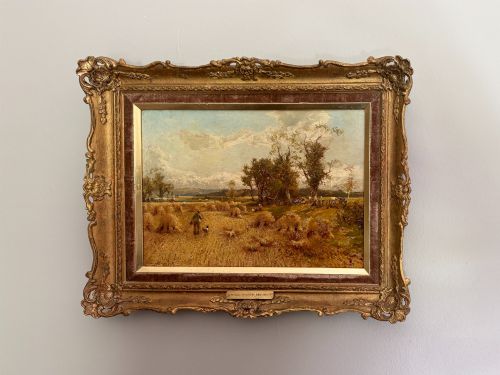
When you search for antique agricultural artwork, you encounter framed canvases and watercolours depicting the traditional rhythms of country life, farm labour, and prized livestock. The selection relies heavily on Victorian and Edwardian works, capturing heavy horses at the plough, haymakers in the field, and cattle within pastoral landscapes.
Most examples originate from British artists working within schools of realism and impressionism during the nineteenth and early twentieth centuries. The subjects reflect a period when farming formed the backbone of the economy, translated onto canvas or paper by artists drawn to rural industry.
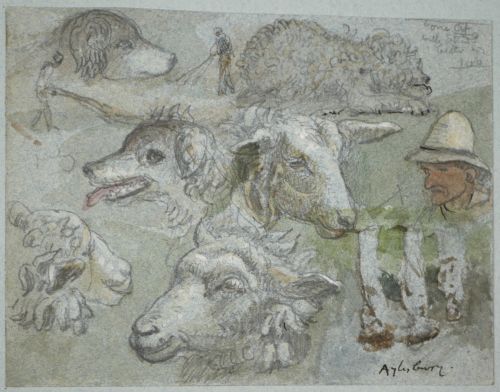
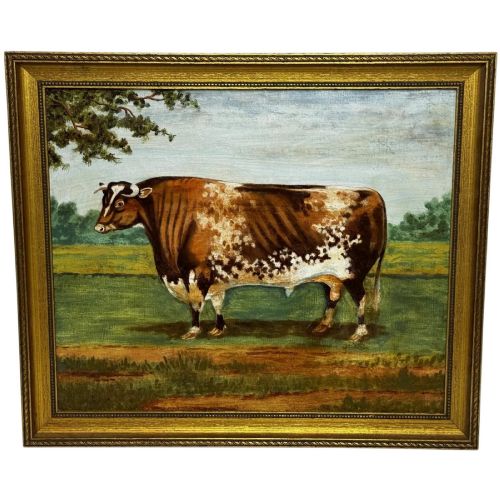
You will find everything from detailed watercolours of harvest time to large oil paintings of shorthorn bulls and working horses in barns. These compositions range from naive depictions of farmyard animals to accomplished plein air landscapes recording the changing agricultural seasons.
How they were made
The works utilise traditional painterly methods, primarily oil paint applied to stretched canvas or wooden panels, alongside watercolours executed on heavy paper. Artists built up their compositions through layered brushwork, capturing the play of light across open fields and the textures of animal coats and harvested hay.
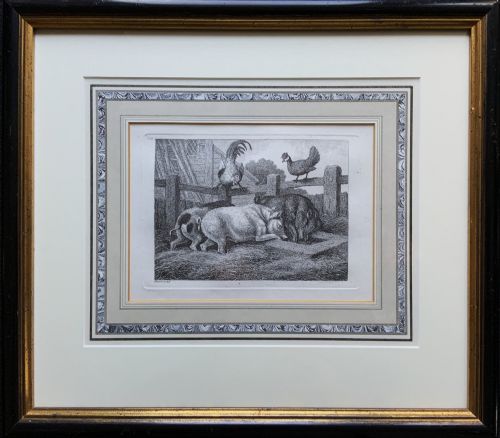
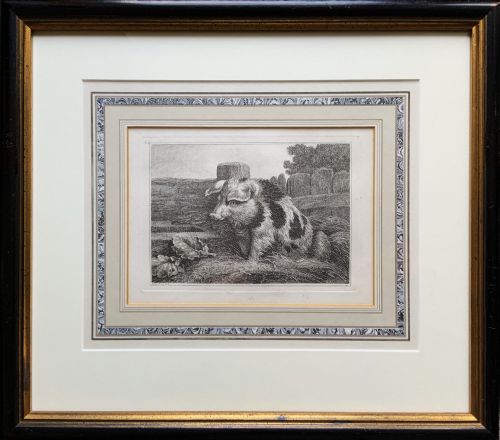
Mediums such as original etchings also appear, created through inked metal plates pressed onto paper to render fine lines of rural scenery. Pigments were worked with binders to achieve lasting depth, housed within period wooden frames that frequently complement the painting style.
Prized shorthorn bulls gaze placidly from heavy gilt frames, immortalising nineteenth-century agricultural pride.
What varies in quality
Quality rests upon the artist's command of anatomy, light, and atmosphere, separating competent academic records from truly evocative observations of rural life. A superior canvas demonstrates confident handling of heavy horses or livestock, convincing depth in the landscape, and a harmonious palette.
The strength of the composition and the integrity of the surviving medium dictate the standing of a piece within this category. Works that successfully convey the heavy labour of the harvest or the quiet dignity of farm animals without lapsing into sentimentality hold greater visual and historical authority.
James Smetham·Herbert Dicksee·Oswald Garside·Raimond Louis Lecourt·James Kyd·Henry Bailey·Herbert Royle·Percival Glenfern·John Atkinson·J.C. Grey·James William Booth·George Soper·Arthur Winter Shaw·Thomas Sidney Cooper·Arthur Charles Dodd·Vernon Stokes·Rowland Henry Hill·Joseph Kirkpatrick·W.A. Clark·Joseph Paulman·J L Van Leemputten·Frederick William Jackson·John Percy Cooke·Ernest Higgins Rigg·Walter Duncan
The Antique Agricultural Artwork Glossary
- Etching
- A printmaking technique where lines are bitten into a metal plate with acid before being inked and pressed onto paper. This method allows for fine, expressive detail in graphic works.
- British Impressionism
- A painting style emerging in the late nineteenth and early twentieth centuries focusing on everyday subjects, natural light, and loose brushwork. Artists working in this manner moved outdoors to capture immediate atmospheric effects.
- Watercolour painting
- Pigments suspended in a water-soluble base applied to paper to create translucent washes of colour. It offers a direct and luminous medium favoured for landscape studies.
- Oil on canvas
- A traditional medium combining ground pigments with drying oils, spread across a woven fabric support stretched over a wooden frame. This combination allows for rich blending and textured impasto surfaces.
Antique Agricultural Artwork: Frequently Asked Questions
What subjects appear in these artworks?
These pieces predominantly depict rural labour, including haymaking, ploughing teams, and the harvesting of wheat. Farmyard scenes featuring heavy horses, cattle, and sheep also feature prominently across the selection.
Artists focused closely on the daily realities of nineteenth and early twentieth-century agriculture. Figures of farm hands and milkmaids populate the landscapes alongside detailed portraits of prized livestock.
How do I date these paintings?
Dating relies upon stylistic markers, artist signatures, and framing materials characteristic of specific periods like the Victorian era or the early twentieth century. Many works carry direct inscriptions, dates, or signatures from the artists who painted them.
Examining the canvas preparation, stretcher frames, and paper types offers further clues regarding the age of the piece. Comparative study with documented works by the same artists helps narrow down the decade of creation.
Where were these rural scenes painted?
The settings reflect British and European countryside locations, capturing specific regions such as Essex, Yorkshire, and Normandy. Artists often worked directly from nature in rural farming communities.
Titles frequently reference precise geographic locations or local estates where the agricultural activities took place. This grounds the artwork in actual topographical settings of the period.
How should I display antique paintings?
These artworks require placement away from direct sunlight and excessive humidity to protect vulnerable canvas, paper, and pigment layers. Maintaining a stable indoor climate prevents warping in the wooden frames and support structures.
Pairing the piece with appropriate period lighting enhances the visibility of the brushwork and tonal qualities. Ensuring secure wall mounting supports the weight of framed oils and watercolours safely.