



Antique Agate Snuff Box
An antique agate snuff box is a pocket-sized marvel of stone and metal, offering tactile pleasure and miniature craftsmanship from the Georgian and Victorian eras.
Antique Agate Snuff Box
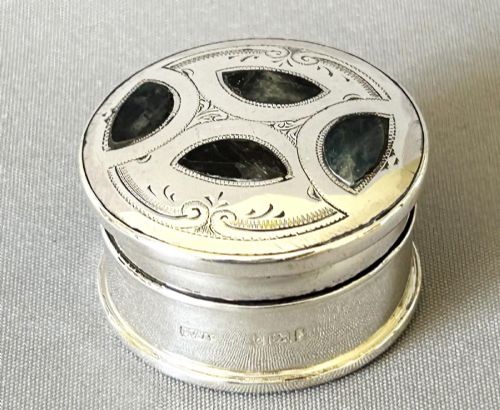
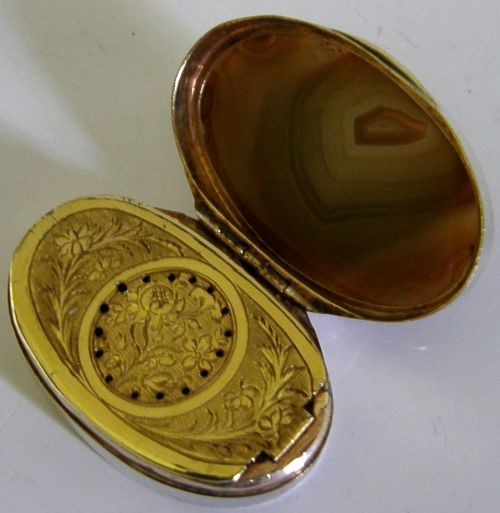
When you search for an antique agate snuff box, you encounter small desk and pocket containers designed for holding powdered tobacco, pills, or aromatic vinegars. These pieces span Georgian, Victorian, and Edwardian periods, appearing in varied geometric and oval forms.
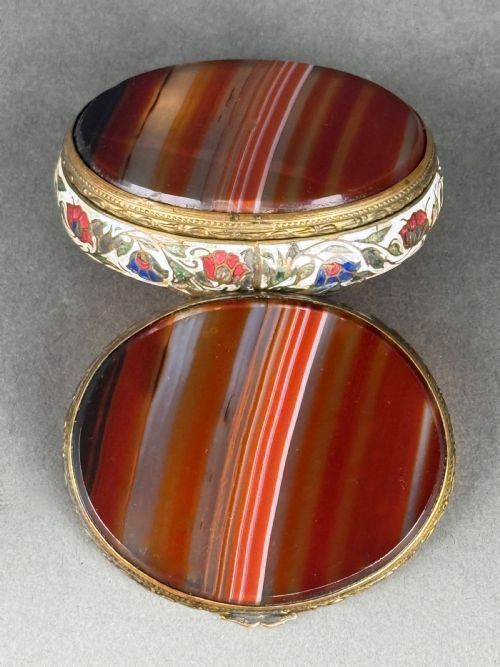
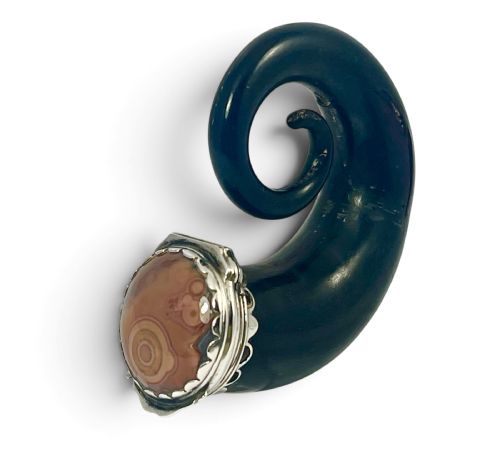
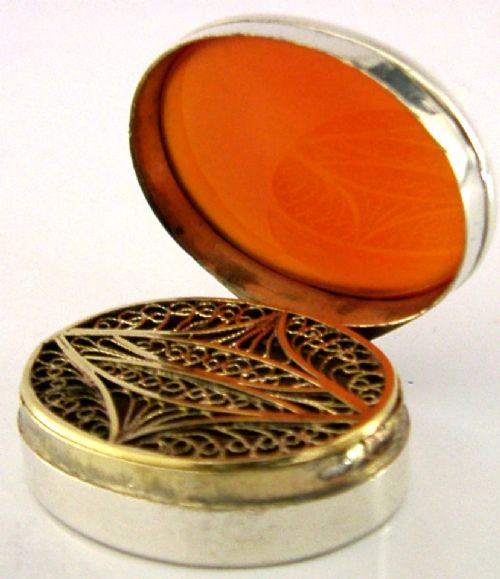
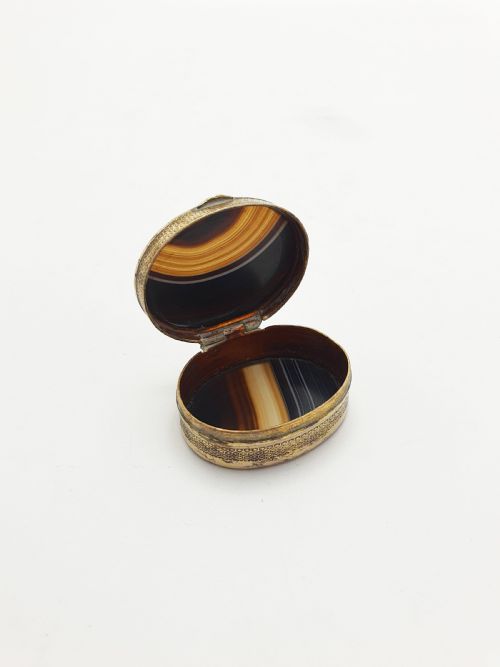
The version most commonly met on this page is the Scottish silver-mounted piece featuring banded or orange agate, often dating from the nineteenth century. Alongside these, French champlevé enamel examples and English sterling silver vinaigrettes emerge in the listings.
Makers and makers' marks occasionally appear, linking items to specific silversmiths such as Edward Smith or the firm Hilliard and Thomason. The scale remains consistently small, intended for personal carriage or display on a surface.
How they were made
Lapidaries cut and polished natural quartz stones, particularly banded, moss, and orange varieties, to reveal the intricate natural strata of the mineral. These polished stone panels were then fitted precisely into metal mounts.
Silversmiths and goldsmiths constructed frames from sterling silver, gold, gilt brass, and gilt metal, employing hinge-work and bezels to secure the stone lids and bases. Scottish makers frequently incorporated horn alongside silver in traditional mull forms.
Enamelling techniques, such as champlevé, added decorative colour to metal borders on French boxes, complementing the natural patterning of the agate panels.
Antique Agate Snuff Box Retail Price Guide 2026
Typical asking prices for agate snuff box among the pieces listed under this phrase on Sellingantiques today, from the lower quarter to the upper quarter. They describe what is for sale here now, not the wider market.
Some nineteenth-century Scottish horns are stout enough to double as miniature pocket weapons while carrying your daily snuff.
What varies in quality
The visual strength of the stone defines the upper tier of pieces, where bold natural banding, vivid orange tones, or distinct moss inclusions display superior lapidary selection. Poorer examples utilise plain, muddy, or heavily fractured agates with little visual depth.
Precision in the metal mounts separates standard boxes from exceptional ones, particularly the tightness of the hinge action and the flush alignment of stone to metal. Hallmarks add documentary value, and robust gauge silver enhances durability compared to thin gilt brass.
Hilliard and Thomason·Edward Smith
The Antique Agate Snuff Box Glossary
- Vinaigrette
- A small ornamental box containing a perforated inner grill, traditionally soaked in aromatic vinegar or smelling salts. These date frequently to the Georgian period.
- Banded agate
- A variety of chalcedony featuring distinct parallel stripes or layers of contrasting colours. Lapidaries orient these bands to maximise visual impact on box lids.
- Snuff mull
- A traditional Scottish pocket container for powdered tobacco, often fashioned from ram's horn decorated with silver and set with a stone lid.
- Champlevé enamel
- A technique where troughs are carved into a metal surface and filled with vitreous enamel before firing. This method decorates French and continental pieces.
- Bezel setting
- A collar of metal that holds the edge of an agate stone securely in place against the body of the box.
Antique Agate Snuff Box: Frequently Asked Questions
What is a vinaigrette?
A vinaigrette is a small container housing a pierced internal grill designed to hold a sponge soaked in vinegar.
Owners opened these miniature boxes for refreshing scents during travel in the Georgian and Victorian eras.
How do I date a box?
Dating relies on silver hallmarks, architectural styles, and the specific metalwork techniques used in the hinges and mounts.
Georgian pieces display different mount profiles compared to later Victorian or Edwardian examples.
Were these used for tobacco?
Many boxes served to hold dry snuff tobacco for inhalation during social gatherings.
Others functioned as pill boxes or trinket containers depending on their internal depth and configuration.