
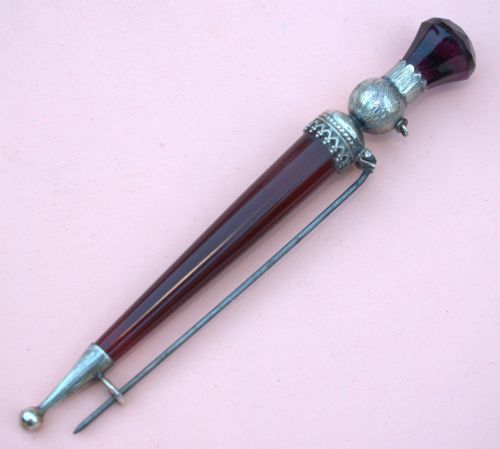


Antique Agate Pin
An antique agate pin is a striking piece of nineteenth-century jewellery prized for its banded stones and rich historical associations.

Antique Agate Pin
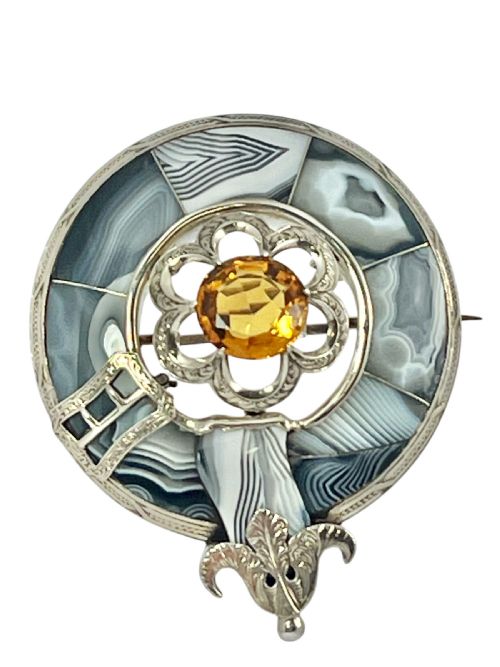
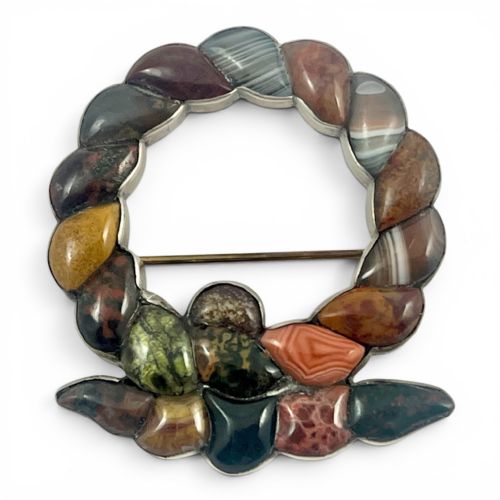
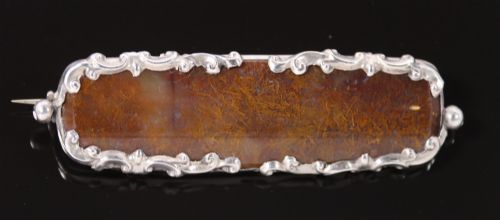
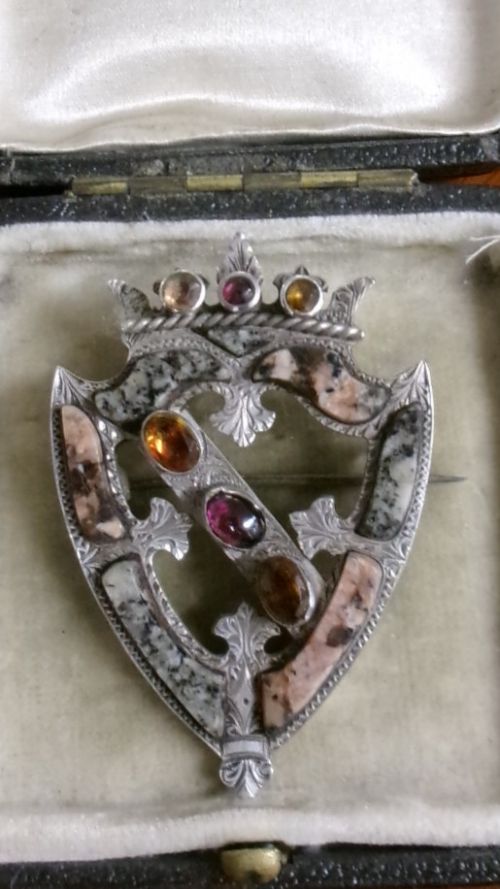
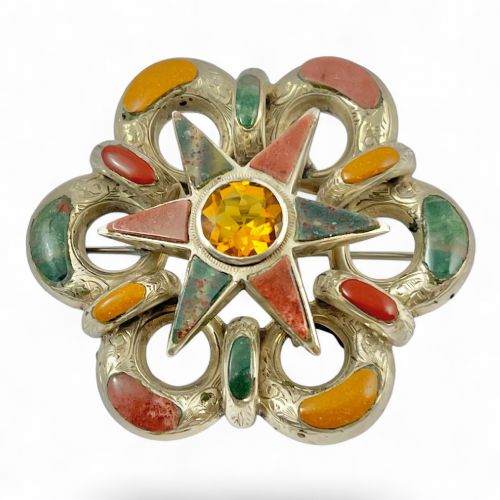
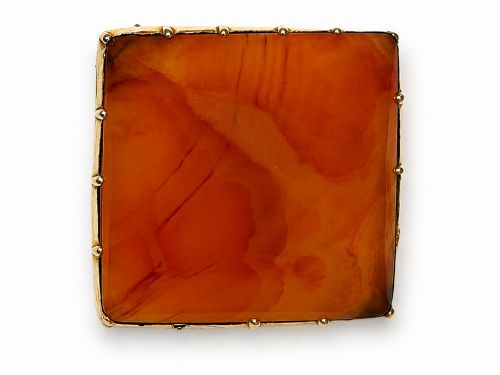
When searching for an antique agate pin, you are looking at nineteenth-century brooches and kilt pins set with banded chalcedony, jasper, or bloodstone. These pieces range from Victorian Scottish Revival designs to simpler late nineteenth-century specimens.
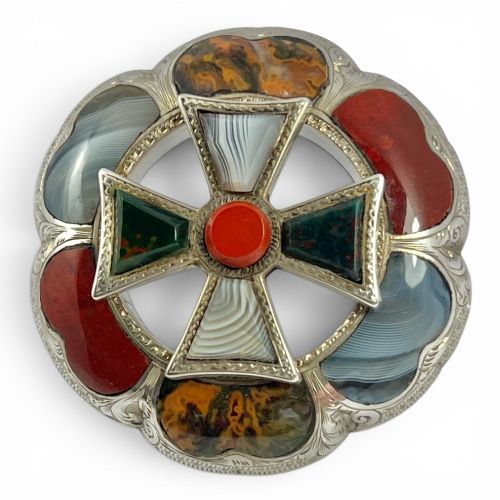
The most common form you will meet on this page is the Scottish silver brooch, often incorporating Montrose agate or blue lace agate. They draw the eye with their natural earth tones and polished mineral surfaces.
Beyond brooches, the broader category includes spinning fobs and desk accessories like letter openers that utilise the same distinctive hardstones. Each object showcases the Victorians' enduring fascination with regional stonework and Celtic motifs.
How They Were Made
These pieces combine sterling or unmarked silver settings with hardstones cut and polished to reveal their natural banding. Silversmiths mounted the stones into detailed bezels, frequently employing thistle designs or geometric Scottish Revival frameworks.
Makers shaped jaspers, bloodstones, and agates - including specialised varieties like Montrose and blue lace agate - by hand before securing them into metal mountings. The craftsmanship relies on precise lapidary work paired with traditional metalworking techniques of the Victorian era.
The listings combine Victorian Scottish Revival brooches in silver with hardstones like Montrose agate, blue lace agate, jasper, and bloodstone.
What Varies in Quality
The distinction between ordinary and exceptional examples rests upon the depth of the stone's natural banding and the crispness of the silversmith's hand. Superior pieces display vibrant, highly variegated agates paired with substantial, intricately chased silver mounts rather than thin stamped metal.
Design complexity also separates the tiers, with multi-stone geometric arrangements and finely engraved Celtic revival motifs commanding greater visual interest. The quality of the lapidary work dictates how light plays across the highly polished mineral surface.
Mappin and Webb
The Antique Agate Pin Glossary
- Montrose Agate
- A distinct variety of Scottish agate characterised by its specific colour banding and regional provenance. It is frequently found in nineteenth-century jewellery originating from Scotland.
- Scottish Revival
- A nineteenth-century design movement inspired by traditional Celtic artwork, weaponry, and Highland ornamentation. This style heavily influenced the production of silver brooches and kilt pins.
- Spinning Fob
- A double-sided or multi-sided pendant designed to rotate on a central axis, often holding set agates, carnelians, or bloodstones. These were traditionally attached to watch chains.
- Bloodstone
- A dark green chalcedony flecked with red jasper spots, also known as heliotrope. Victorian jewellers favoured this durable stone for both brooches and revolving pocket watch fobs.
- Intaglio
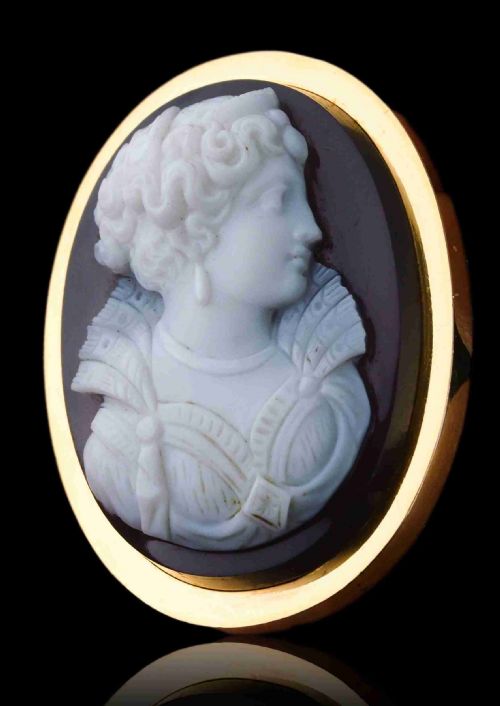
- A gem or stone carved with a sunken design so that an impression can be made in relief. Antique fobs occasionally feature these carved portraits or crests.
Antique Agate Pin: Frequently Asked Questions
How do I wear an antique agate pin?
These brooches and kilt pins pair well with heavy woollens, scarves, and structured jackets where the substantial weight of the silver and stone is fully supported.
Position the pin securely through thicker fabrics to showcase the intricate metalwork and banded agates without sagging.
Are all these pins from Scotland?
While many pieces reflect the Victorian Scottish Revival movement and feature regional stones like Montrose agate, production also occurred across wider British workshops.
Stylistic cues such as thistle motifs and Celtic silverwork help identify pieces with direct Scottish connections versus general Victorian production.
What is the difference between agate and bloodstone?
Agate is a form of chalcedony known for its distinct curved or parallel colour banding, whereas bloodstone is a dark green quartz spotted with red jasper.
Victorian jewellers frequently combined both minerals within the same spinning fob or silver brooch design.
How should I clean my antique agate pin?
Maintain the silver settings and polished stones by gently wiping them with a soft, dry microfibre cloth to remove dust and skin oils.
Avoid liquid dips or harsh chemical cleaners, as these can damage porous hardstones and destroy the aged patina on the silver.