

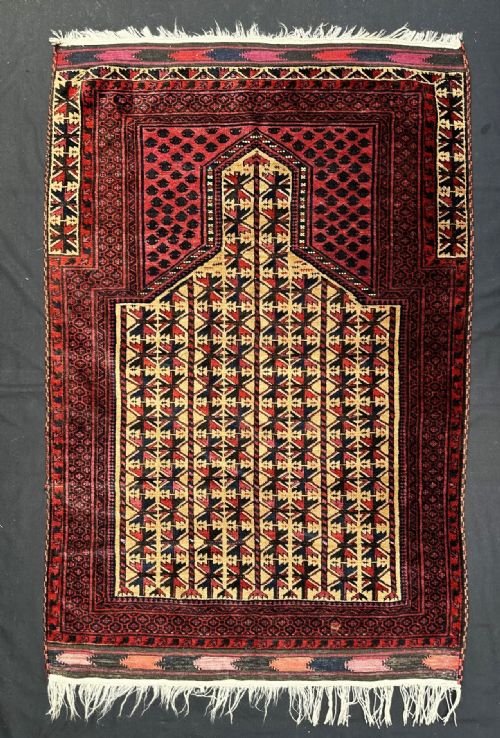

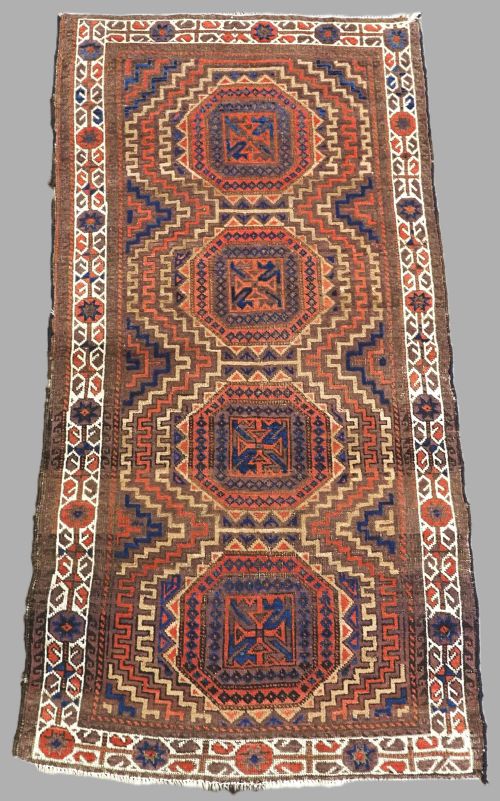
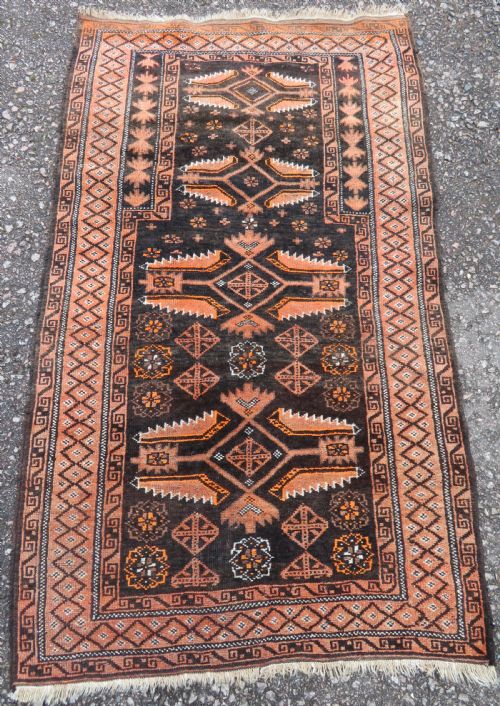
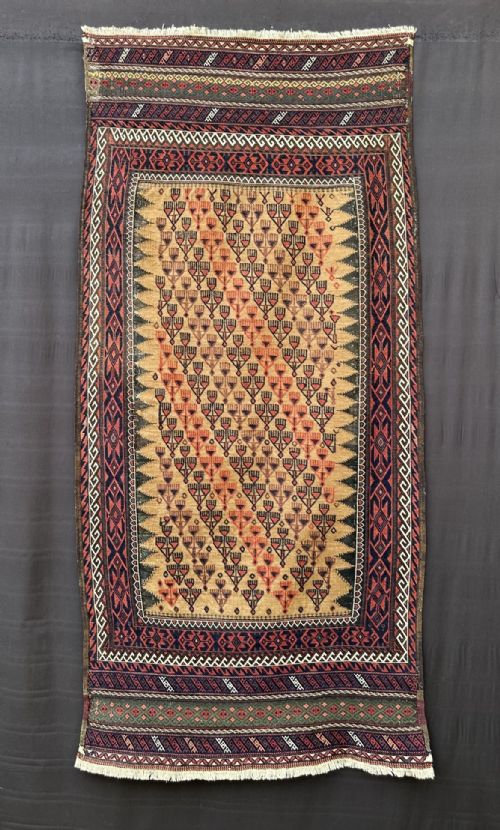


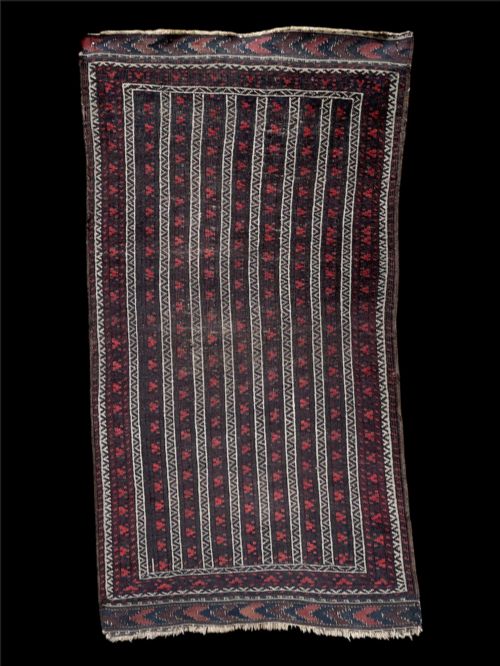


Antique Afghan Wool Runner
When you choose an antique afghan wool runner, you invite tribal history and enduring hand-knotted craftsmanship into your hallway or narrow space.
Antique Afghan Wool Runner
An antique afghan wool runner represents the utilitarian yet artistic output of nomadic and village weavers from the nineteenth and early twentieth centuries.
Most examples originate from tribal groups such as the Baluch, Timuri, and Ersari Turkmen, working across the borderlands of Afghanistan and Persia.
These long, narrow floor coverings served practical roles in tents and homes, frequently incorporating traditional motifs like guls, prayer mihrabs, and geometric borders.
What Varies In Quality
The fineness of the knotting and the handling of the wool dictate the structural integrity and handle of the textile.
Clarity and saturation of natural dyes, alongside the complexity and execution of tribal motifs like the kalam donneh or multiple mihrabs, separate standard pieces from the finest weaving.
The overall balance of the design, the preservation of original kilim ends, and the structural uniformity along the length define the superior examples.
Antique Afghan Wool Runner Retail Price Guide 2026
Typical asking prices for afghan wool runner among the pieces listed under this phrase on Sellingantiques today, from the lower quarter to the upper quarter. They describe what is for sale here now, not the wider market.
Several textiles display structural quirks like being woven in two separate parts and joined down the middle to achieve a larger format.
The Antique Afghan Wool Runner Glossary
- Gul
- A medallion motif repeated across Turkmen and Baluch carpets. These octagonal or polygonal designs often identify specific tribal groups.
- Mihrab
- A niche design representing the direction of prayer, frequently seen on prayer rugs. Single, double, or triple mihrabs direct the eye through the field composition.
- Sofreh
- A dining or spreading cloth used by nomadic tribes for sharing meals or preparing bread. These flatwoven or piled pieces often feature distinct borderlands designs.
- Kilim
- A flatwoven textile produced without a knotted pile. They appear as standalone coverings or as protective end panels on runner rugs.
Antique Afghan Wool Runner: Frequently Asked Questions
Where were these runners made?
Most pieces originate from tribal regions and borderlands across Afghanistan and north-east Persia. Weavers belonged to specific nomadic or village groups such as the Baluch, Timuri, and Ersari.
Production occurred within domestic settings, relying on local materials and traditional designs handed down through generations.
How do I care for an antique wool runner?
Vacuum gently without using a rotating brush bar to protect the old pile and fragile kilim ends. Keep the runner out of direct, harsh sunlight to preserve the natural dyes.
Lift the runner occasionally to clean underneath and allow the natural fibres to breathe. Professional antique rug cleaning is recommended for washing.
How are periods identified?
Datings rely on material analysis, dye characteristics, and stylistic evolution recorded across nineteenth and early twentieth-century examples. Natural dyes and hand-spun wool point toward earlier production phases.
Structural traits, such as the weave density and the presence of original flatwoven kilim ends, help narrow down the decade of creation.