


Antique Adjustable Desk Chair
An antique adjustable desk chair brings mechanical ingenuity and solid timber together to anchor a workspace with genuine period character.
Antique Adjustable Desk Chair
An antique adjustable desk chair combines mechanical height mechanisms with timber and leather construction to serve working spaces. These pieces appear across several eras, ranging from Victorian and Edwardian examples to later industrial workshop designs.
The most common forms on this page include revolving swivel chairs, office armchairs, and patent music seats. Many examples pair oak or mahogany frames with pivoting mechanisms and adjustable heights.
Makers and designers from the nineteenth and early twentieth centuries produced these items for offices, studies, and industrial settings. Buyers encounter styles spanning Grand Regency influence, Victorian industrialism, and Art Deco design.
How they were made
Carpenters and manufacturers relied on durable timbers such as oak, mahogany, and elm to build the structural frames and seats. Many pieces incorporate bentwood components to shape supportive armrests and backs.
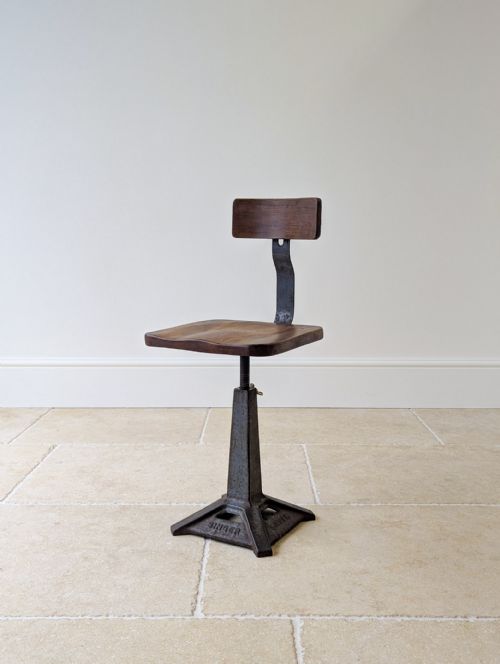
Mechanical function relies heavily on cast iron and brass hardware for swivel actions, rise and fall mechanisms, and revolving columns. Workshops frequently upholstered seats and backs in genuine leather for daily use.
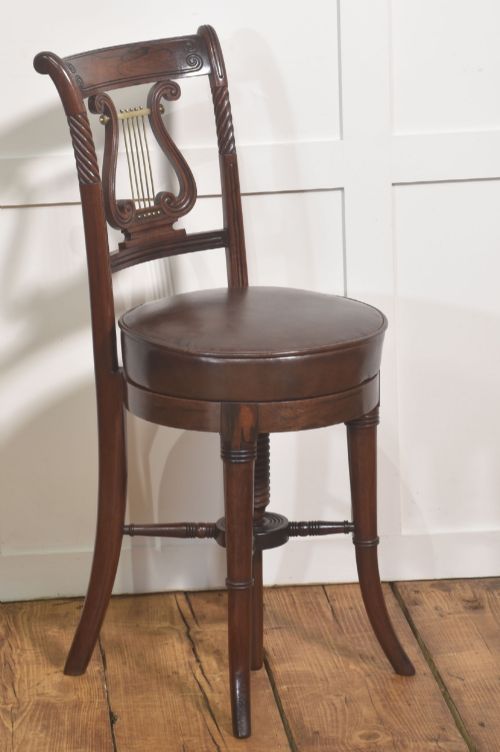
A late nineteenth-century patent music chair in green leather proves Victorians took their piano practice with absolute swivel mobility.
What varies in quality
The sophistication of the mechanical movement largely determines the standing of an antique adjustable desk chair. Smooth rotation and sturdy height adjustment reflect superior original engineering compared to stiff or loose mechanisms.
Material selection and joinery detail set finer pieces apart from standard utility seating. Examples featuring well-figured mahogany, heavy cast iron bases, and intact leather upholstery demonstrate higher original manufacture.
Singer·Evertaut
The Antique Adjustable Desk Chair Glossary
- Swivel chair
- A seat mounted on a central revolving spindle that allows the user to turn freely. This mechanical function proved essential in busy Victorian and Edwardian offices.
- Rise and fall
- A mechanism that enables the seat height to be adjusted up or down. These systems utilise threaded spindles or lever-operated friction collars.
- Bentwood
- Timber subjected to steam and pressure to curve it into ergonomic shapes. This technique created durable, flowing lines for chair backs and arms without weakening the grain.
- Patent chair
- A seating design incorporating a mechanism protected by a formal industrial patent. These pieces often feature complex mechanical adjustments for music or office use.
- Revolving stool
- A backless seat mounted on a rotating column with height adjustment. Industrial workshops frequently employed these sturdy iron and wood items.
Antique Adjustable Desk Chair: Frequently Asked Questions
How do I adjust the height on these chairs?
Most antique adjustable desk chairs operate via a central threaded spindle beneath the seat. Turning the seat clockwise or anticlockwise raises or lowers the platform.
Some industrial and Edwardian examples utilise mechanical levers or clamping collars to control the rise and fall action.
Were these chairs used only in offices?
While many examples served administrative roles in Victorian and Edwardian offices, others found places in music rooms, studios, and industrial workshops.
Specialist variants like patent music chairs and heavy cast iron workshop seats catered to specific trades and domestic hobbies.
How do I tell Victorian from Edwardian chairs?
Victorian office seating often displays heavier proportions, deep buttoned leather, and ornate mahogany or oak turnings. Grand Regency influences also appear in nineteenth-century designs.
Edwardian pieces generally exhibit cleaner lines, lighter oak construction, and simpler mechanical adjustments suited to modernizing workspaces.
Can I use an antique desk chair daily?
These chairs were built for sustained daily use by clerks and professionals using durable timbers and heavy iron mechanisms. Solid construction ensures they remain practical for modern desk work.
Checking the stability of the central swivel column and leather upholstery ensures safe and comfortable everyday use.